




Foliate Carved Table
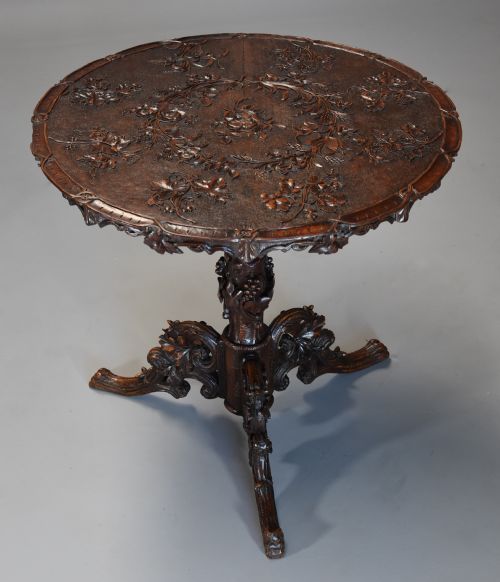
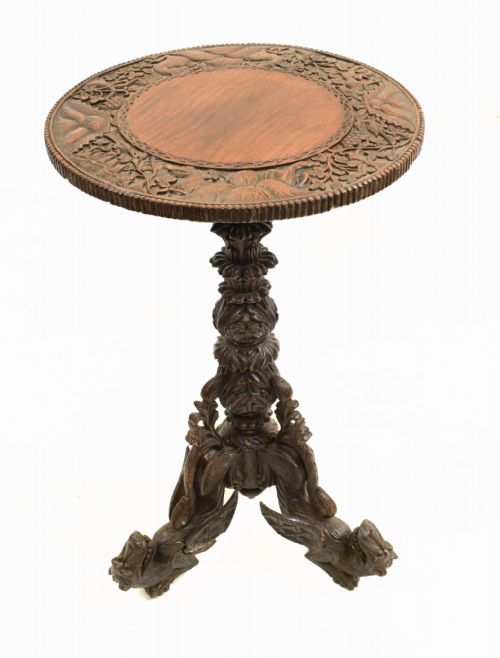
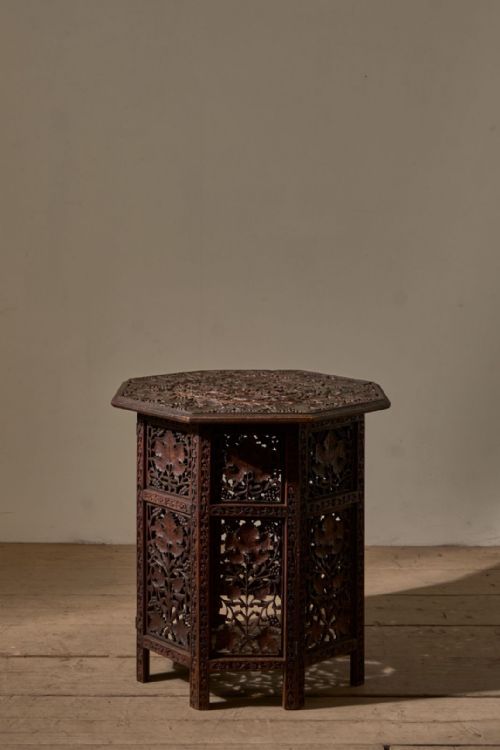
A foliate carved table brings the rich, organic texture of leaf and vine motifs into a room through deeply worked wood.
Foliate Carved Table
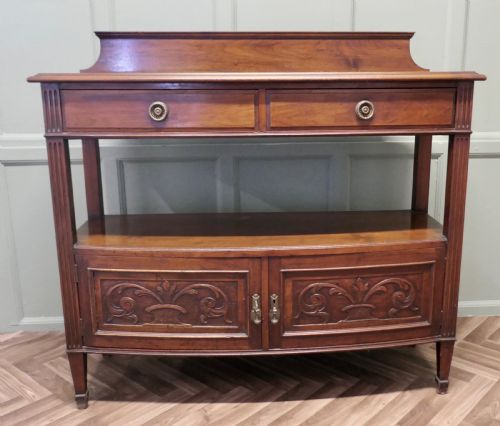
When you search for a foliate carved table, you are looking at items defined by intricate leaf and floral ornamentation cut directly into the timber. The selection spans distinct global traditions, featuring Anglo-Indian, Black Forest, and Victorian craft originating across the nineteenth and early twentieth centuries.
The pieces you meet most often on this page take the form of side tables, occasional tables, and centre tables. They employ rich timbers such as mahogany, walnut, teak, rosewood, and padauk to carry elaborate botanical carving.
How they were made
The makers relied upon dense tropical hardwoods and temperate timbers like walnut, lime wood, and linden wood, which accepted sharp chisel work without splitting. These woods were worked by hand to create deep relief carvings of leaves, scrolls, and floral motifs.
Assembly often involved traditional joinery, turning, and sometimes brass inlay or collapsible frames designed for campaign use. The surfaces were finished to highlight the natural grain beneath the dense ornamentation.
Listings for this phrase include periods spanning the Victorian era through the early twentieth century, utilising materials such as padauk, walnut, teak, and rosewood.
What varies in quality
The distinction between ordinary and exceptional carving lies in the depth of undercut relief and the precision of the botanical detail. Stronger examples display crisp leaf edges and balanced symmetry that show the carver possessed a firm command of form.
Choice of timber also separates the tiers, with dense hardwoods like padauk and rosewood providing a finer canvas for intricate work than softer utility woods. The structural integrity of the joints and the crispness of the turning on the legs complete the measure of quality.
The Foliate Carved Table Glossary
- Foliate
- Adorned with leaf shapes or leaf-like ornamentation. This design element sits at the heart of every piece matching this search.
- Padauk
- A heavy, dense tropical timber with a reddish hue, frequently utilised in Anglo-Indian furniture. It accepts fine carving and holds sharp detail over generations.
- Black Forest
- A regional style of wood carving originating from the mountain ranges of Central Europe, typically executed in linden or walnut. Pieces from this tradition often feature naturalistic animal and botanical motifs.
- Campaign table
- Portable furniture designed to fold or dismantle for travel. Examples seen here combine practical mobility with detailed surface carving.
Foliate Carved Table: Frequently Asked Questions
What is a foliate carved table?
A foliate carved table is a piece of furniture featuring ornamentation based on leaves, vines, and floral patterns. These items range from nineteenth-century Anglo-Indian occasional tables to European Black Forest centre tables.
The carving is executed directly into timbers such as walnut, padauk, and mahogany. Each piece showcases the distinct regional carving styles of its maker.
How do I identify a Victorian piece?
Victorian examples often display heavy timber construction, deep relief carving, and traditional nineteenth-century proportions. They frequently utilise mahogany, rosewood, or walnut.
Look closely at the joinery and the style of the leaf motifs to distinguish these items from later twentieth-century productions. Regional variations also provide clear clues to the origin.
Where were these tables made?
The pieces originate from various global workshops, including British colonial India, the Black Forest region of Europe, and domestic British cabinet makers. Each region brought its own native timbers and carving traditions to the form.
Anglo-Indian pieces often feature padauk or teak, while European workshops tend to utilise walnut and linden wood.
How do I care for carved wood?
Maintain carved wooden surfaces by keeping them away from direct heat sources and dramatic humidity changes. Dust the intricate recesses regularly with a soft brush to prevent build-up.
Apply occasional appropriate wax polish sparingly to nourish the timber without filling the delicate carved details. Avoid modern silicone sprays that can damage antique finishes.