
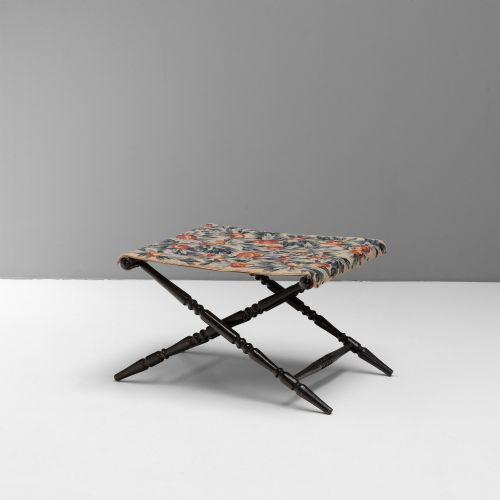



Folding X Frame Stand
A folding x frame stand offers a versatile surface that collapses when not required, combining portability with sturdy everyday utility.
Folding X Frame Stand
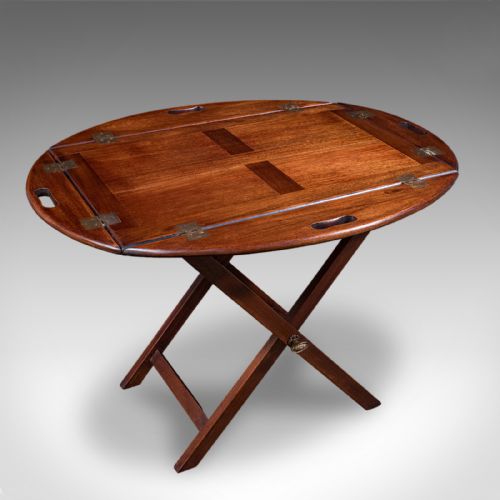
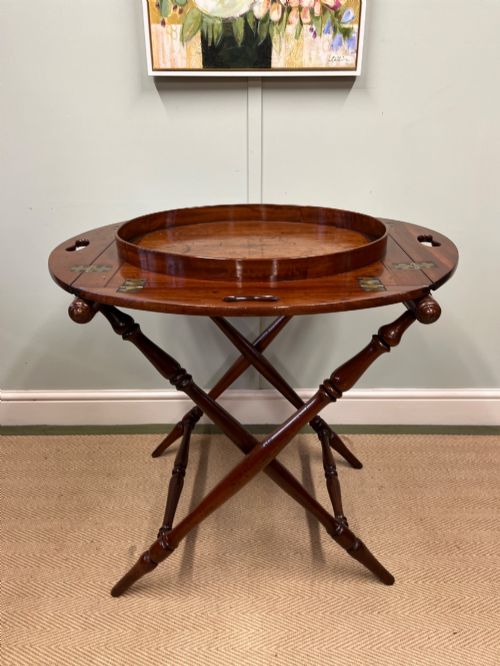
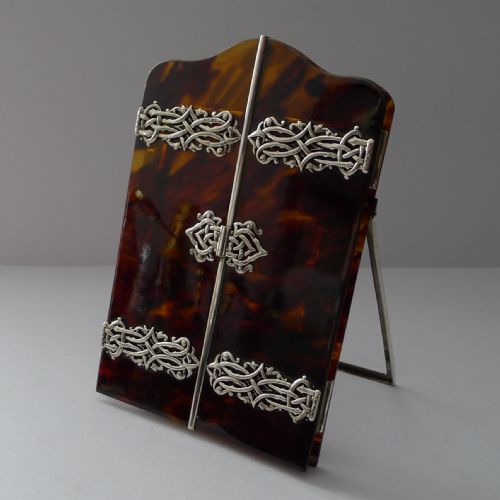
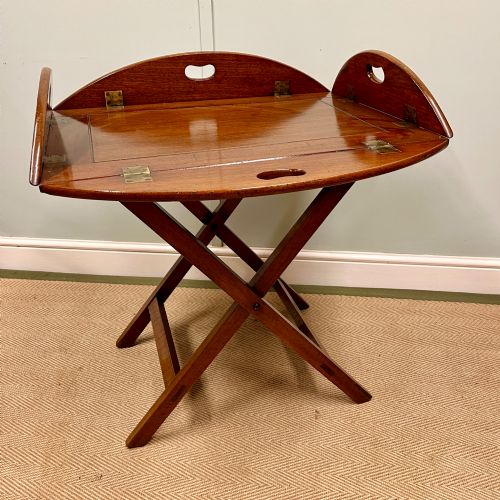
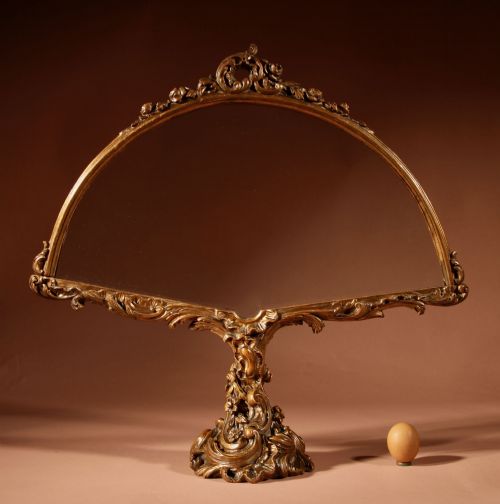
A folding x frame stand primarily manifests as a butler tray on stand, alongside occasional tables, tray tables, side tables, picture frames, desks, and display cases. These functional objects appear across the Georgian, Regency, Victorian, and Edwardian periods, reflecting changing domestic habits in British homes.
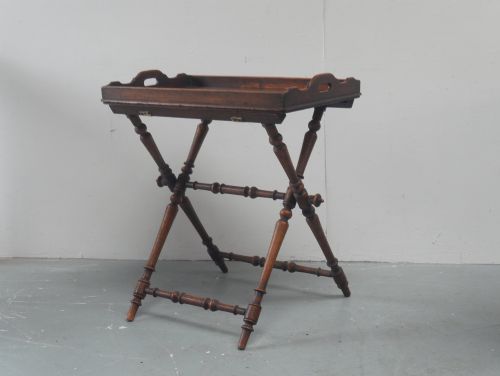
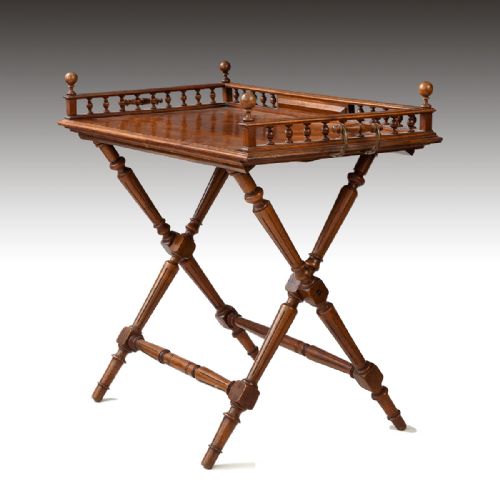
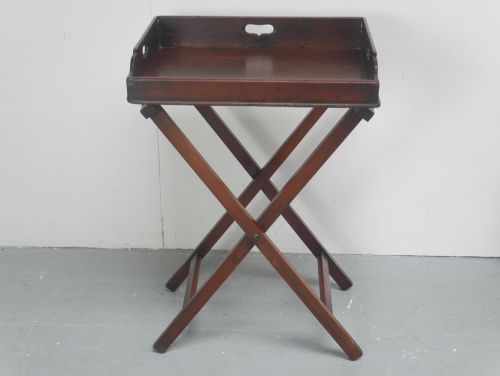
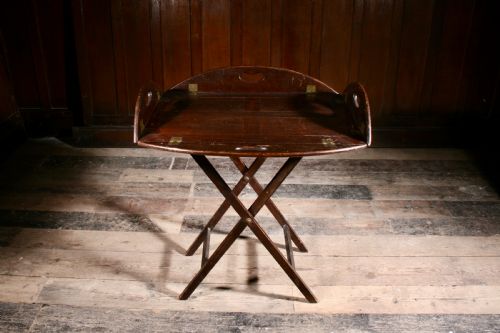
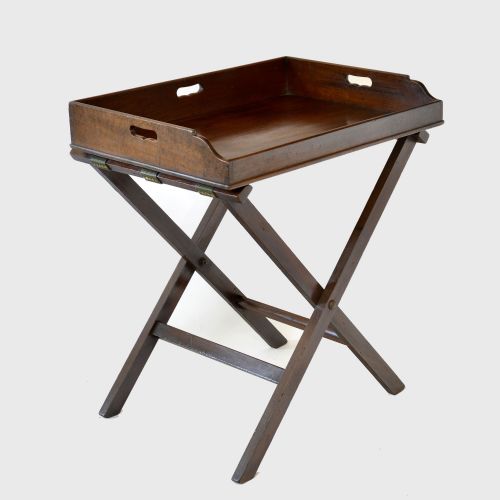
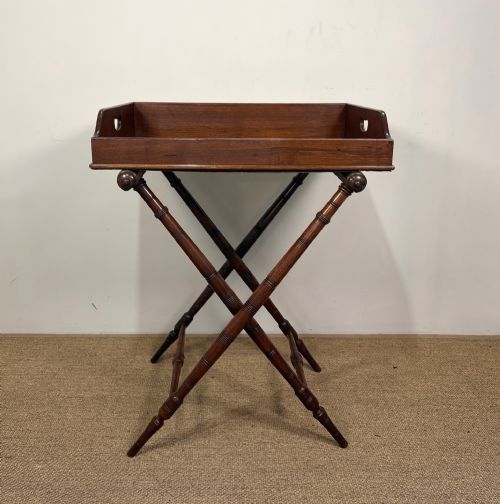
The version most commonly met on this page is the butler tray on stand, featuring a removable wooden tray resting upon a folding cross-leg base. Such pieces served originally for serving drinks or meals before being folded and stored out of the way.
Makers and craftsmen applied various regional styles to these stands, including English Country, French Rococo, and Anglo-Indian designs. The underlying form remains consistent, governed by the hinged X-frame mechanism that allows rapid collapse and deployment.
Materials and construction
Cabinet makers utilised dense hardwoods such as mahogany, oak, walnut, and rosewood to construct the frames and trays, ensuring sufficient weight and durability for daily handling. These timbers were often selected for their rich grain and polished to a smooth finish.
Hinges, mounts, and supports frequently incorporate brass, sterling silver, or cotton webbing to reinforce joints and assist the folding action. Selected display items also integrate glass and tortoiseshell for decorative surface panels.
Joinery techniques focused on stability under load, employing tight pivots and cross-bracing within the X-frame configuration so the stand could support heavy trays without wobbling.
One notable oak tray carries provenance linking it directly to Bäckaskog Castle.
Distinctions in quality
Quality rests significantly on the selection of timber and the precision of the turning and joinery in the X-frame legs. Finer examples display carefully matched wood veneers or solid boards with minimal warping over time.
The integration of original metalwork, such as brass hinges and mounts, distinguishes superior pieces from those with later replacements. Original hardware moves smoothly and matches the age of the wooden structure.
Proportion and execution of carved details, where present, separate standard utilitarian items from elevated pieces produced by skilled workshops. The tightness of the folding action without excessive looseness indicates superior initial manufacture.
The Folding X Frame Stand Glossary
- Butler tray
- A portable wooden tray with hinged or fixed sides, designed to lift off its supporting stand. It was traditionally used by household staff to carry china and silverware.
- X-frame
- A structural base formed of two intersecting members that pivot or cross in the middle like the letter X. This design allows the entire support to collapse flat.
- Campaign desk
- A portable desk made in sections with folding legs, designed for easy transport by military officers on campaign. These pieces utilise robust hardwoods and flush hardware.
- Drop-flap serving stand
- A table featuring hinged leaves that lower or raise to alter the surface area. It provides flexibility in smaller dining or living spaces.
- Occasional table
- A small, movable table intended for specific, intermittent use rather than a permanent room arrangement. They appear in numerous revival styles across the nineteenth century.
Folding X Frame Stand: Frequently Asked Questions
What were folding x frame stands used for?
These stands primarily held removable trays for serving food, tea, or beverages in reception rooms. Their collapsible design allowed servants to clear them away rapidly when not needed.
Over time, similar folding frames supported reading desks, display cases, and photograph frames. This made them adaptable furniture for changing domestic routines.
How do I identify a Georgian folding stand?
Georgian pieces generally display dense Cuban mahogany or oak with straightforward, elegant lines. Their construction relies on hand-cut joints and simple, robust X-frame pivots.
Later Victorian and Edwardian examples often introduce more ornate carving, rosewood, or walnut. They also frequently incorporate brass mounts and varied edge profiles on the trays.
Can I use a butler tray stand daily?
These stands were engineered for heavy domestic service and remain entirely suitable for contemporary daily use. The folding mechanism is designed for frequent opening and closing.
Care should be taken to protect polished wooden surfaces from moisture and heat. Regular gentle dusting preserves the historic finish.