



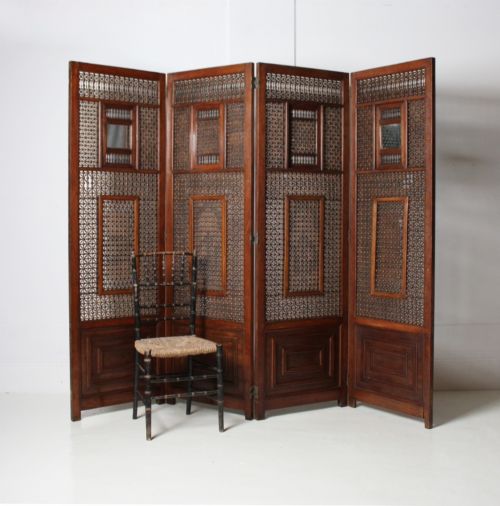
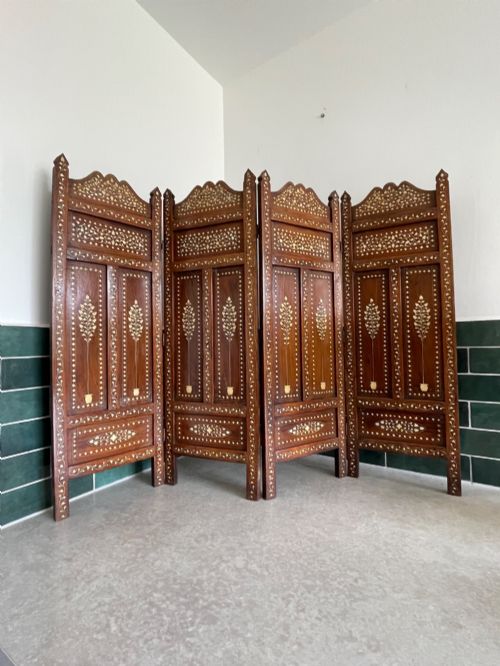
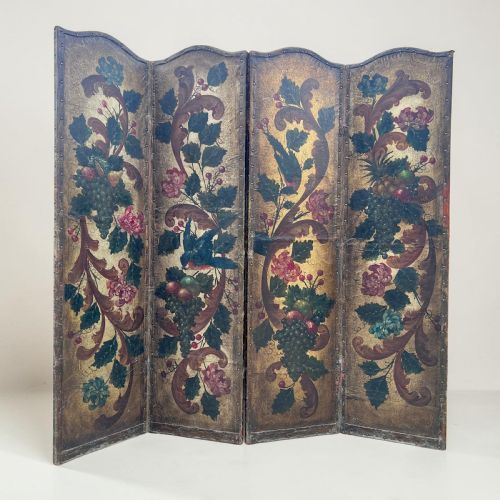


Folding Panel Room Divider
A folding panel room divider partitions space with hinged sections, offering privacy and decorative impact.
Folding Panel Room Divider
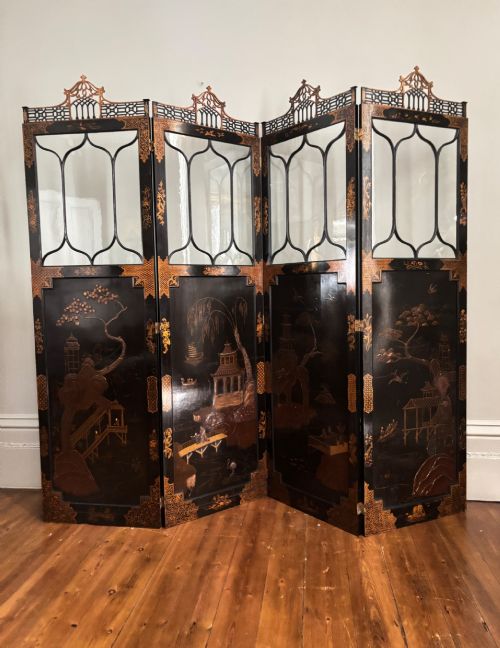
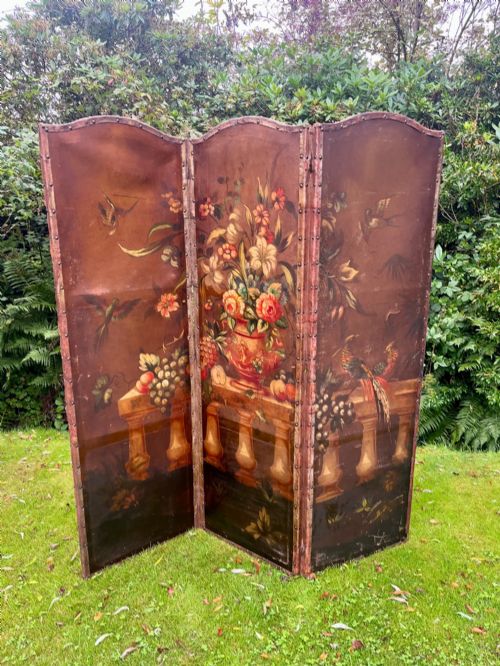
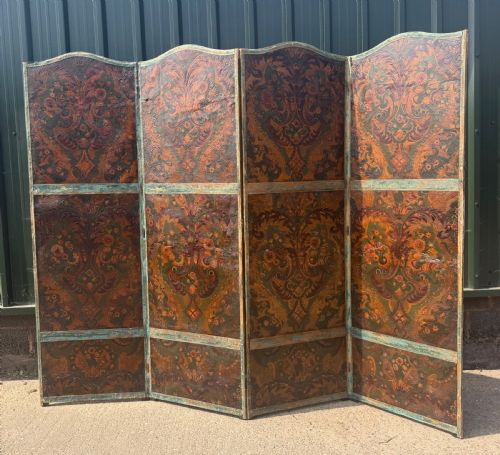
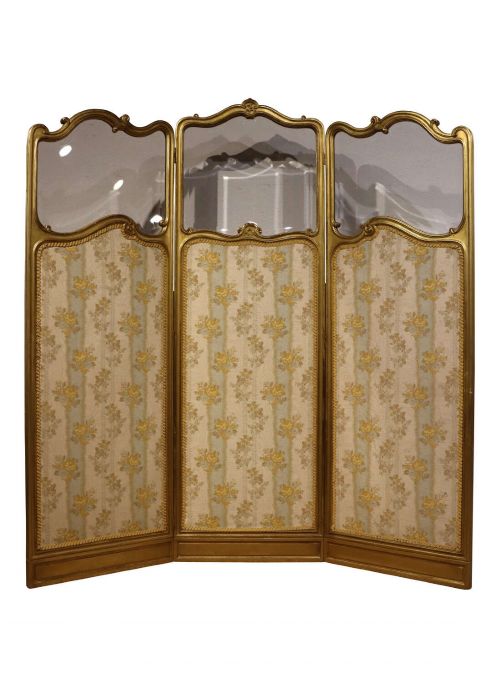
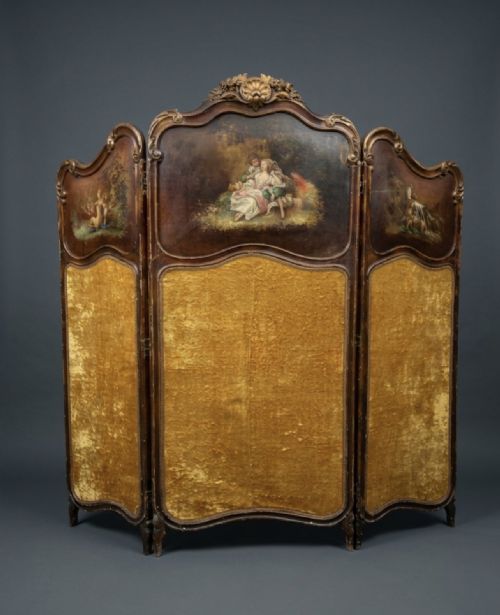
A folding panel room divider creates flexible boundaries within a floor plan using multiple hinged leaves. When searching this phrase, a buyer encounters multi-fold examples spanning the eighteenth, nineteenth, and early twentieth centuries.
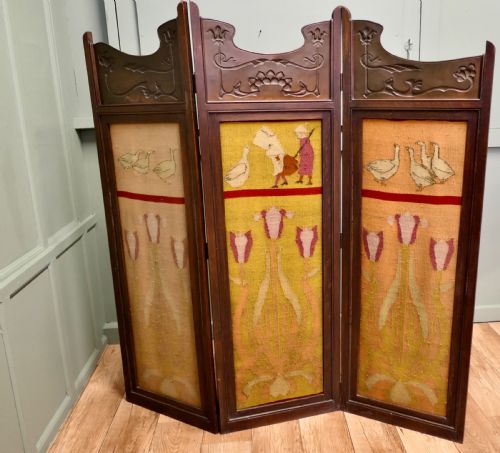
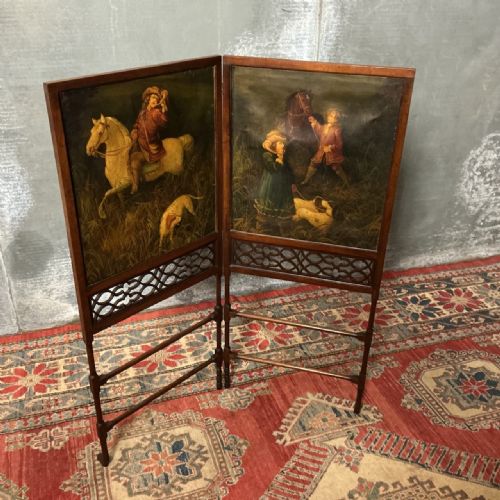
The pieces on this page include tall room dividers, dressing screens, and smaller table or fire screens. Materials range from carved hardwood and lacquered panels to fabric, leather, and oil-painted canvas.
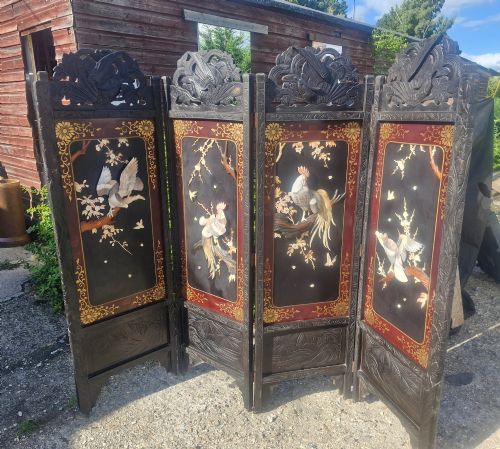
Victorian, Edwardian, and Continental interpretations appear alongside Asian imports like Chinese Coromandel and Japanese textile screens. Many feature between three and eight folds, joined by hinges to stand upright in a zig-zag or curved configuration.
Distinctions in craftsmanship
Quality rests in the execution of the surface art and the stability of the joinery. Hand-painted oil scenes, detailed needlepoint work, and deep carved bone or lacquer demand significant skill compared to printed or scrap-applied alternatives.
The weight and selection of the timber dictate the longevity of the frame. Denser hardwoods and heavy brass hinges support large multi-fold panels without sagging, whereas lesser builds rely on lighter softwoods that warp under tension.
The finish on both the front and the reverse side indicates the workshop standard. Superior pieces maintain decorative continuity or finished wood grains across the back, showing attention to detail from every viewing angle.
William Morris
The Folding Panel Room Divider Glossary
- Coromandel
- A dense dark timber or a Chinese lacquer technique involving incised designs filled with colour on a dark ground. This method creates a flat, textured surface often seen on eight-fold screens.
- Verdure
- A style of tapestry or painted wall art depicting lush foliage, trees, and sometimes animals. Flemish verdure screens bring a woodland canopy effect indoors.
- Mashrabiya
- An architectural element featuring pierced wooden lattice panels arranged in geometric patterns. These are integrated into folding room dividers for filtered light and ventilation.
- Modesty screen
- A low folding screen originally used to shield a person from draughts or direct heat near a fireplace. They typically stand lower than full room dividers.
- Scrap work
- A decorative technique using pasted paper cut-outs, engravings, or lithographs applied to a backing and varnished over. Victorian scrap screens display dense collages of historical images.
Folding Panel Room Divider: Frequently Asked Questions
How do I stabilise a heavy folding screen?
Heavy folding screens remain upright by arranging the panels in a zig-zag or staggered curve rather than pulling them completely straight. The angles of the hinges distribute the weight and create a stable footprint on the floor.
Heavier wood and lacquer models naturally anchor themselves better than lighter fabric or paper screens. Placing the divider on even flooring further prevents wobbling across the joined leaves.
Can I use a room divider for privacy?
These dividers function well to partition a room, create a dressing area, or block sightlines into a specific zone. Taller four to eight-fold models effectively divide large spaces into intimate sections.
Solid wood, leather, thick canvas, and lacquered panels offer complete visual privacy. Lighter fabric or glass-panelled screens provide spatial separation while allowing light to pass through.
What is the difference between a dressing screen and a room divider?
Dressing screens traditionally stood in bedrooms to provide privacy while changing clothes. They frequently incorporate mirrors, needlepoint, or vanity-related decorative elements.
Room dividers often feature a larger scale with more panels to segment a wider living space. However, historical terminology often overlaps, and many pieces served both functions interchangeably.