



Folding Leaf Mahogany Table
A folding leaf mahogany table brings versatile timber surfaces into daily rooms, adapting effortlessly from compact side pieces to full dining proportions.
Folding Leaf Mahogany Table
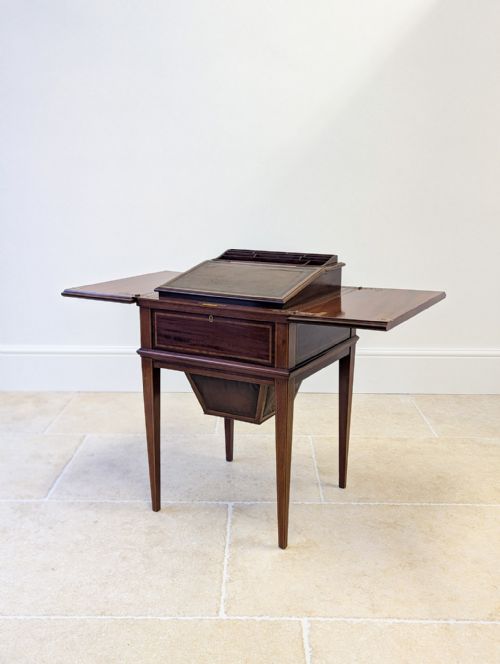
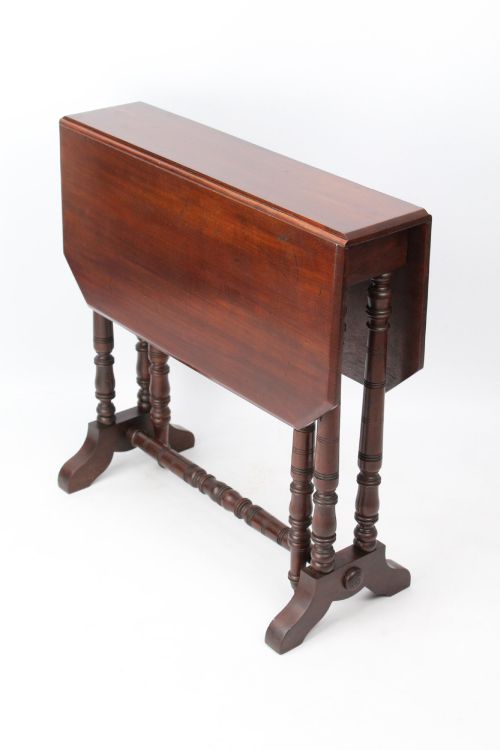
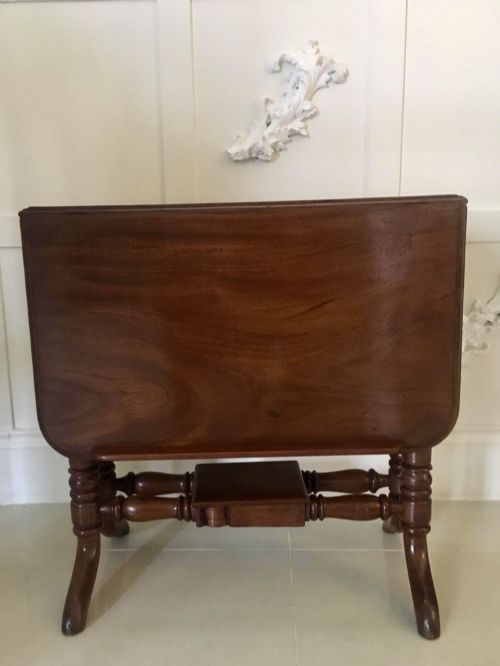
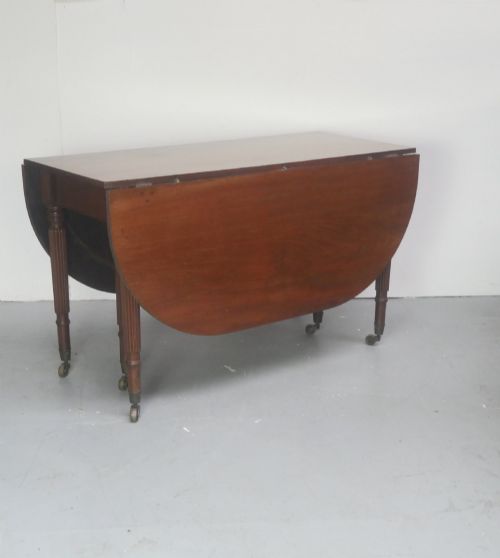
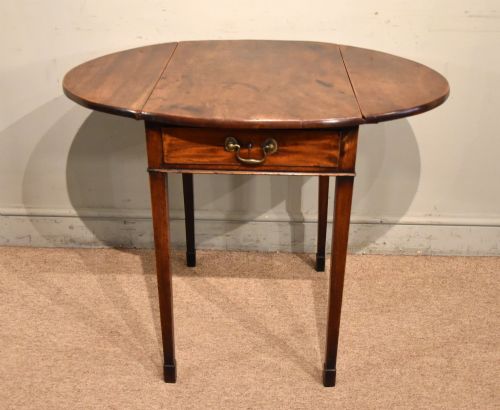
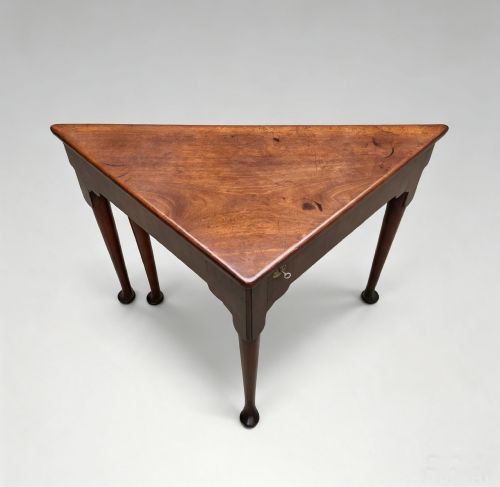
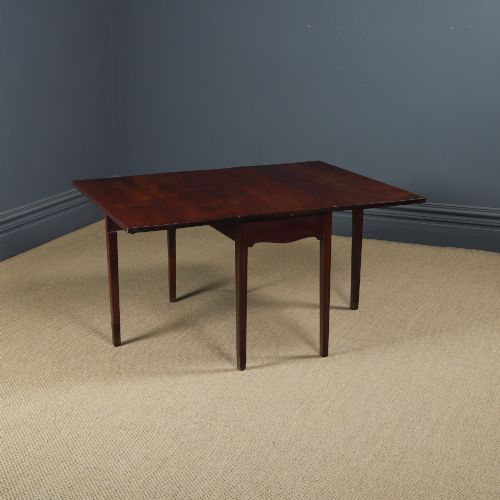
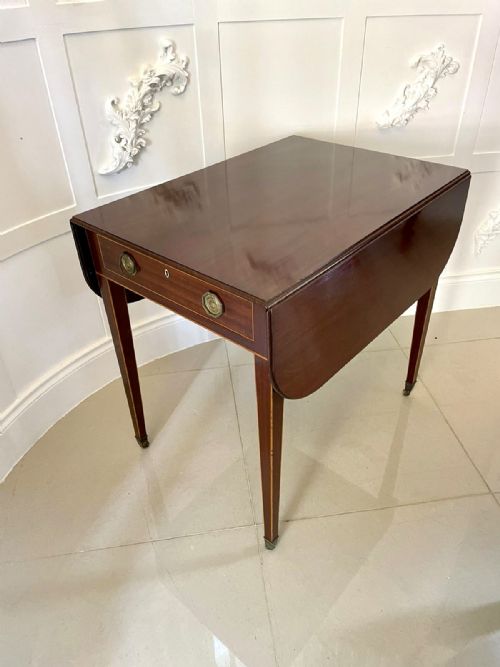
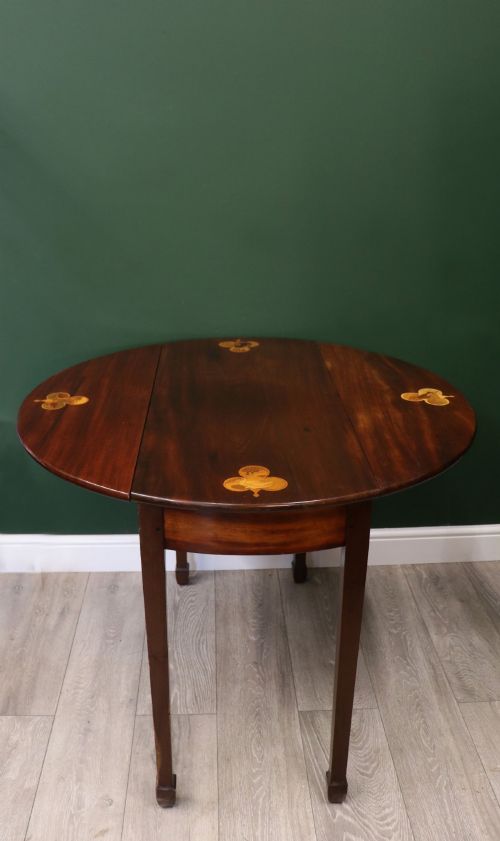
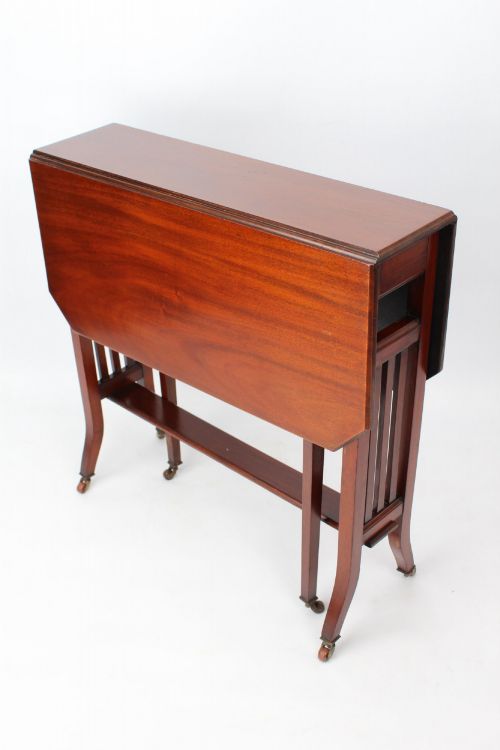
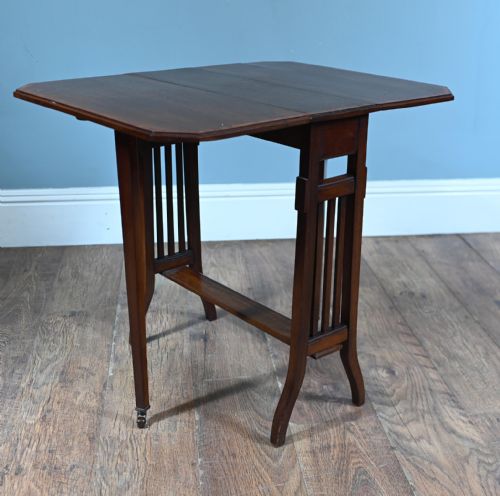
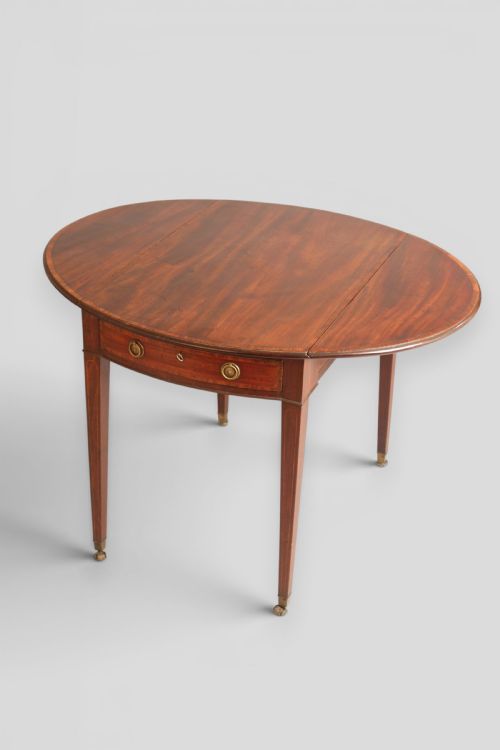
A folding leaf mahogany table encompasses diverse forms spanning the eighteenth century through the Edwardian era, including Pembroke tables, Sutherland tables, drop-leaf dining tables, and games tables.
Makers designed these items to save space, employing hinged flaps or folding mechanisms that alter the footprint according to immediate domestic needs.
The specimens recorded here range from George II and George III periods to Victorian, Regency, and Edwardian styles, alongside occasional examples from the 1930s.
Materials and construction
Cabinetmakers utilised solid mahogany and Cuban mahogany alongside supportive secondary timbers, often selecting figured grains for primary surfaces.
Many items incorporate decorative stringing or contrasting details using satinwood and boxwood inlay, while others integrate brass hinges, castors, or leather inserts.
Some tables hide gaming wells beneath their folding tops for secret dice storage.
Gradations of execution
Superior examples display crisp carving on legs and stretcher joints, balanced proportions when fully extended, and tight hinge alignment that allows leaves to drop level without sag.
The choice of timber grain dictates visual hierarchy, with rich Cuban mahogany and fine satinwood inlay marking out the more ambitious workshops from utilitarian production.
The Folding Leaf Mahogany Table Glossary
- Pembroke table
- A small table with two hinged flaps on opposite sides, typically featuring one or two small drawers beneath the surface.
- Sutherland table
- A narrow drop-leaf table where the flaps comprise a large portion of the top surface, supported by swinging gate legs.
- Gateleg table
- A table with hinged leaves supported by legs that swing outward like a gate to bear the weight of the extended flap.
- Envelope table
- A card or tea table with a square top composed of four triangular folding flaps that pivot open to reveal a baize-lined interior.
- Spider leg table
- A slender occasional table supported by exceptionally thin turned legs connected by delicate stretchers.
Folding Leaf Mahogany Table: Frequently Asked Questions
How do I date a folding leaf mahogany table?
Examine the leg styles, hardware types, and secondary timbers underneath the framework. Georgian pieces often display hand-cut dovetails and vernacular timber choices, whereas Edwardian items reveal lighter internal framing and machine-tooled components.
Style markers like satinwood inlay or specific gateleg configurations point directly to the prevailing tastes of the Victorian and Edwardian periods.
Were these tables used for dining?
Larger drop-leaf and gateleg versions served everyday meals in domestic spaces where permanent dining furniture consumed too much floor area. Leaves dropped down against the wall between uses.
Smaller formats functioned as tea tables, games surfaces, or writing desks rather than primary dining boards.
How do I care for antique mahogany surfaces?
Maintain the finish using traditional beeswax applied sparingly with soft cloths. Avoid synthetic sprays and keep timber away from direct heat sources to prevent wood shrinkage.
Direct sunlight fades rich mahogany tones over decades, so position tables away from bright windows.
What is Cuban mahogany?
Cuban mahogany is a dense, heavy hardwood imported from the Caribbean during the eighteenth and early nineteenth centuries. It exhibits deep colouration and intricate grain patterns.
Restrictions on export eventually led cabinetmakers to adopt alternative mahogany sources from other regions.