

Folding Gateleg Table
A folding gateleg table provides a practical surface that expands when required and collapses against a wall when floor space is needed.
Folding Gateleg Table
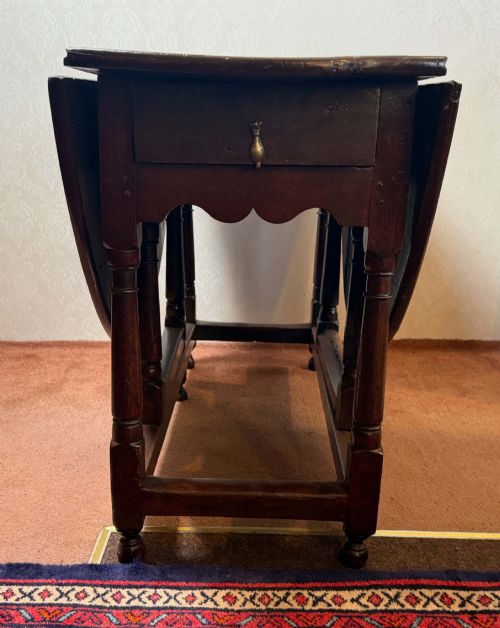
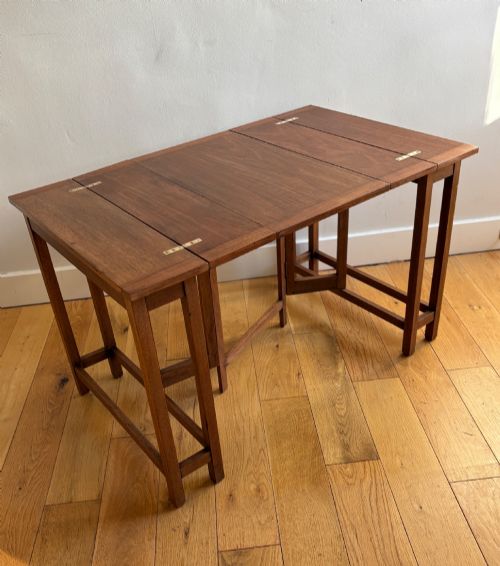
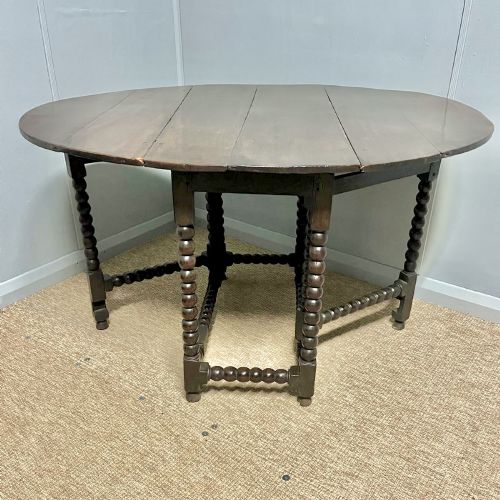
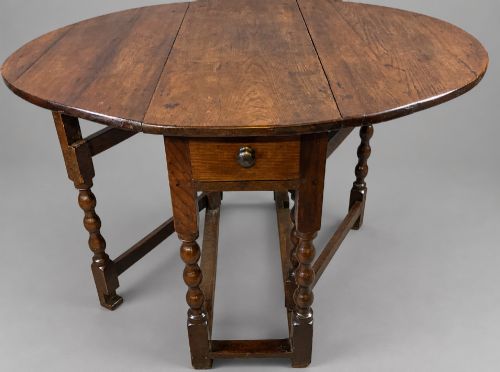
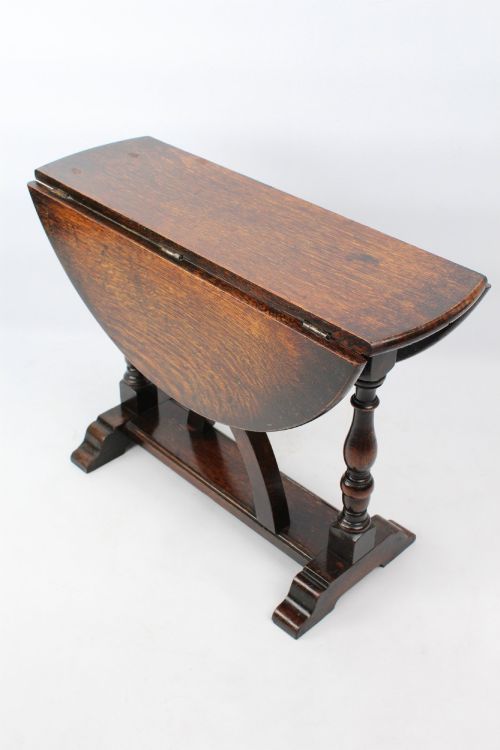
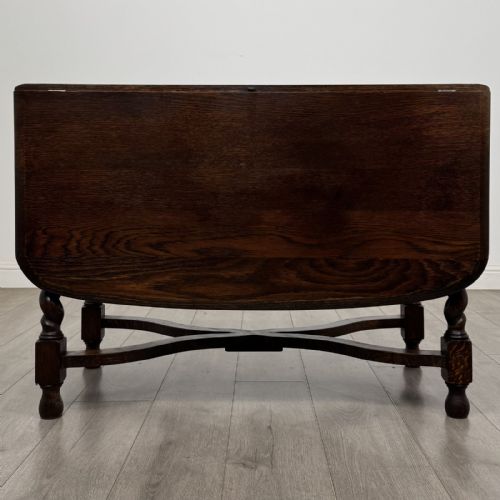
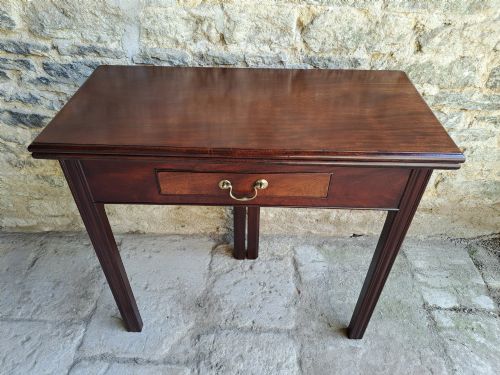
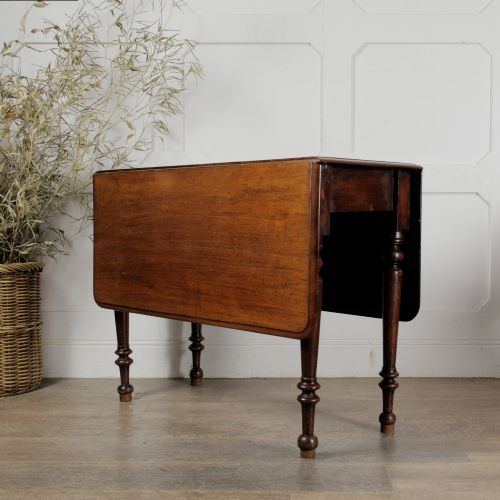
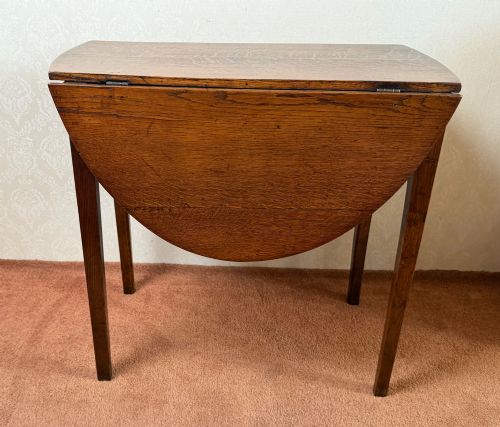
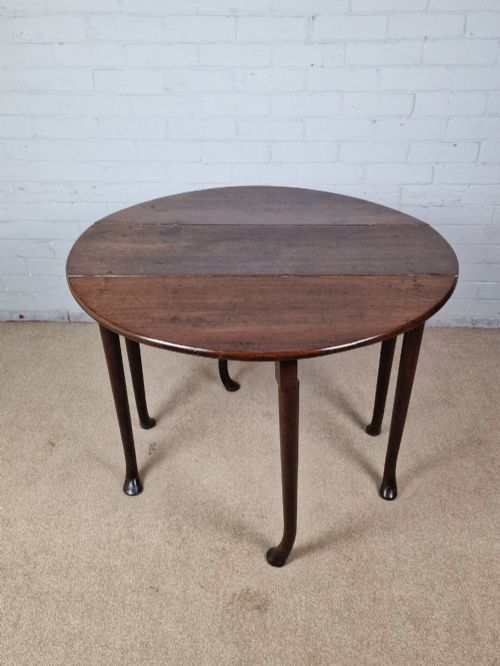
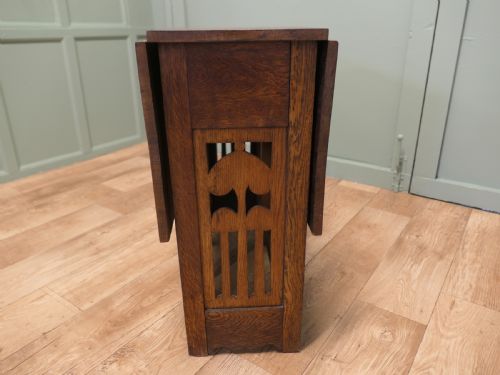
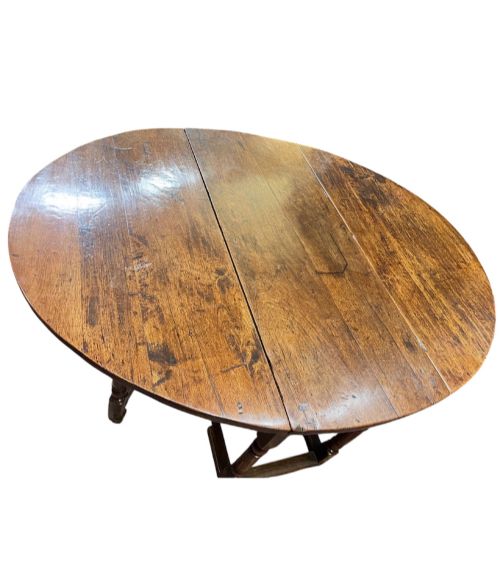
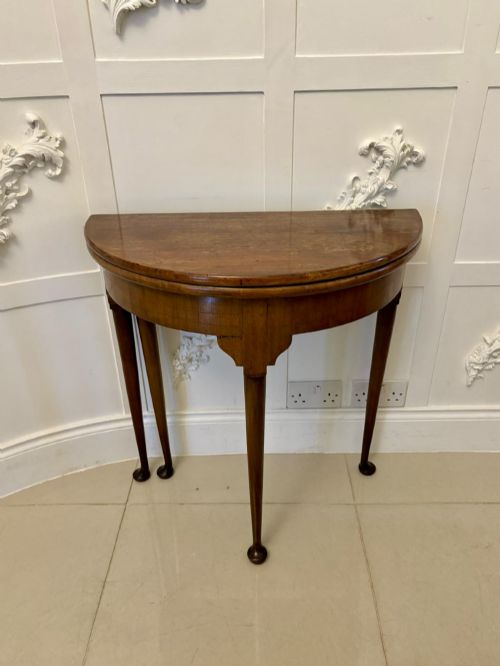
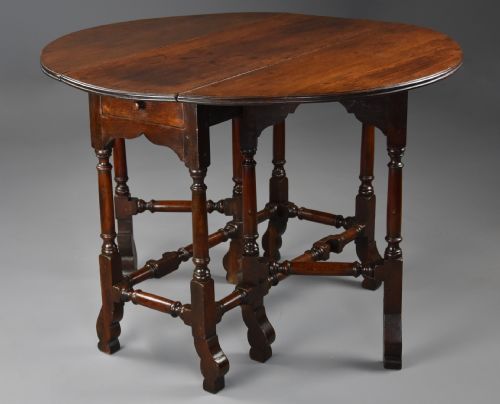
A folding gateleg table is a form of furniture featuring hinged leaves supported by swinging legs that pivot outwards to bear the weight of the extended top. Buyers looking for these pieces want a versatile surface that adapts easily from a compact footprint to a larger dining or serving area. Examples on this page span from the seventeenth century through the Edwardian period, encompassing styles such as Georgian, Jacobean, and Victorian.
How they were made
Makers utilised solid timbers such as oak, walnut, and mahogany, frequently selecting boards with figured grain for the folding leaves and top surfaces. Structural framing relied on mortise and tenon joints to secure the legs and rails, ensuring stability when the leaves were raised.
Legs were shaped using turning techniques, producing barley twist, baluster, or slender spider leg profiles that supported the pivoting gate mechanism. Finish applications involved natural wax polish to enhance the patina of the timber, alongside occasional painted or inlaid decorative treatments.
Folding Gateleg Table Retail Price Guide 2026
Typical asking prices for folding gateleg table among the pieces listed under this phrase on Sellingantiques today, from the lower quarter to the upper quarter. They describe what is for sale here now, not the wider market.
Swedish country workshops contributed colourful painted slagbord tables designed to handle hearty family meals and lively seasonal gatherings.
What varies in quality
The standard of a folding gateleg table depends on the selection of timber and the precision of the joinery in the pivoting leg mechanism. Superior examples display tightly fitted hinges, straight framework, and well-figured wood timbers that have developed a deep, uniform patina over centuries.
Proportion and scale also distinguish better pieces, particularly smaller walnut or yew wood examples with balanced turnings. Inferior or heavily altered specimens often show mismatched wood replacement sections or instability in the swinging gate support structure.
The Folding Gateleg Table Glossary
- Gateleg table
- A table with hinged leaves supported by one or more legs that swing outward like a gate. This design allows the surface area to be halved when not in use.
- Sutherland table
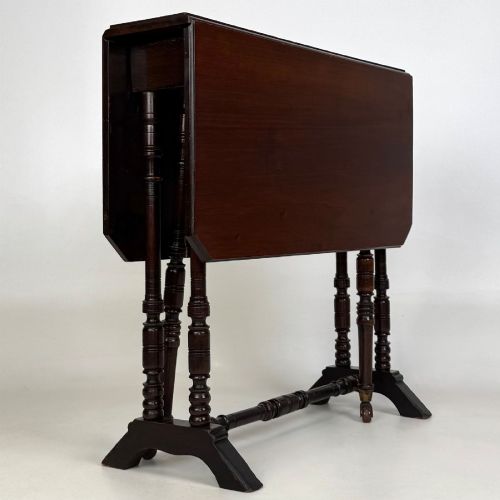
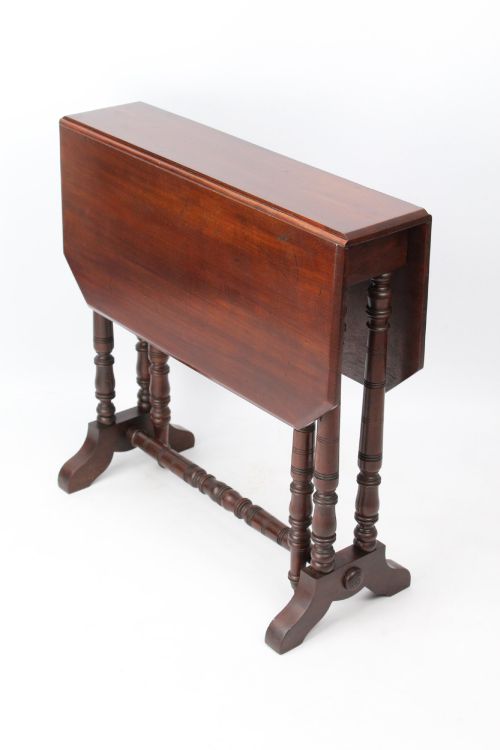
- A narrow drop-leaf table featuring particularly slender gatelegs and leaves that fold down nearly vertically. These tables were developed during the Victorian period for easy placement in domestic interiors.
- Barley twist
- A type of turned wooden leg carved in a spiral twist resembling a helix. This decorative form appears frequently on seventeenth-century and revival period furniture.
- Patina
- The surface sheen and colour developed on wood through age, wear, and polishing. Collectors value this indicator of historical depth and careful maintenance.
Folding Gateleg Table: Frequently Asked Questions
How do you use a folding gateleg table?
A folding gateleg table functions by lifting one or both hinged leaves and swinging the pivoting leg outward from the frame to lock the surface in place. Lowering the leaves requires swinging the leg back inward so the top hangs flat.
This adaptability allows the table to serve as a compact side console or an expanded dining surface depending on daily spatial requirements.
How do you date an oak gateleg table?
Dating an oak gateleg table involves examining the construction methods, such as hand-cut tenons, timber characteristics, and the style of the turned legs. Earlier seventeenth-century pieces typically exhibit heavier framing and pegged joints, whereas later revival pieces show more uniform machine tooling.
Hardware details like handmade iron hinges also provide strong clues regarding the period of manufacture.
What is a Sutherland table?
A Sutherland table is a specific variation of the drop-leaf table characterised by a very narrow central top and exceptionally wide folding leaves. The supporting gatelegs are positioned close to the centre when closed.
Introduced during the Victorian era, they were designed to take up minimal floor space against a wall.
Where should you place a gateleg table at home?
A gateleg table sits well against a living room or hallway wall with both leaves dropped, functioning as a surface for lamps or decorative objects. Opening one or both leaves allows the piece to transition into a dining area or a desk.
Placing the table away from direct heat sources helps protect the antique timber and hinged joints from warping.