
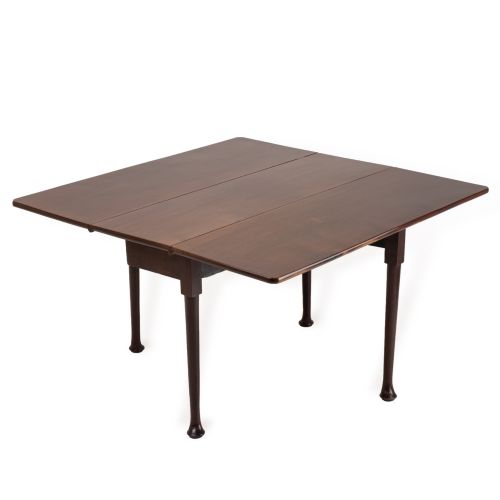


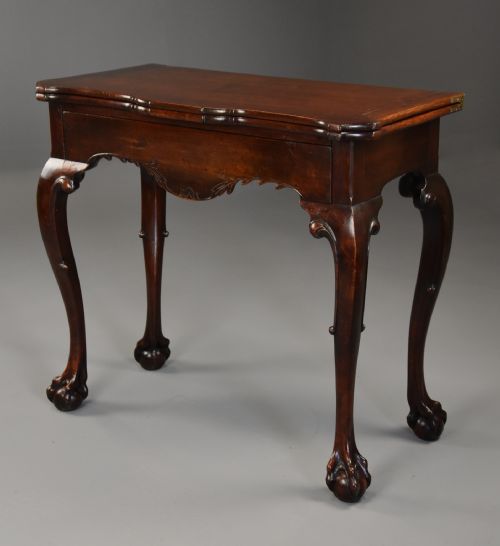
Folding Flap Side Table
A folding flap side table offers clever space-saving versatility, making these drop-leaf and gateleg designs practical additions to any room.
Folding Flap Side Table
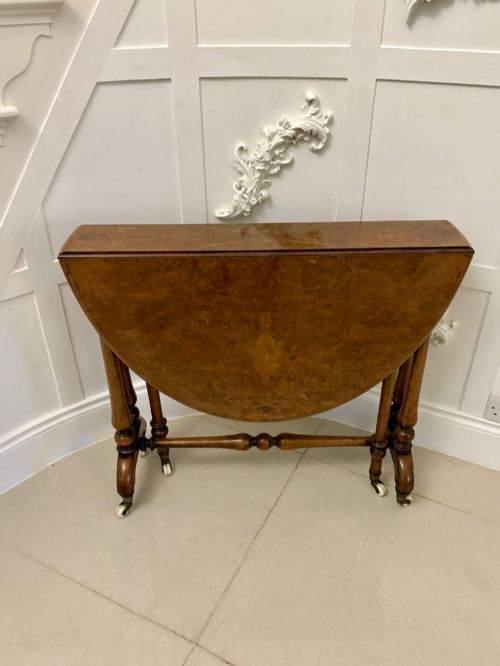
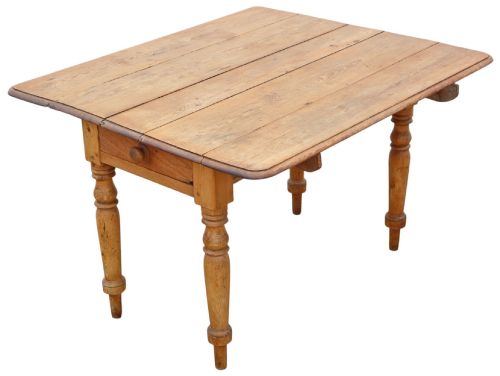
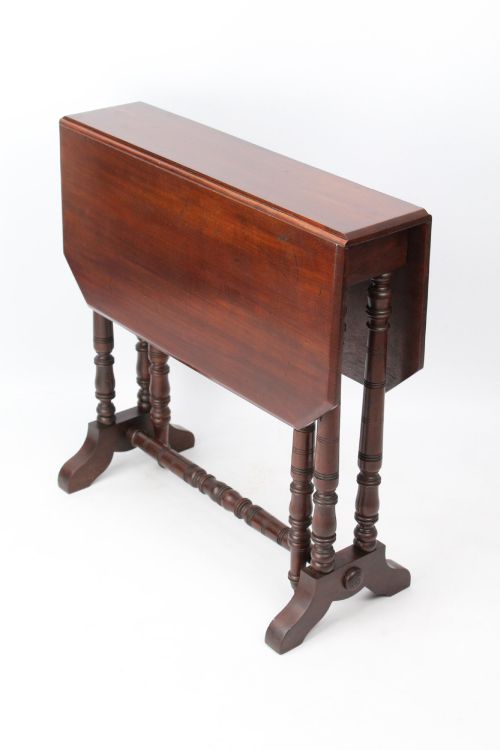
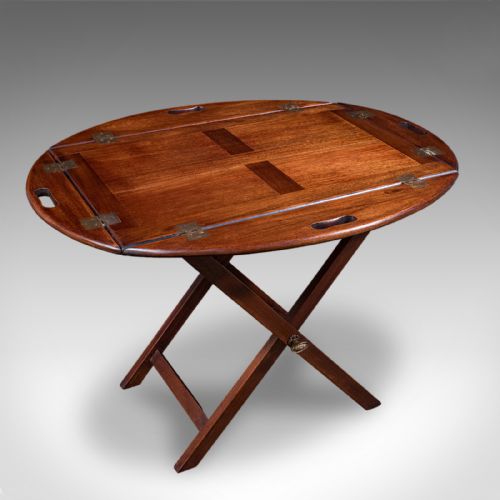
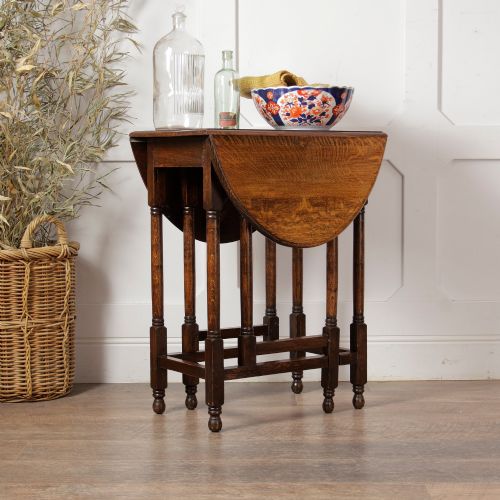
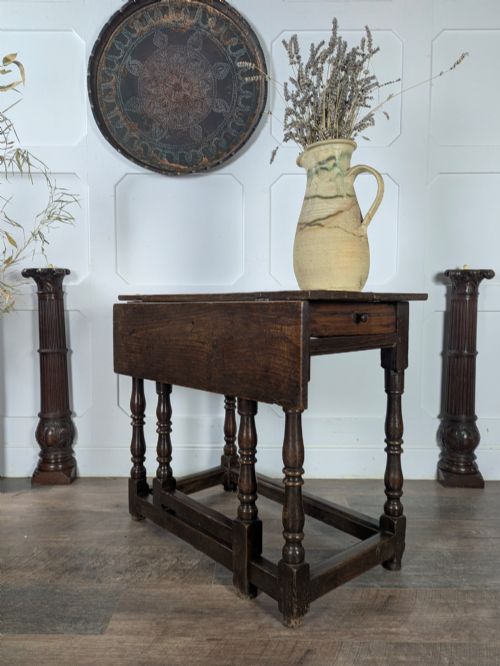
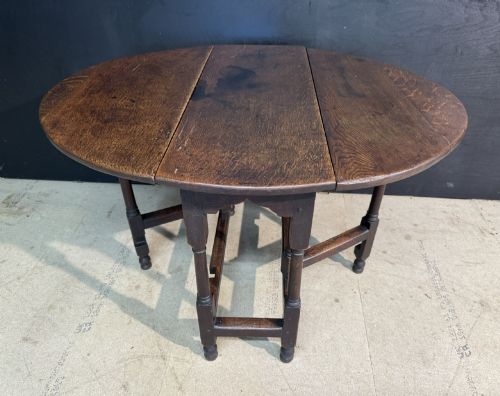
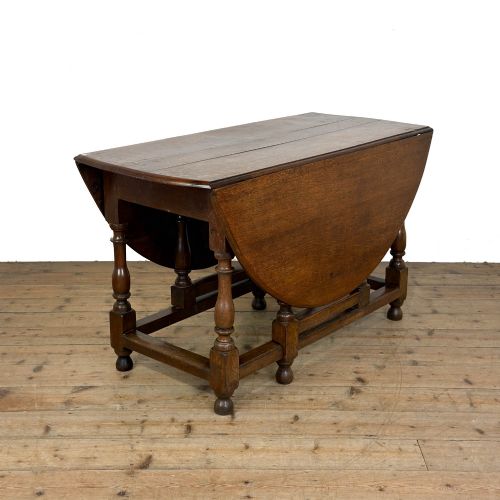
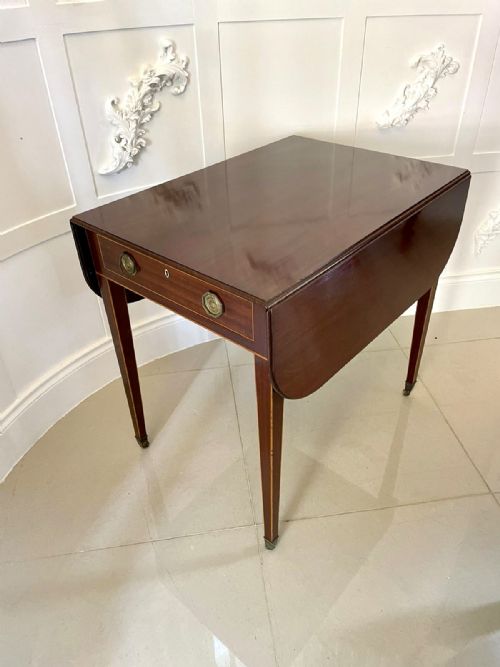
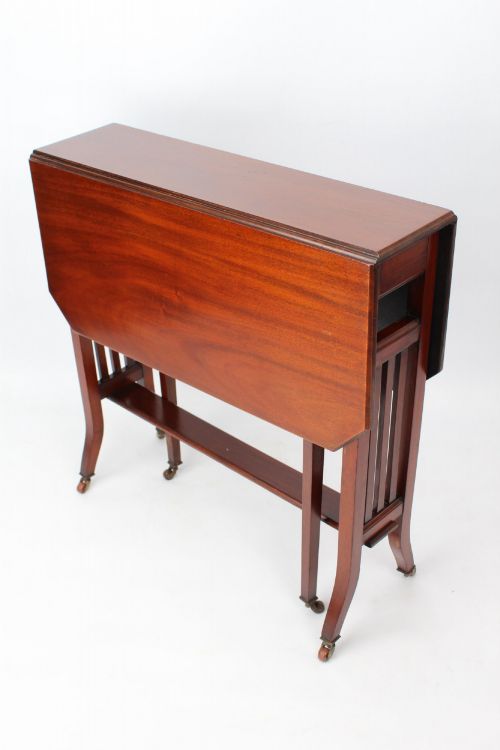
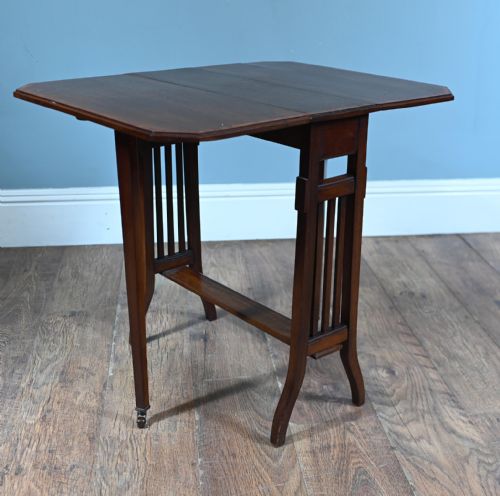
A folding flap side table is primarily represented here by gateleg tables, Sutherland tables, and Pembroke tables spanning from the seventeenth century through the Edwardian era. These pieces provide compact surfaces that expand via hinged leaves supported by swing-out legs or pivoting brackets.
Buyers will encounter substantial seventeenth and eighteenth-century solid oak gateleg pieces as well as refined Victorian and Edwardian mahogany or burr walnut Sutherland tables. Each version serves the dual purpose of a compact console and an extended serving surface.
Materials and construction
Cabinet makers utilised dense hardwoods such as oak, mahogany, and walnut to ensure structural stability at the hinged joints. Solid timbers and veneered surfaces were shaped using traditional joinery, supported by brass hinges and swivel mechanisms.
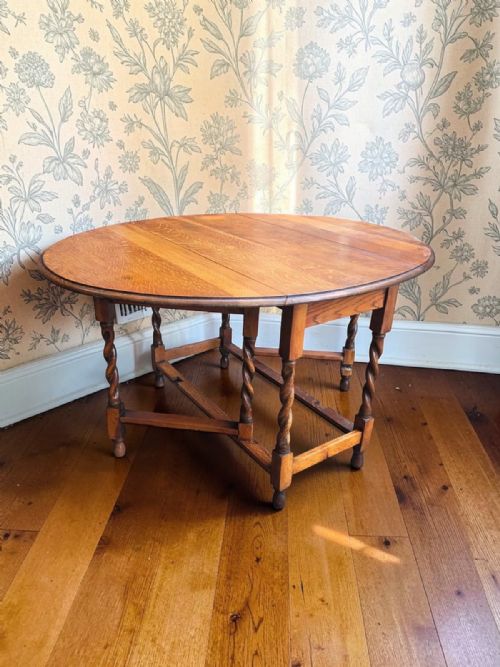
Turned legs, including barley twist designs, and delicate spider legs provide the necessary clearance and support for dropping flaps. Inlaid boxwood and delicate stringing frequently decorate the top surfaces and drawer fronts of Georgian and Edwardian examples.
Factors of quality
The standard of a folding flap side table depends on the selection of timber figures, such as burr walnut or figured mahogany, and the crispness of turned or inlaid details. Superior examples exhibit tightly fitted hinges and stable drop leaves that align evenly when raised.
Construction integrity in the pivoting gateleg or folding mechanism dictates the daily utility and longevity of the piece. Subtle details like hand-cut dovetails in drawers and well-preserved original patination separate standard items from finer workshop output.
Liberty & Co.
The Folding Flap Side Table Glossary
- Gateleg table
- A table with hinged leaves supported by legs that swing outward like a gate to hold the flaps. This sturdy construction became popular in the seventeenth century.
- Sutherland table
- A narrow drop-leaf table featuring exceptionally slender legs and a very small central fixed top. The flaps fold down almost vertically to save space.
- Pembroke table
- A small rectangular table with two hinged flaps on opposite sides and usually one or two drawers. It was developed during the eighteenth century for versatile domestic use.
- Barley twist
- A type of column turning resembling a twisted rope, commonly found on the legs of seventeenth-century and revival oak tables. It adds decorative depth to structural supports.
- Drop-leaf
- A table top configuration where hinged flaps lower at the sides when not in use. This allows the furniture footprint to adjust according to immediate room requirements.
Folding Flap Side Table: Frequently Asked Questions
What is a folding flap side table used for?
These tables function as versatile surfaces that adjust to room dimensions by dropping or raising their hinged leaves. Historically they served for tea, dining, or occasional placement where space was at a premium.
Today they provide flexible display areas in hallways, sitting rooms, or dining spaces without dominating the floor plan.
How do I identify an eighteenth-century gateleg table?
Early gateleg tables typically feature heavy solid oak construction with pegged joints and substantial turned legs. The timber exhibits deep patination and tool marks from hand working.
Later Victorian and Edwardian iterations tend to use mahogany or walnut with finer turning and lighter framing structures.
How do I care for a wood drop-leaf table?
Keep wooden surfaces away from direct heat sources and strong sunlight to prevent the timber or veneer from drying out and cracking. Regular dusting with a soft dry cloth maintains the finish.
Periodically nourishing the wood with appropriate wax preserves the natural lustre and protects the antique patina.