




Jacobean Revival Coffee Table
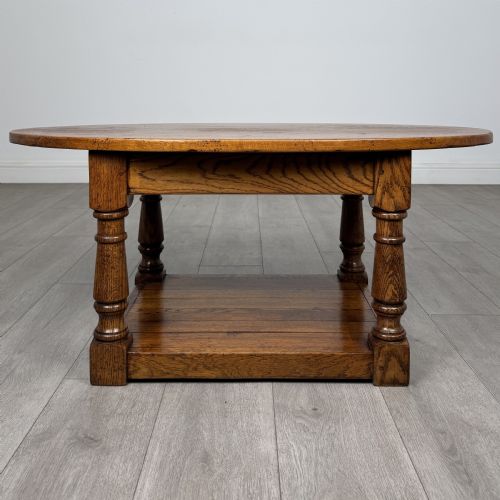
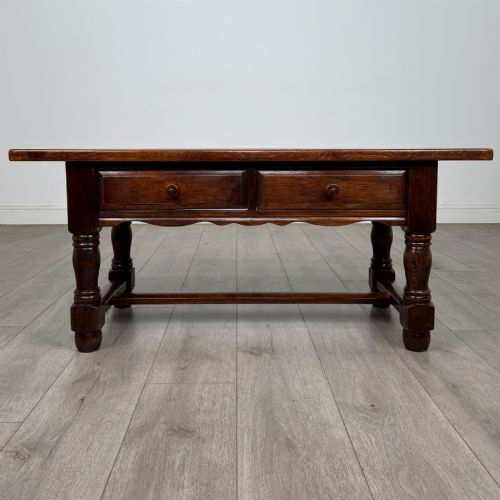
These jacobean revival coffee table pieces bring heavy oak timbers, turned supports and carved details into domestic rooms as low functional surfaces.
Jacobean Revival Coffee Table
A jacobean revival coffee table draws on seventeenth-century motifs to provide a low surface for living spaces. The form adapts historical dining and occasional tables into heights suited for modern seating.
Examples on this page span the Victorian, Edwardian and early twentieth-century decades, particularly the nineteen-twenties and nineteen-thirties. Forms range from gateleg coffee tables and nest of three tables to oval and six-sided occasional tables.
Makers of these pieces utilised traditional British furniture formats, often pairing dark timbers with carved borders and stretcher bases. The resulting tables offer robust construction alongside historical decorative character.
How they were made
Construction relies heavily on oak, complemented by occasional examples in mahogany. Workshops utilised solid timber boards for table tops and structural frames, ensuring long-term durability.
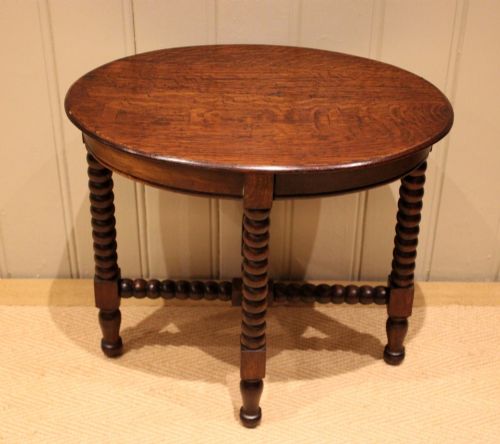
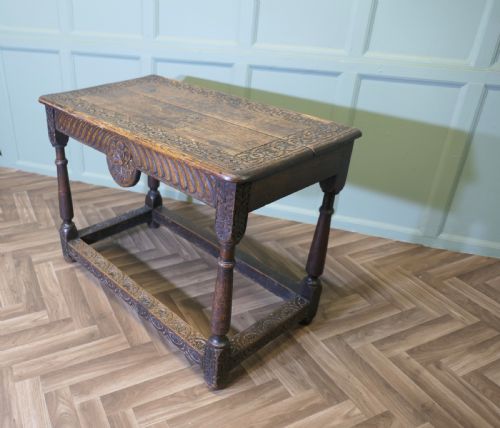
Surface decoration involves hand-carved elements and turned supports such as barley twist legs. Metal fittings appear in select configurations, while leather insets furnish specific tabletop surfaces.
Listings show oak as the dominant material, accompanied by mahogany, leather and metal across Victorian, Edwardian and early twentieth-century periods.
What varies in quality
Quality rests upon the crispness of the carving and the selection of the timber. Tables featuring deeply carved borders and well-figured oak stand apart from plain utility pieces.
The complexity of the structural form also influences the standard of the piece. Nest of three tables or extending refectory mechanisms demand precise joinery compared to simple four-legged occasional formats.
The Jacobean Revival Coffee Table Glossary
- Gateleg table
- A table with hinged flaps supported by swing-out legs. This format allows the surface area to expand or contract depending on space.
- Barley twist
- A spiral turning resembling a twisted rope. This decorative technique appears frequently on table legs and supports during revival periods.
- Refectory table
- A long, narrow table traditionally used for dining. Revival versions scale down the proportions for use as low coffee or side tables.
- Occasional table
- A small, movable table designed for specific, intermittent use within a room. These pieces take various shapes including square, oval and six-sided tops.
Jacobean Revival Coffee Table: Frequently Asked Questions
What is a jacobean revival coffee table?
A jacobean revival coffee table is a low surface inspired by seventeenth-century British furniture design. These pieces incorporate historical characteristics like turned legs and carved oak.
They emerged across the Victorian and Edwardian eras, extending into the nineteen-twenties and thirties. The style suits interiors seeking substantial timber furniture with traditional decorative detail.
How do I date these tables?
Dating relies on construction methods, timber choice and prevailing stylistic trends of the period. Pieces span the nineteenth century through to nineteen-thirty.
Earlier examples often display hand-carved detailing and heavier proportions, while later twentieth-century versions adapt the aesthetic for compact domestic coffee tables.
What woods were used?
Oak is the predominant timber found across these listings, valued for its strength and grain. Workshops also utilised mahogany for specific designs.
Secondary materials include leather tabletop inserts and metal hardware. The choice of wood directly dictates the weight and visual presence of each table.
How do I place one in my room?
These tables function well as central low surfaces in living areas or as side tables beside seating. Their dark timbers anchor brighter modern interiors.
Consider the footprint and height of the specific form, whether a nest of three tables, an oval gateleg, or a refectory format, to match your room layout.