

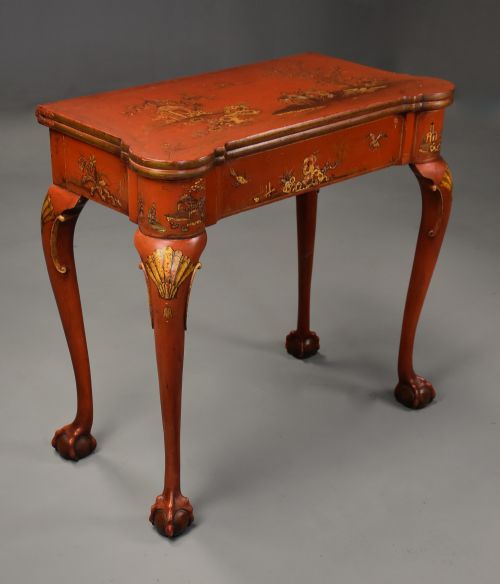


Folding Envelope Games Table
A folding envelope games table unfolds from a compact console into a fully lined playing surface for cards and counters.
Folding Envelope Games Table
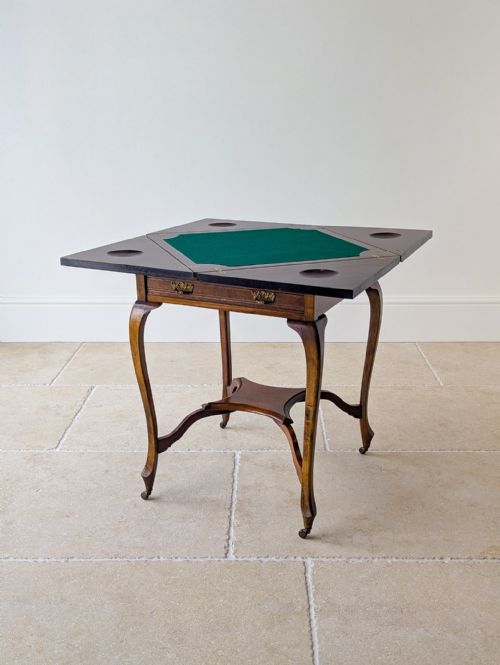
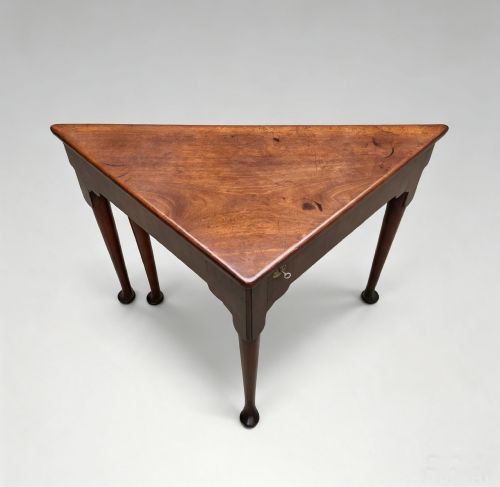
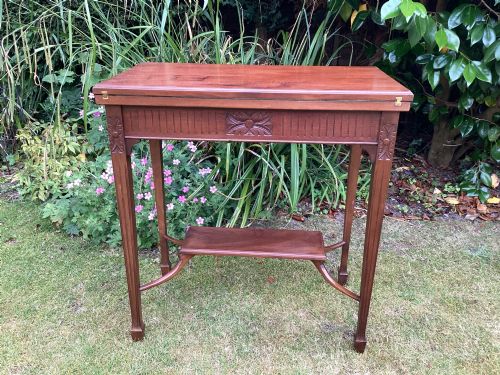
A folding envelope games table is a versatile piece designed specifically for domestic entertainment, transitioning smoothly from a side table to a square playing surface. When you search for a folding envelope games table, you meet pieces predominantly from the Edwardian and Victorian periods, alongside earlier Georgian and 19th-century examples.
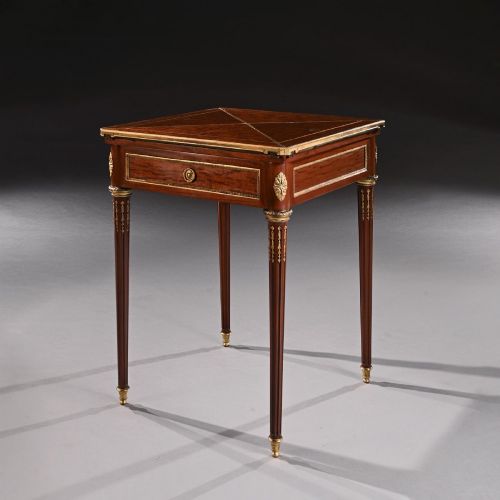
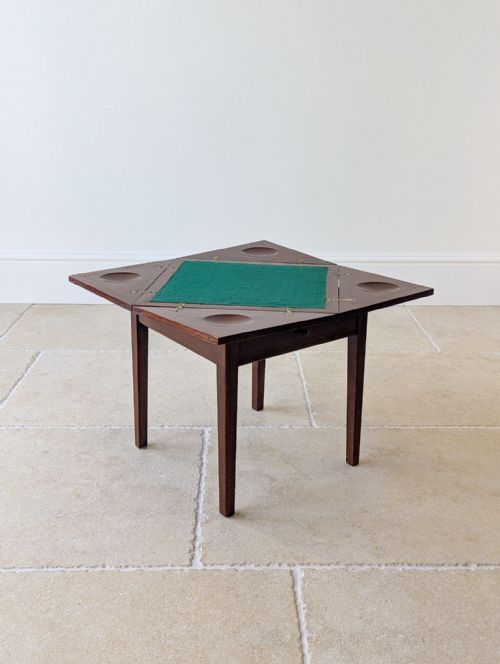
The distinguishing feature of these tables is the clever mechanism where four triangular flaps rotate and fold open to reveal a surface lined with baize. Formats range from standard card tables to occasional tables and specific games tables featuring corner gaming wells for counters and coins.
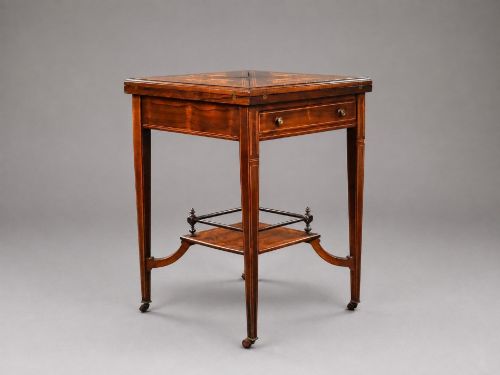
Origins span British workshops as well as continental makers, with styles drawing on Edwardian Chippendale revival, Louis XVI revival, and Chinoiserie aesthetics. They sit comfortably in a drawing room or study, functioning as elegant side furniture when closed and ready focal points for evening card games.
How They Were Made
The ingenious folding mechanism relies on precision woodwork and discreet brass hinges that allow the triangular leaves to pivot outward in unison while the supporting legs move into position. The interior surfaces are traditionally lined with wool baize to provide a tactile, cushioned area for playing cards.
Some tables include hidden compartments designed specifically to store counters and playing cards out of sight.
What Varies in Quality
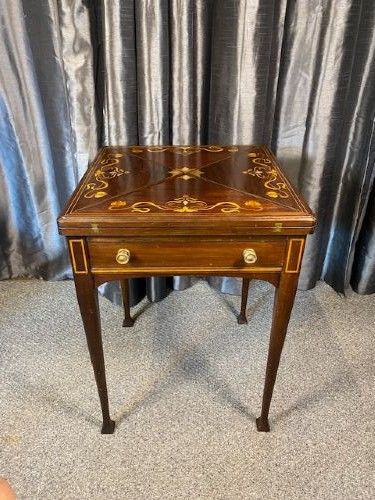
The distinction between standard production and exceptional craftsmanship lies in the selection of timber veneers and the precision of the inlay work. Finer examples display symmetrical grain patterns, crisp brass or satinwood stringing, and hand-carved details that reflect the maker's pedigree.
Antoine Lampre·Maple and Co·Howard and Sons Ltd·Francoise Linke
The Folding Envelope Games Table Glossary
- Baize
- A coarse woollen material used to line the playing surface of card tables, providing a soft texture that protects cards and dampens sound.
- Envelope top
- A clever table top design consisting of four triangular flaps that fold over each other diagonally like an envelope to conceal the playing surface.
- Gaming wells
- Small recessed compartments built into the corners of the table surface to hold counters, chips, and coins during card play.
- Marquetry
- Decorative veneer work arranged in intricate pictorial or geometric patterns using various coloured woods.
Folding Envelope Games Table: Frequently Asked Questions
How do the flaps open?
The four triangular flaps rotate on pivoting wooden arms connected to the central frame. Lifting one leaf causes the opposing leaves to unfold simultaneously into a square.
This synchronized movement creates a stable playing surface without requiring separate pull-out supports for every flap.
Where were they placed?
These pieces functioned primarily as side tables or console tables against drawing room walls during the day. When evening arrived, owners pulled them into the centre of the room for card games.
Their dual nature made them essential furniture for Victorian and Edwardian domestic entertaining.
What are gaming wells?
Gaming wells are small circular or triangular hollows recessed into the corners of the table baize. They held counters, markers, and money securely during play.
Tables featuring these wells were specifically designed for games involving frequent scoring.
How do I date a table?
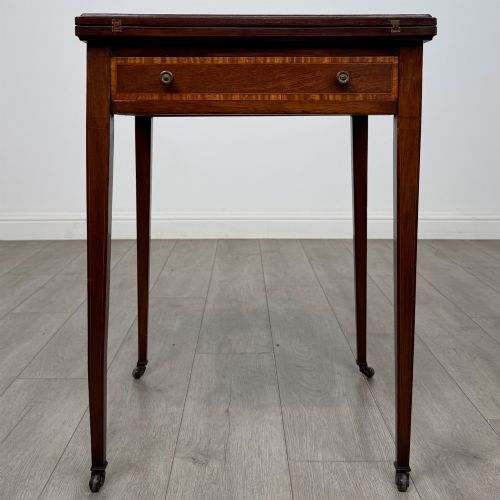
Dating relies on combining the timber choice, decorative style, and structural hardware. Edwardian pieces often feature lighter satinwood inlay and slender tapering legs, while Victorian examples lean toward heavier rosewood and walnut.
Maker stamps and patent brass hinges also provide precise chronological markers.