

Folding Butler Table
A folding butler table is a portable serving surface with a removable tray on a collapsible stand, offering versatile charm for modern living.
What a Folding Butler Table Is
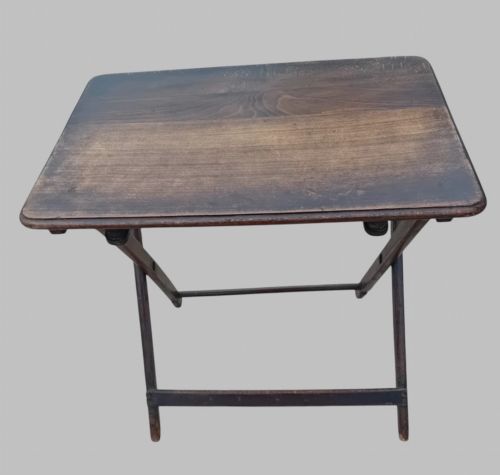
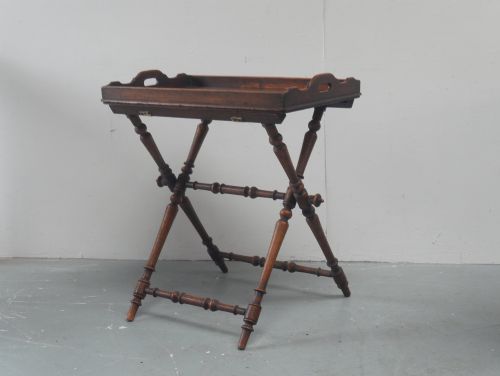
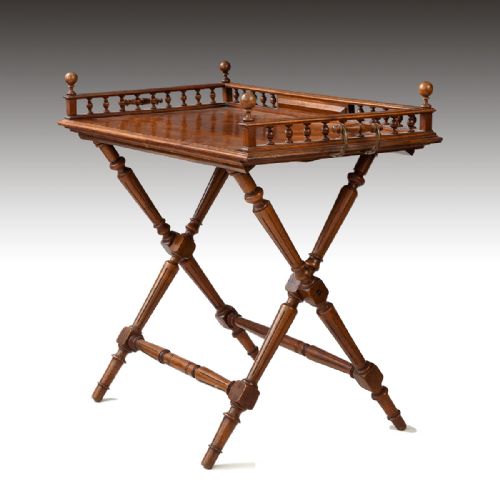
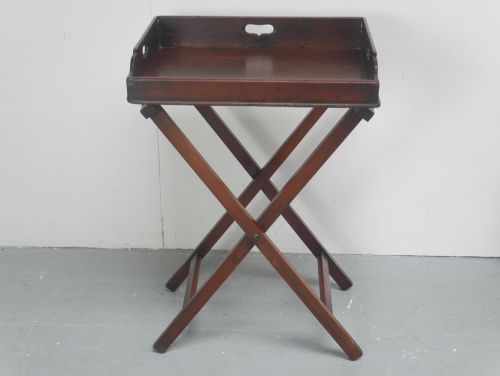
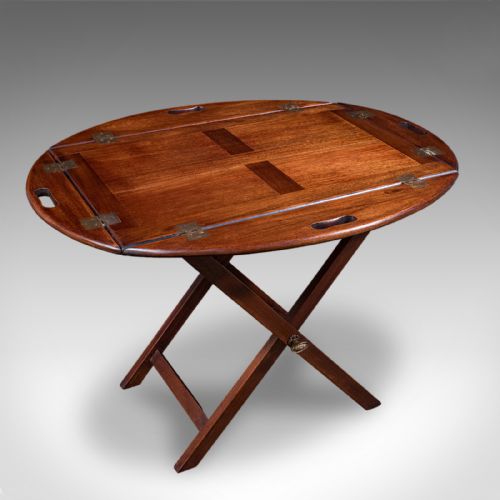
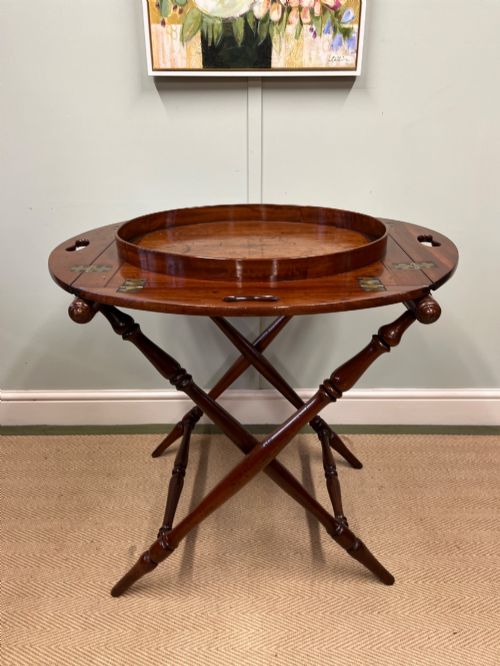
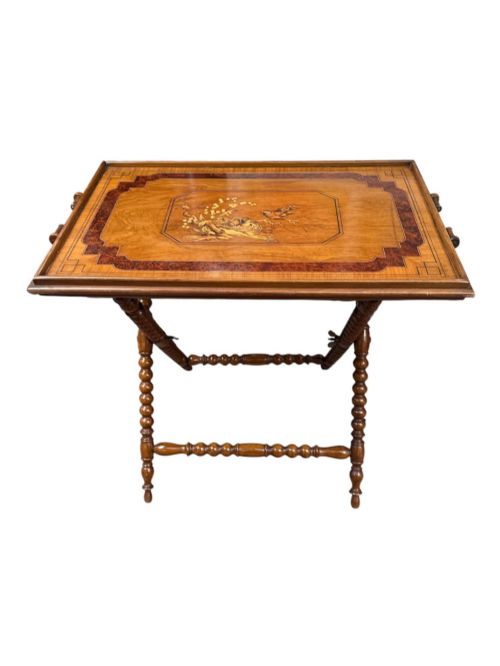
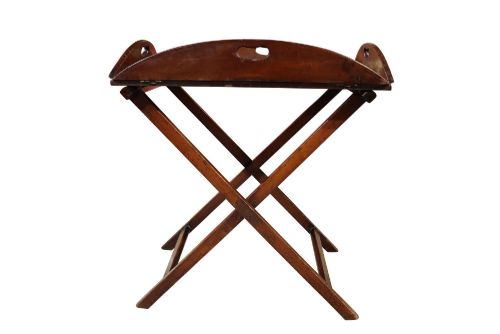
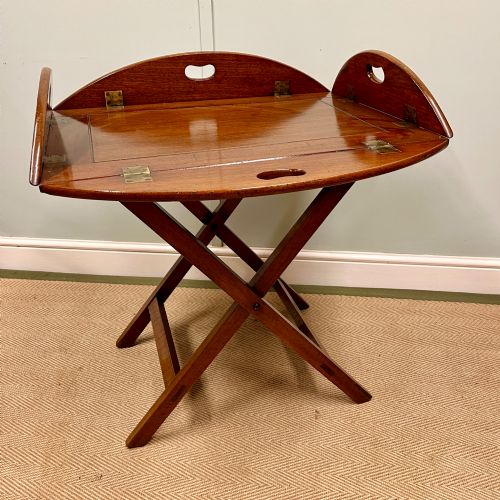
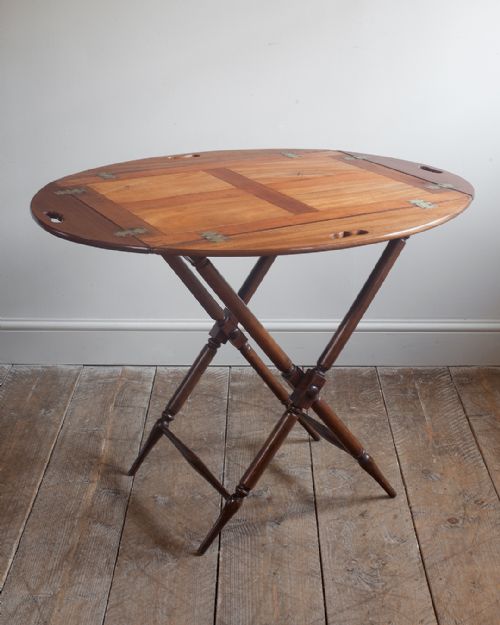
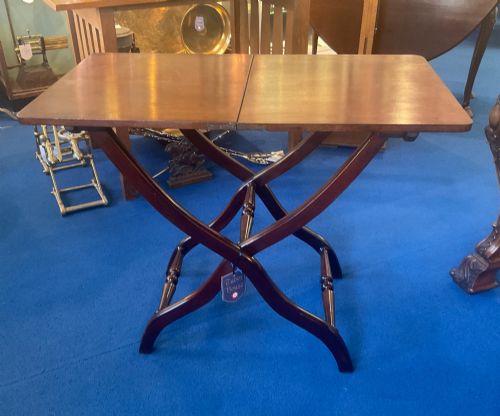
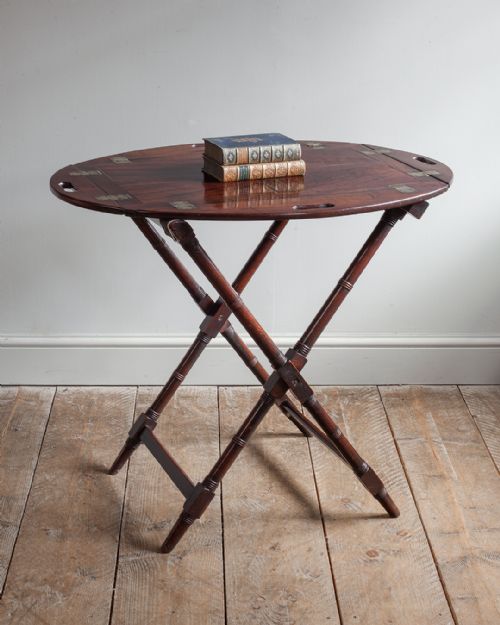
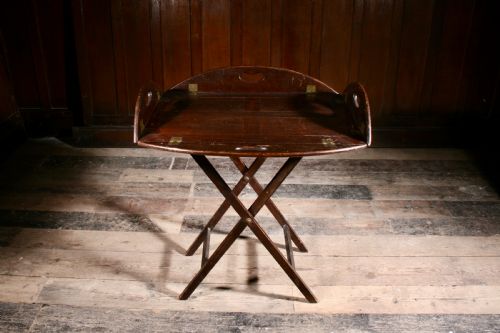
A folding butler table combines a detachable tray with a collapsible X-frame stand, designed originally for portable service. Pieces matching this search phrase span occasional tables and tray tables used for serving tea, wine, or meals.
The versions most commonly met on this page date from the nineteenth century, including Victorian, Georgian, and Regency eras. These examples reflect campaign heritage and domestic service, functioning today as adaptable coffee or side tables.
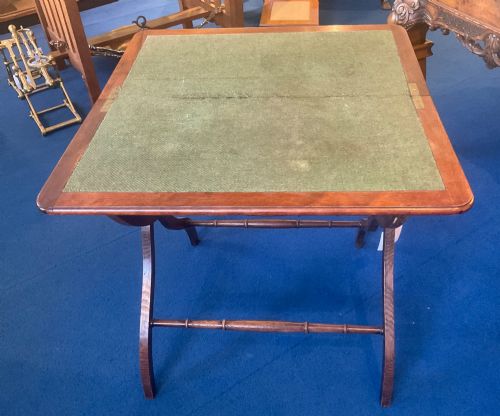
Forms range from simple rectangular trays with cutout handles to circular tops and carved oak or mahogany structures. Stands fold flat for easy storage, maintaining the dual purpose of portability and display.
Materials and Techniques
Construction relies heavily on dense timbers such as mahogany, oak, birchwood, and solid ebony, paired with brass hinges and fittings. Some examples incorporate baize or cotton webbing to secure the folding action and protect the wood surfaces.
Joinery techniques focus on sturdy cross-frame folding mechanisms that support removable trays with raised edges. Carved details appear on select oak and mahogany frames, while other surfaces showcase gilt finishes.
Retail Price Guide 2026
Typical UK retail prices for folding butler table, calculated from the Sellingantiques database of over a million retail prices indexed since 2003. This retail price guide relies exclusively on Sellingantiques data; no external sources or auction records are used, so the figures do not describe the wider market.
Listings feature nineteenth century periods including Victorian, Georgian, and Regency eras.
Distinctions in Quality
Quality rests on the selection of timber, the weight and precision of the brass hardware, and the stability of the folding mechanism. Superior examples feature well-figured grain in the mahogany or oak, alongside crisp carving and tight joints.
Finer pieces maintain a harmonious proportion between the depth of the tray and the height of the stand. Lesser grade items show simpler secondary woods, looser frame tolerances, or replacement hardware.
The Folding Butler Table Glossary
- Butler tray
- A portable wooden tray with hinged or cutout sides designed for carrying service items. It lifts cleanly off its base for separate use.
- Coaching table
- A collapsible wooden stand with a folding base built for travel and military campaigns. It matches the form of the butler table.
- Campaign furniture
- Portable furnishings designed for officers and travellers during the nineteenth century. These pieces feature folding elements and brass mounts.
- Occasional table
- A small, movable table intended for specific, intermittent use in a room. Folding butler tables frequently serve this function today.
Frequently Asked Questions
What is a folding butler table used for?
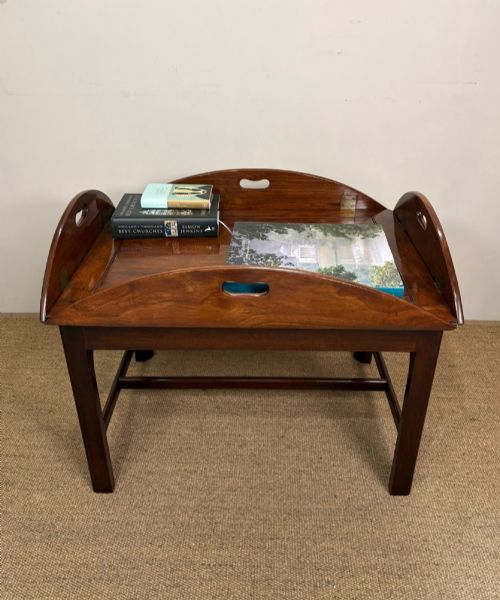
These tables function as versatile surface furniture in living spaces, holding drinks, books, or decorative items. The removable tray allows for serving refreshments directly to guests.
The collapsible design means the entire unit stows away neatly when floor space is required.
How do I date a folding butler table?
Dating relies on identifying timber choices, construction methods, and hardware styles across the nineteenth century. Georgian and Regency pieces often show finer mahogany grains, while Victorian and Edwardian examples introduce varied woods like birchwood or oak.
Examine the brass hinges and the wear patterns on the folding stand for further chronological clues.
Are the trays removable?
The top sits unattached on the folding stand, allowing it to lift off completely. This original feature enabled servants to carry the tray independently of the base.
Modern placement benefits from this dual capability, letting owners use the tray separately from the stand.
How do I care for antique wood surfaces?
Maintain timber surfaces by dusting with a dry cloth and applying natural beeswax periodically to nourish the grain. Keep tables away from direct heat sources and strong sunlight to prevent warping.
Use coasters on the tray surface to protect antique polishes from moisture rings.