
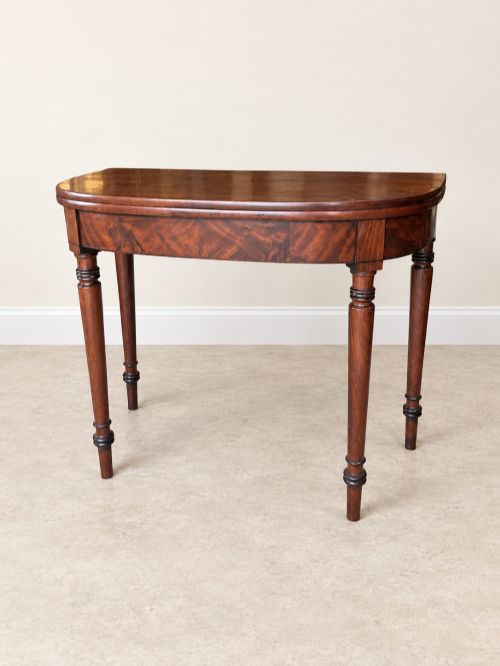


Folded Tea Table
A folded tea table turns from a compact side piece into a surface for hospitality, combining clever mechanisms with rich cabinet timbers.
Folded Tea Table
When you search for a folded tea table, you encounter versatile furniture designed to expand when guests arrive. These pieces double as card tables, console tables, and games tables across several periods.
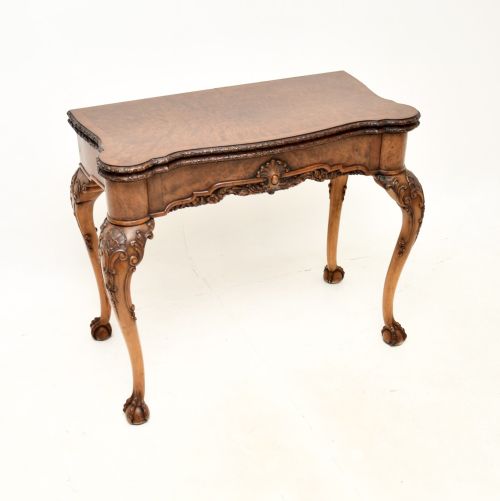
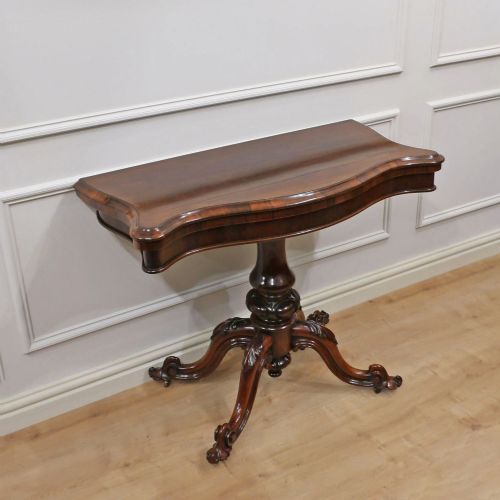
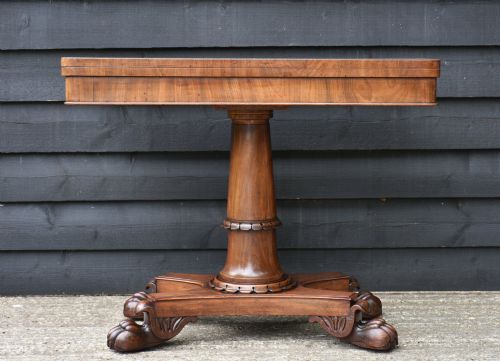
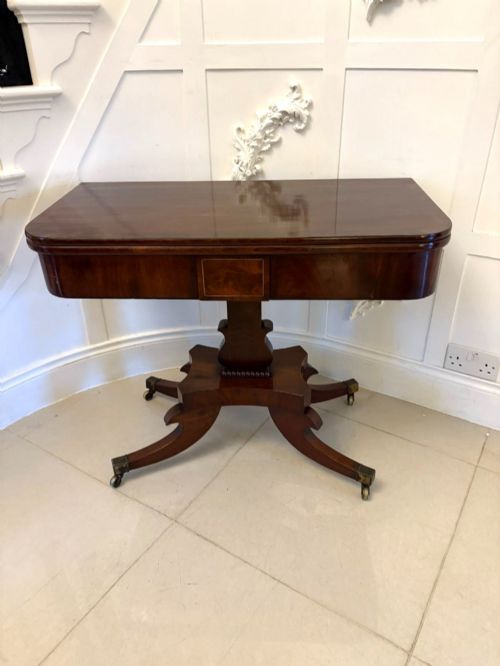
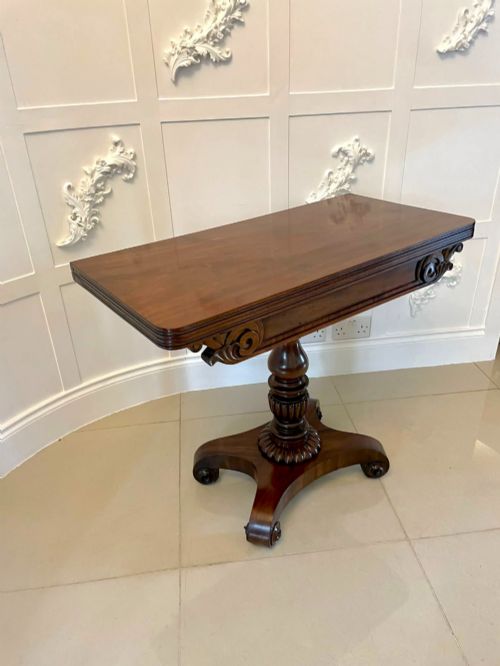
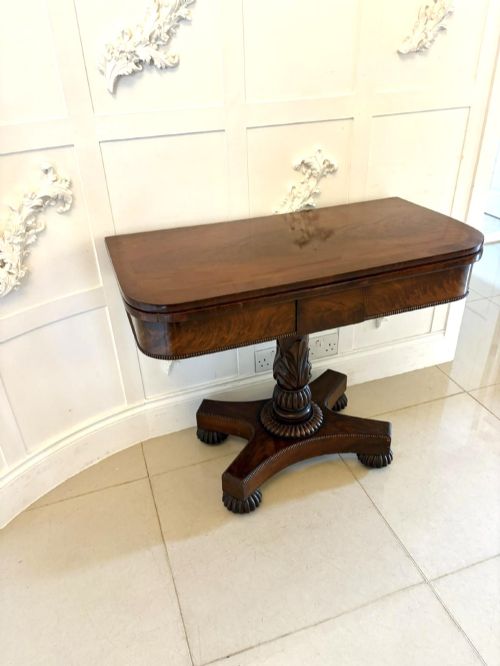
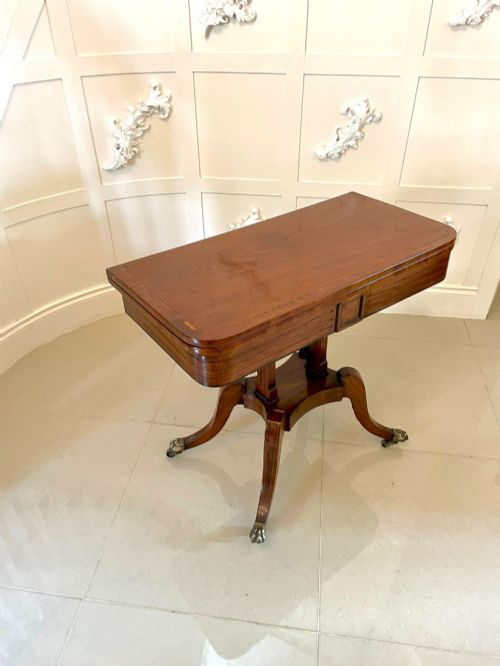
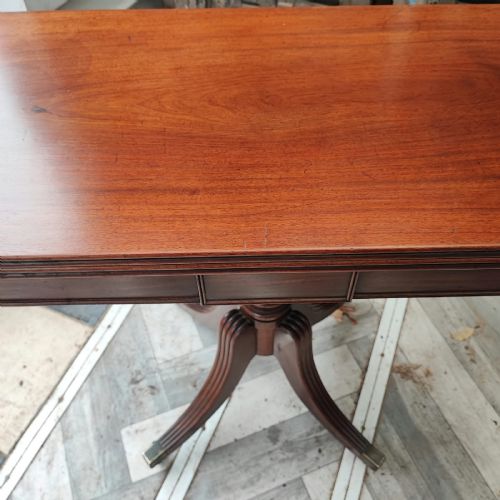
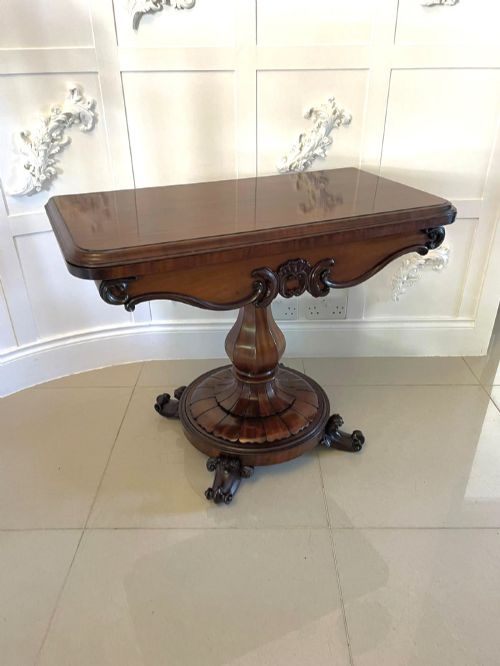
The most common versions on this page date from the Georgian, Regency, and Victorian eras. Mahogany and rosewood predominate, often featuring fold-over or swivel tops supported by clever concertina or scissor actions.
How they were made
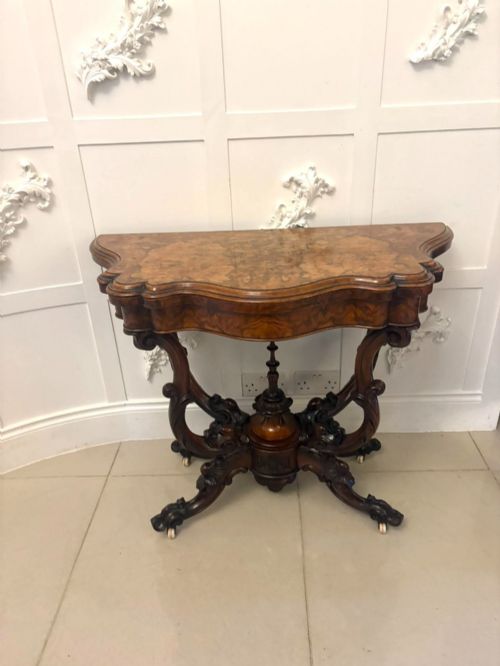
Cabinetmakers utilised solid timbers and fine veneers like mahogany, walnut, and rosewood over secondary woods. Surfaces often received elaborate embellishments including brass inlay, boxwood stringing, and marquetry.
The folding tops relied on specialised hinges, swivel pivots, and concertina frames to support the extra leaf safely. Carved pedestal bases, sabre legs, and folding brackets provided structural stability.
Listings feature tables spanning from the 18th century through the Edwardian period, constructed from mahogany, walnut, rosewood, and satinwood.
What varies in quality
The distinction between ordinary and exceptional examples lies in the selection of figured timber veneers, such as flame mahogany or burr walnut. Finer workshops invested heavily in matched grain patterns across the folding top leaves.
Mechanisms also separate standard builds from superior ones, with smooth concertina actions and heavy brass hardware indicating high craftsmanship. Carved details on bases and legs display sharper chisel work on better pieces.
George Bullock·Gillows·Giles Grendey
The Folded Tea Table Glossary
- Concertina action
- An expanding frame that pulls out like an accordion to support a fold-over top evenly. This design allows all four legs to remain at the corners when opened.
- Demilune
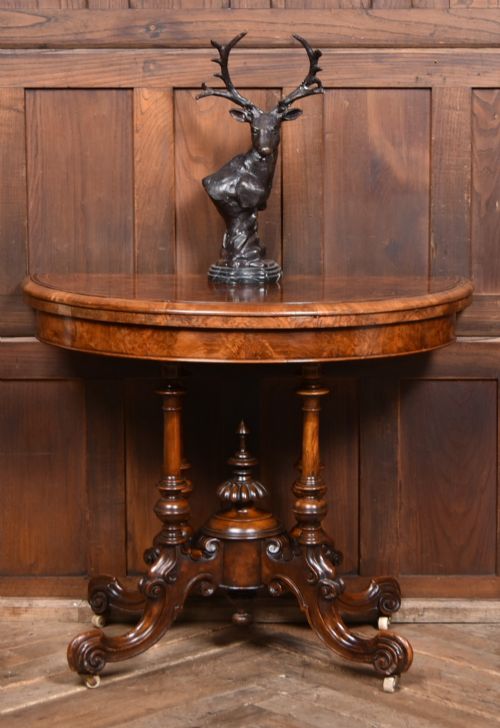
- A half-moon shape popular for console and card tables placed flat against a wall. These surfaces swing open into a full circle when unfolded.
- Marquetry
- Decorative patterns formed by fitting together thin slices of various coloured woods and other materials. Sorrento ware often utilises this technique for intricate pictorial scenes.
- Sutherland table
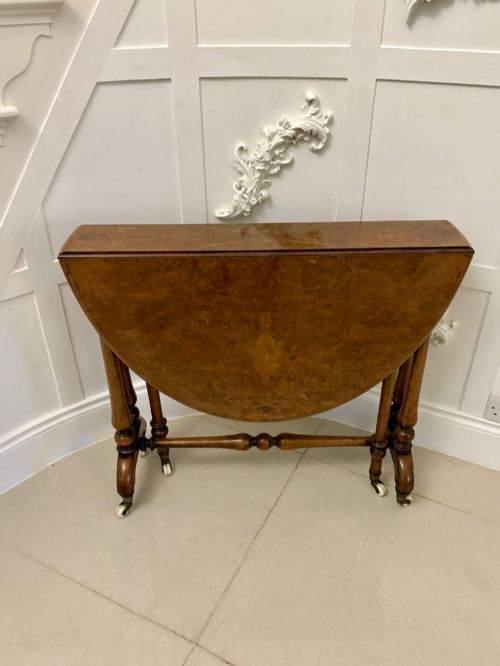
- A narrow drop-leaf table with hinged flaps supported by pivoting gate legs. This form allows the entire piece to fold into a very compact footprint.
- Sabre leg
- A curving, outward-flaring leg with a round or rectangular section tapering toward the foot. This style is frequently seen on Regency examples.
Folded Tea Table: Frequently Asked Questions
How did people use a folded tea table?
These tables stood against a parlour wall holding decorative items until tea time or evening card games. Owners swung the hinged top open and rotated or supported the leaf to create a stable dining or gaming surface.
Once the gathering ended, the leaf folded back down and the table returned to its slim profile against the wall. This dual purpose made them essential for formal entertaining in period homes.
How do I tell a card table from a tea table?
Card tables frequently retain green baize or felt lining inside the folded top to provide a soft surface for playing cards. Tea tables usually feature polished wooden tops across the entire inner surface.
Many examples on this page served both functions interchangeably, functioning as console tables when closed and adapting for cards or tea when opened.
What woods were used for these tables?
Mahogany remains the dominant timber across 18th-century and Regency pieces, often selected with flame or figured grain. Rosewood and walnut gained popularity during the Victorian era.
Craftsmen also incorporated satinwood, boxwood, and brass for inlay work, while specialised pieces utilised burr yew or kingwood veneers.
How do I care for a polished wood surface?
Protect antique wood surfaces from direct sunlight and extreme temperature fluctuations to prevent the veneer from lifting or cracking. Apply natural beeswax periodically and buff gently with a soft cloth.
Avoid placing damp items or hot cups directly on the polished top without protective coasters. Dust the carved details regularly with a dry brush.