
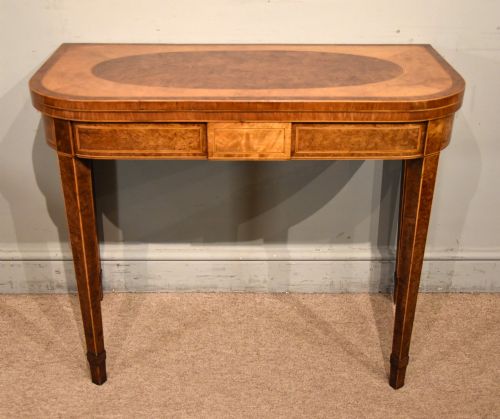
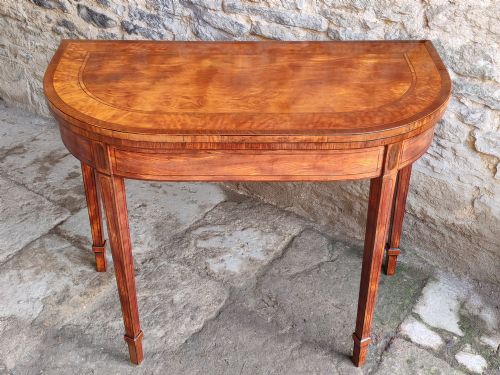
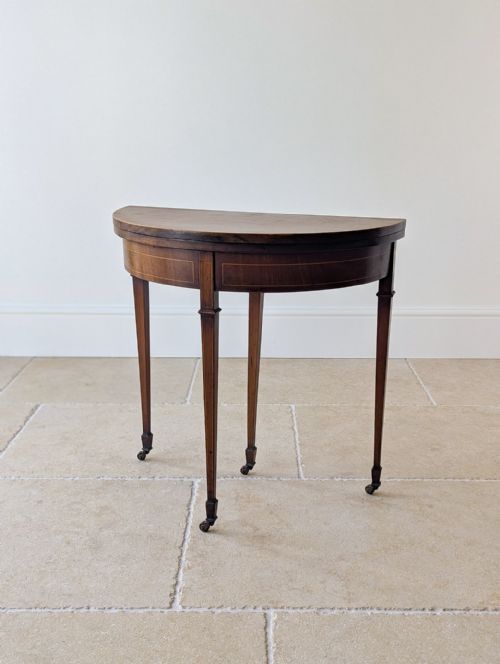
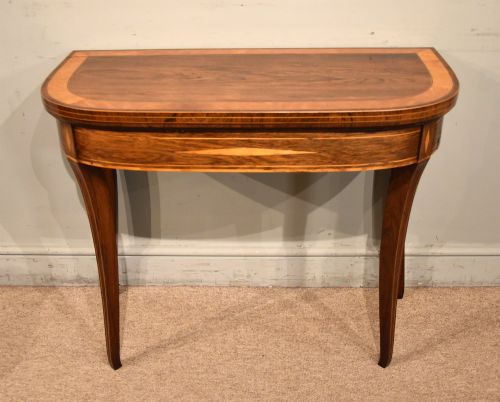


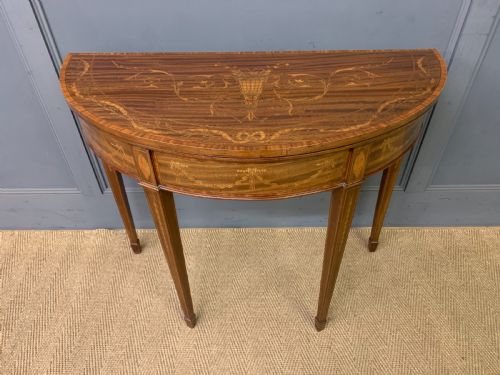

Inlaid Demilune Console
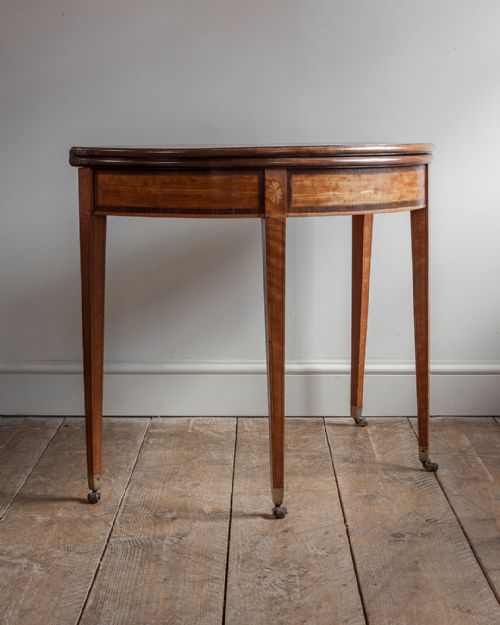
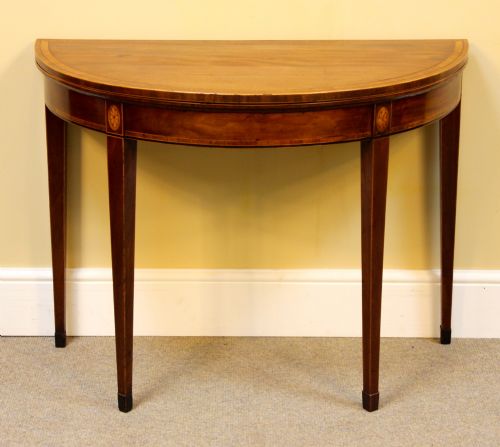
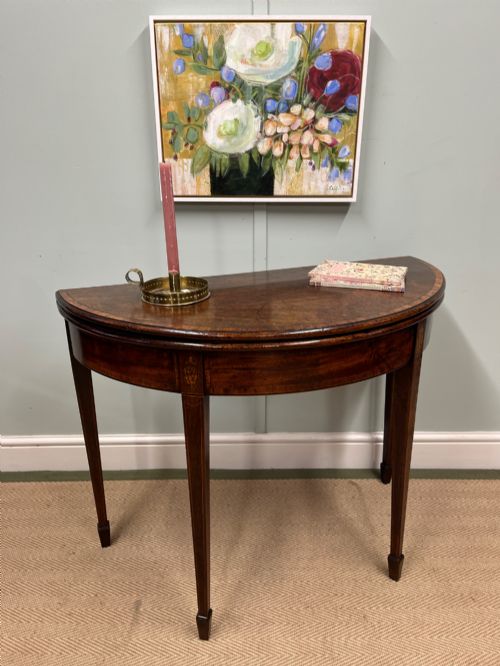
An inlaid demilune console is a semicircular table of distinct elegance, desired for its ability to fit slimly against a wall while offering decorative presence.
Inlaid Demilune Console
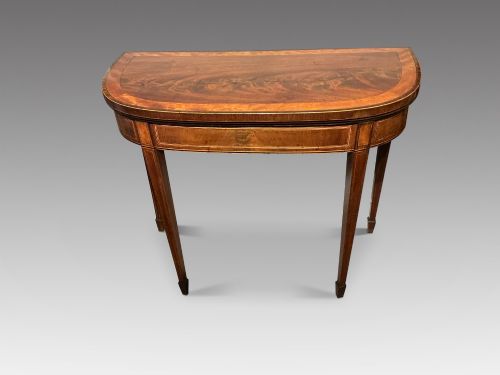
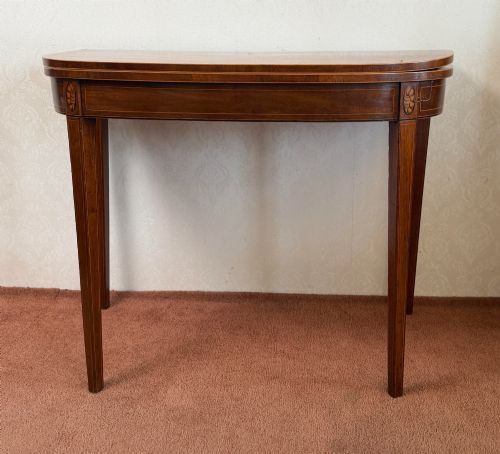
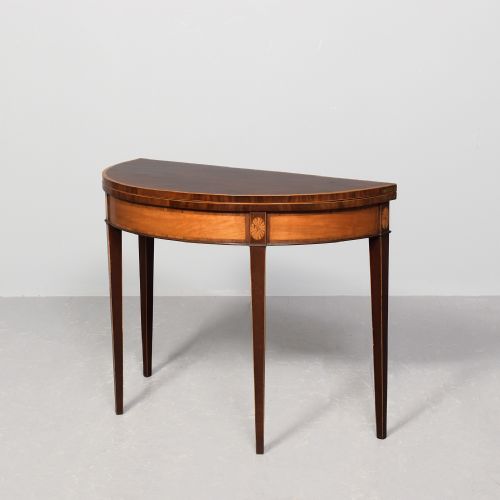
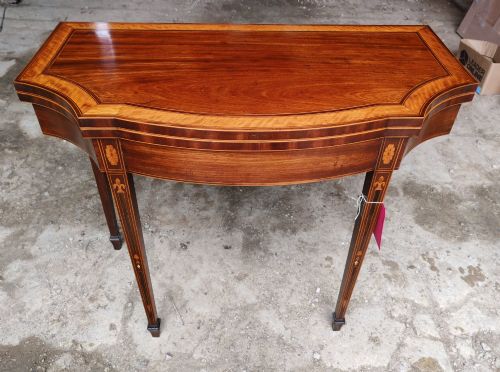
An inlaid demilune console is a semicircular piece designed to sit flush against a wall, combining the profile of a half-circle with decorative surface ornamentation. These tables often appear in formats that double as card tables, tea tables, or side tables, adapting their surface area through hinged tops or static boards.
The versions most commonly found here date from the Georgian and Regency periods, alongside later Edwardian revivals and early twentieth-century interpretations. Mahogany and satinwood form the primary structural and decorative timbers of these pieces, frequently accented with contrasting boxwood stringing and geometric inlay.
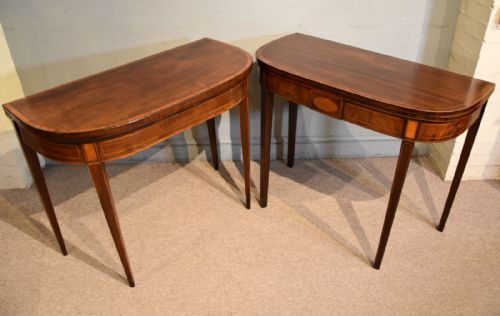
Makers from the eighteenth century onward employed the demilune shape to soften the corners of formal rooms while providing a functional ledge for ornaments, candles, or card games. The survival of pairs within this category indicates that many were originally commissioned to balance a symmetrical interior scheme.
Distinctions in Quality
The distinction between standard workshop production and superior cabinetwork rests on the choice of timber figurations, such as highly figured Honduras mahogany or meticulously selected burr yew wood. Master craftsmen achieved sharper precision in their boxwood stringing and marquetry panels, ensuring the botanical or geometric motifs remained crisp and balanced.
Construction integrity also defines the upper tier of these pieces, visible in the smoothness of the pivot mechanisms on fold-over card tables and the stability of tapered legs. Pieces attributed to documented makers or executed during the primary Sheraton and Hepplewhite periods typically demonstrate higher refinement in proportion and decorative restraint.
Some card tables hide secret spaces beneath their folding tops, originally intended for storing counters and packs of playing cards.
Bruce & Burns of Edinburgh·Edward and Roberts
The Inlaid Demilune Console Glossary
- Demilune
- A table or furniture form shaped like a half-moon or semicircle. This profile allows the piece to stand flat against a wall while projecting minimally into a room.
- Inlay
- A decorative technique where materials such as boxwood, satinwood, or brass are embedded into the surface of a darker wood to create contrasting patterns.
- Marquetry
- An elaboration of inlay where pieces of various coloured woods are assembled to form pictorial or geometric designs across an entire tabletop.
- Crossbanding
- A border of veneer laid around the edge of a tabletop with the grain running perpendicular to the central panel, framing the primary wood.
- Card Table
- A hinged table designed to fold open for gaming, often lined with baize or felt and supported by a swing leg that secures the extended leaf.
Inlaid Demilune Console: Frequently Asked Questions
What is a demilune table used for?
These tables served primarily as ornamental hall or console surfaces, positioned against walls to hold decorative objects or lighting. Many examples also functioned as folding card or tea tables, opening up to accommodate guests during social evenings.
Their shallow profile made them particularly useful in narrow corridors and formal drawing rooms where floor space was at a premium.
How do I identify a Georgian piece?
Georgian tables typically display classical proportions, solid timber construction, and restrained decorative elements such as boxwood stringing or subtle satinwood crossbanding. The legs are frequently straight and tapered, or carved in subtle spade foot designs characteristic of the late eighteenth century.
Examination of the underside and secondary woods reveals hand-cut joinery and signs of age consistent with the Georgian and Regency eras.
Are these tables sturdy enough for daily use?
Most surviving examples have remained stable through centuries of domestic life, provided they receive appropriate care regarding humidity and weight distribution. Fold-over mechanisms require gentle handling to preserve the original hinges and supporting swing legs.
Placing them away from direct heat sources ensures the veneers and timbers remain secure.
What is the difference between inlay and marquetry?
Inlay involves inserting contrasting lines or small shapes of wood, such as boxwood, into shallow recesses carved directly into the solid timber or veneer. Marquetry creates broader pictorial or geometric patterns by assembling an entire puzzle of various wood veneers before applying it to the surface.
Both techniques defined the decorative vocabulary of late eighteenth and nineteenth-century cabinetmakers.