






Fluted Pedestal Wine Table
A fluted pedestal wine table is a compact surface built for quiet utility, offering sturdy elegance where space is tight.
Fluted Pedestal Wine Table
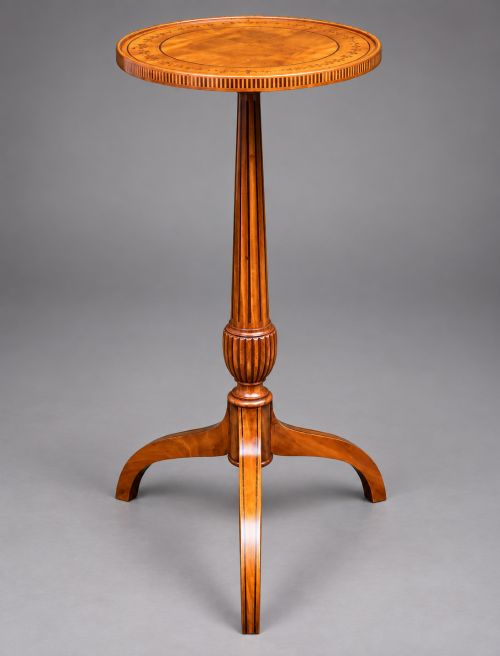
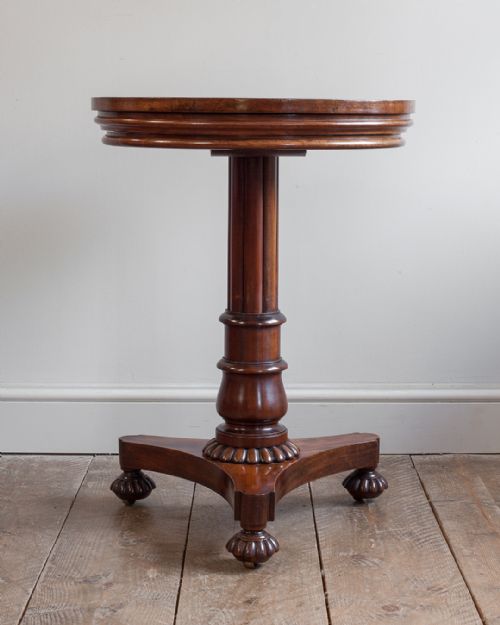
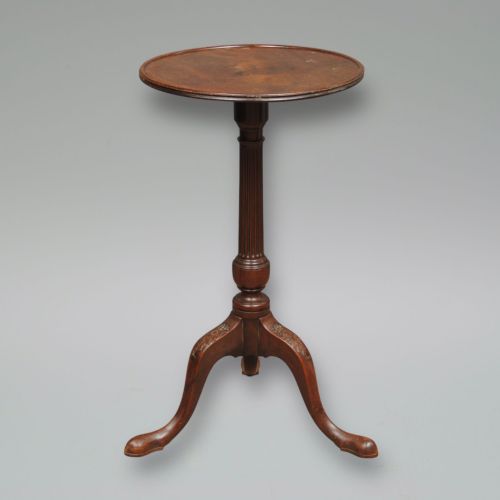
When you search for a fluted pedestal wine table, you find small occasional surfaces designed to hold a single glass or bottle near a chair. These pieces generally rest on a central column supported by tripod legs, standing at a convenient height for seated use.
The versions met on this page range from simple 18th-century mahogany examples with turned stems to elaborate 19th-century satinwood pieces displaying Sheraton style. Formats shift between traditional wine tables, tripod tables, and occasional candlestands.
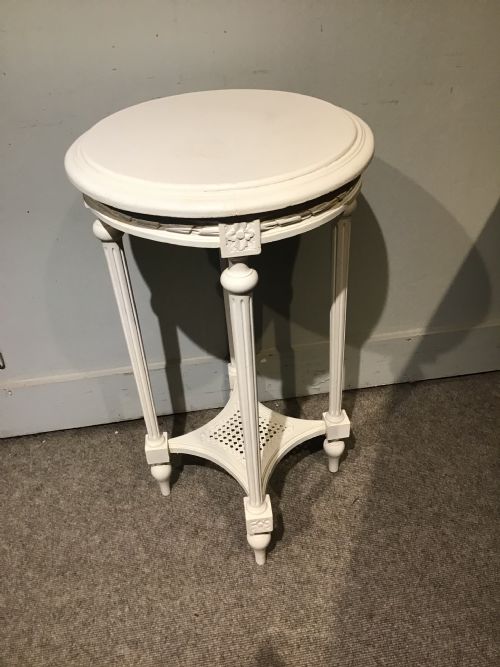
Origins stretch across British, French, and Italian workshops, covering periods from the 18th century through to Edwardian times. Many feature inlaid woods, marble tops, or painted decoration alongside the characteristic turned and carved vertical supports.
How They Were Made
Cabinetmakers built these tables primarily using solid timbers like mahogany and satinwood, frequently employing fine grain selection for top surfaces. Turned columns often incorporate spiral fluting carved directly into the wood.
Decorative elements involve brass or ormolu mounts, gesso details, and intricate inlaid woods forming geometric or floral borders. Painted surfaces and marble inserts appear on continental interpretations, secured with traditional joinery.
Current listings span the 18th century through the Edwardian era, featuring mahogany, satinwood, marble, and brass.
What Varies in Quality
Quality rests on the crispness of the carving on the pedestal stem and the proportion of the tripod base relative to the top. Superior examples display precise joinery where the column meets the legs and the tabletop.
The choice of timber grain and the finesse of any inlay or ormolu mount dictate the visual hierarchy. Tables featuring well-figured mahogany or delicate satinwood sit firmly above plain utility pieces.
The Fluted Pedestal Wine Table Glossary
- Fluting
- Vertical parallel grooves carved into a column or pedestal stem. This classical decorative detail adds visual texture to the central support of the table.
- Pedestal
- A single central column supporting a tabletop. It replaces the traditional four legs to allow more foot room beneath the surface.
- Tripod
- A three-legged base configuration commonly used on small occasional tables. This arrangement ensures stability on uneven floors.
- Satinwood
- A pale, dense hardwood with a natural sheen used for fine cabinetmaking. It often appears in polished veneers or inlaid panels on late periods.
- Ormolu
- Gilt-bronze mounts applied to furniture for decorative effect. This technique was favoured in French Empire and continental designs.
Fluted Pedestal Wine Table: Frequently Asked Questions
What is a fluted pedestal wine table used for?
These tables were originally designed to hold a wine glass or bottle beside a seated guest during evening gatherings. Today, they serve as compact bedside surfaces or display stands for small lamps.
Their modest footprint allows them to fit easily into corners or tight spaces where larger furniture cannot go.
How do I identify an 18th-century table?
Eighteenth-century examples typically display heavy use of solid mahogany with hand-turned pedestal stems and simple tripod legs. Construction methods rely on pegged joints and hand-cut dovetails rather than modern fasteners.
Look for subtle signs of hand-working beneath the top, such as tool marks and natural timber shrinkage over time.
Are these tables stable?
The tripod base design ensures the table remains balanced on three points, even on older uneven floors. The weight of the timber column helps keep the centre of gravity low.
While sturdy enough for everyday items, their light construction means they should not be used to support heavy loads.