




Fluted Mahogany Sofa
A fluted mahogany sofa brings classic lines and rich timber into a room, offering both seating and genuine historic character.
Fluted Mahogany Sofa
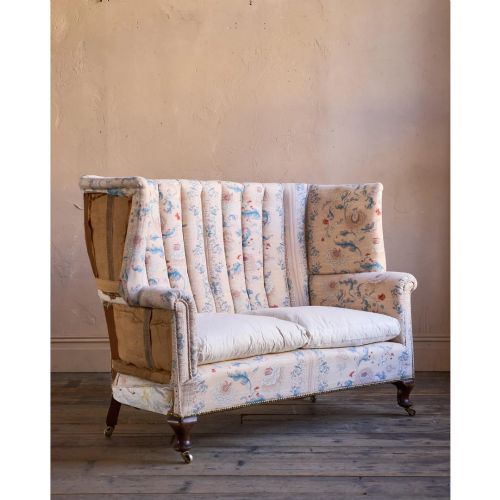
When you search for a fluted mahogany sofa, you encounter seating built from rich timber, often accented with distinctive vertical grooves carved into the woodwork. The examples appearing here span the Georgian, Regency, and Victorian eras, alongside later revival pieces that emulate these earlier aesthetics.
Most pieces combine solid wood frames with seating designed for traditional upholstery, frequently resting on turned or carved supports. You will find variations ranging from wingback designs and serpentine shapes to large country house suites.
Origins stretch across the nineteenth century into the twentieth, encompassing both authentic period craftsmanship and later revivals executed in the established manner.
How they were made
The construction relies heavily on mahogany, selected for its dense grain and deep colour, paired with secondary timbers for internal framing. Artisans shaped the wood by hand, turning legs and carving fluting directly into the timber.
Upholstery techniques involved traditional stuffing secured with hessian and finished with fabric or leather coverings. Brass fittings and castors often completed the lower sections of Regency and Victorian examples.
Fluted Mahogany Sofa Retail Price Guide 2026
Typical asking prices for fluted mahogany sofa among the pieces listed under this phrase on Sellingantiques today, from the lower quarter to the upper quarter. They describe what is for sale here now, not the wider market.
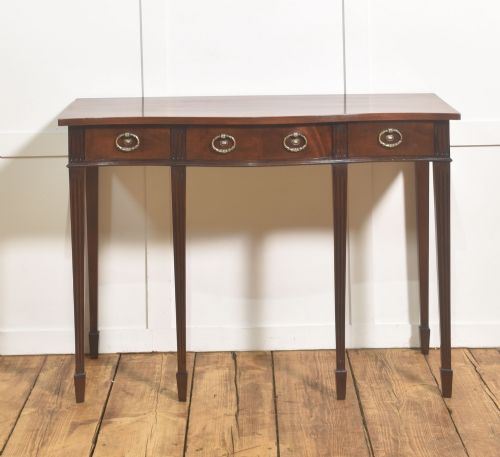
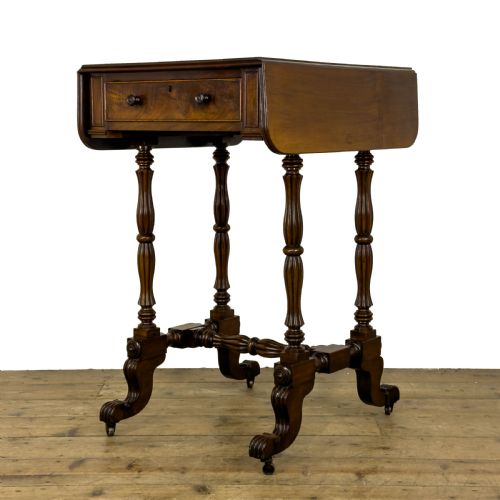
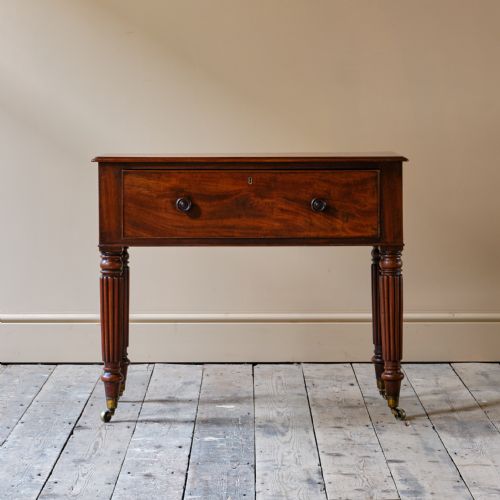
Console tables and work tables frequently accompany sofas in this selection of nineteenth-century and twentieth-century furniture.
What varies in quality
Quality rests upon the crispness of the carved fluting and the selection of the mahogany timber itself. Better examples display balanced proportions, clean joinery, and finely turned supports that reflect confident workshop practice.
The integrity of the frame and the retention of original structural elements distinguish standard production from superior craftsmanship. Revival pieces similarly range from careful interpretations to simpler commercial work.
Gillow Lancaster
The Fluted Mahogany Sofa Glossary
- Fluted
- A series of shallow, parallel grooves carved vertically into a column or furniture leg. This decorative technique originates in classical architecture and lightened heavy timber surfaces.
- Mahogany
- A durable, reddish-brown tropical hardwood prized for furniture making. It resists warping and takes a fine polish.
- Regency
- A British design period spanning the early nineteenth century, characterised by neoclassical influences and restrained elegance. Furniture from this time often incorporates clean architectural lines.
- Serpentine
- A furniture front or edge that curves outward at the centre and inward at the sides. This flowing contour requires precise carpentry.
- Wingback
- An upholstered chair or sofa featuring side panels attached to the arms and framing the back. The design originally protected sitters from draughts.
Fluted Mahogany Sofa: Frequently Asked Questions
How do I identify a Regency period piece?
Regency pieces often display neoclassical motifs, clean architectural lines, and dark mahogany timbers with restrained brass detailing. Look for proportions and construction methods typical of the early nineteenth century.
Compare these traits against later revival items, which can mimic the style using twentieth-century materials or machine-cut joinery.
What is fluting on furniture?
Fluting consists of shallow parallel grooves carved into wooden components like legs or columns. It creates vertical emphasis and textural contrast against smooth timber surfaces.
This decorative choice draws directly from classical architecture, appearing frequently on classical revival and Georgian furniture.
How should I care for mahogany timber?
Maintain mahogany by keeping it away from direct sunlight and sudden temperature shifts to prevent the wood from drying out or splitting. Dust regularly with a soft, dry cloth.
Avoid silicone-based polishes, opting instead for traditional beeswax applied sparingly to preserve the natural grain and lustre.
Are these sofas suitable for daily use?
Historic and revival sofas function well in modern interiors provided the internal framing and support webbing remain sound. Many survive in robust condition after centuries of domestic service.
Upholstered components can be updated or restored to suit contemporary comfort preferences while preserving the underlying antique frame.