


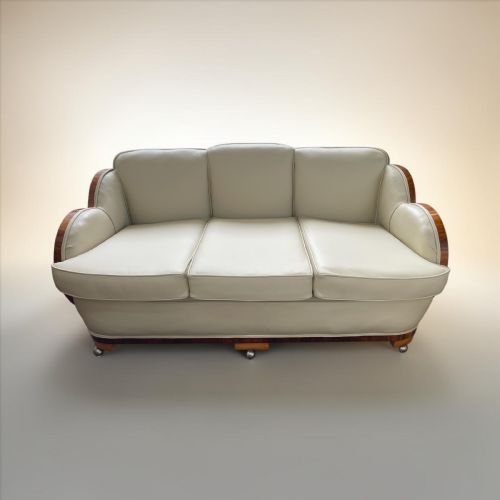


Leather Three Seater Sofa
A leather three seater sofa brings immediate warmth and grounded comfort to a room, ranging from robust Victorian chesterfields to streamlined Art Deco designs.
Leather Three Seater Sofa
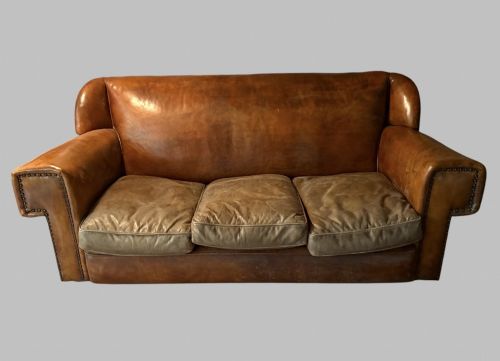
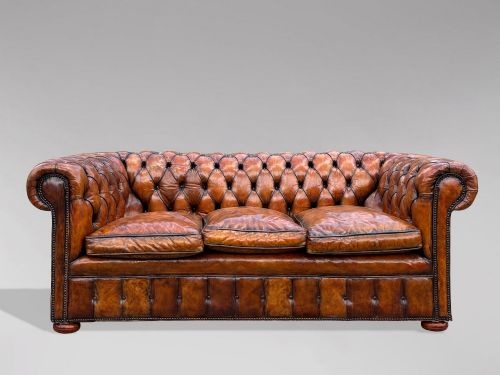
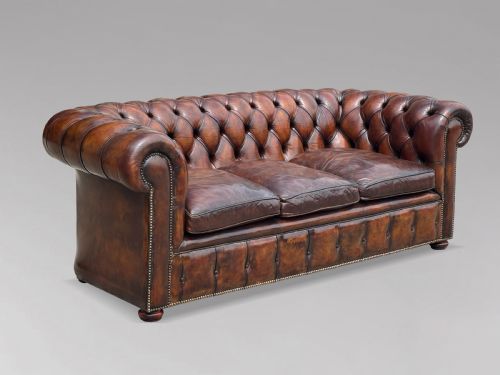
A leather three seater sofa spans several distinct eras, appearing most frequently as a deep-buttoned chesterfield from the nineteenth century or as a rounded cloud shape from the nineteen-thirties. These substantial pieces provide generous seating while anchoring a room with rich patinated hide and traditional craftsmanship.
The selection ranges from Victorian and Edwardian country house settees to striking Art Deco frames associated with makers such as Harry and Lou Epstein. Buyers encounter sturdy mahogany and walnut underframes paired with supple brown, tan, or whiskey leather upholstery.
Victorian examples often feature traditional tufting and moustache backs, whereas nineteen-thirties designs lean into smooth walnut veneers and bulbous silhouettes. Each period brings a distinct architectural weight and seating posture to the domestic interior.
Materials and construction
Makers constructed the foundational frames of these sofas using hardwoods such as walnut, mahogany, maple, and general hardwood, often applying walnut veneer for decorative finish. Solid timber frameworks ensured structural longevity capable of supporting continuous daily use.
Upholstery relied on durable leather hide, sometimes complemented by brass details and metal support elements. Craftsmen secured the leather using deep buttoning and meticulous hand-dying techniques to achieve varied shades from deep brown to warm tan.
Leather Three Seater Sofa Retail Price Guide 2026
Typical asking prices for leather three seater sofa among the pieces listed under this phrase on Sellingantiques today, from the lower quarter to the upper quarter. They describe what is for sale here now, not the wider market.
Quality variations
The standard of a leather three seater sofa depends largely on the integrity of its original timber frame and the depth of the hand-finishing on the hide. Superior examples retain substantial walnut or mahogany structures that support rigorous deep buttoning without compromising frame stability.
The treatment and ageing of the leather differentiate standard utility pieces from exceptional ones. Richly patinated, hand-dyed hides that show natural grain and careful stitching elevate the overall presence and tactile character of the sofa.
Harry and Lou Epstein
The Leather Three Seater Sofa Glossary
- Chesterfield
- A traditional style of sofa characterised by deep button tufting and rolled arms of the same height as the back. This form originated in Britain and remains a staple of leather seating.
- Moustache back
- A distinctive curved upper backrest frame resembling the shape of a Victorian moustache. It adds sculptural interest to nineteenth-century settee designs.
- Cloud shape
- A rounded, bulbous upholstery style popular during the Art Deco period. These curving forms contrast sharply with the linear geometry of earlier Victorian furniture.
- Walnut veneer
- A thin layer of valuable walnut wood applied over a secondary timber base. It provides decorative figuring on nineteen-thirties frames without requiring solid expensive timber throughout.
- Buttoned leather
- An upholstery technique where leather is pulled tight and secured with deep buttons to create a diamond pattern. This method holds internal stuffing firmly in place while adding texture.
Leather Three Seater Sofa: Frequently Asked Questions
How do I care for antique leather?
Antique leather benefits from regular dusting and occasional specialist conditioning to keep the hide supple and prevent cracking. Avoiding direct sunlight and strong heat sources preserves the natural patina over decades of use.
Gentle cleaning with appropriate balms maintains the colour depth of hand-dyed finishes without stripping the historic surface.
What defines an Art Deco sofa?
Art Deco sofas from the nineteen-thirties utilise smooth walnut veneers, cloud-shaped curves, and streamlined silhouettes. They depart from the heavy buttoning of Victorian pieces in favour of bold, rounded upholstery.
These designs often pair rich wood elements with whiskey or tan leather hides to create a balanced modernist aesthetic.
Are these sofas comfortable for daily lounging?
Nineteenth and twentieth-century leather sofas offer deep seating proportions designed for sustained relaxation. Overstuffed chesterfields and club sofas provide robust physical support through traditional sprung interiors.
Their generous three-seater length accommodates multiple occupants comfortably while maintaining structural rigidity.
How do I distinguish Victorian from later styles?
Victorian models typically feature dark hardwood frames, pronounced button tufting, and traditional rolled arms. Edwardian and later pieces introduce lighter timbers like mahogany and simpler, cleaner profiles.
Nineteen-thirties examples further diverge through bulbous cloud shapes and polished walnut veneer finishes.