
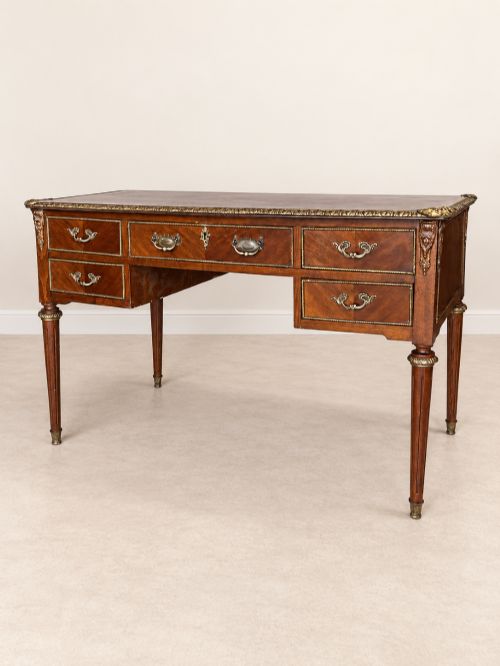
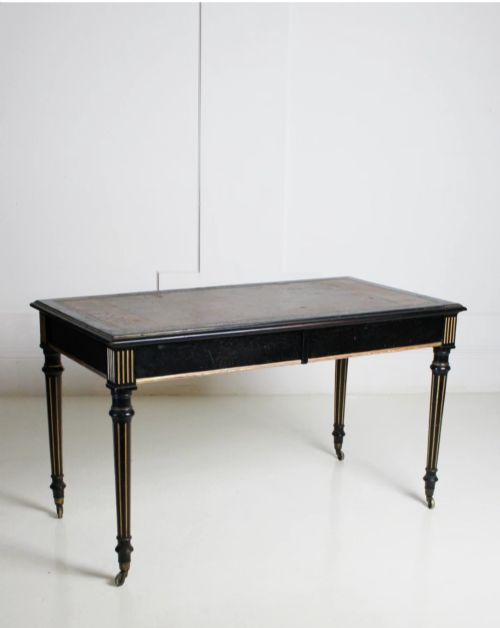
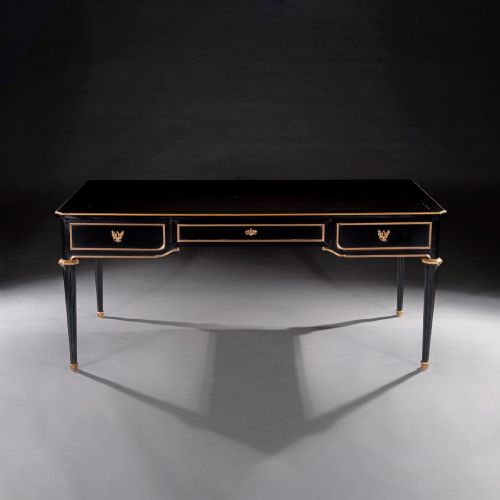
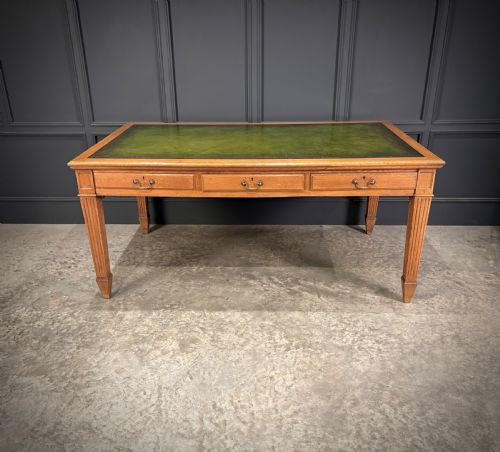

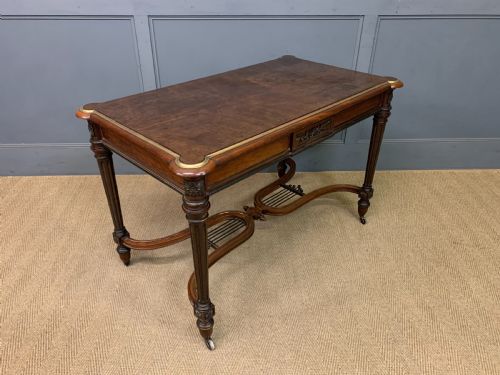


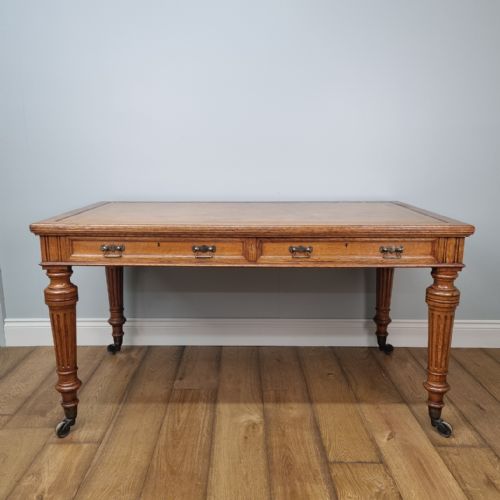
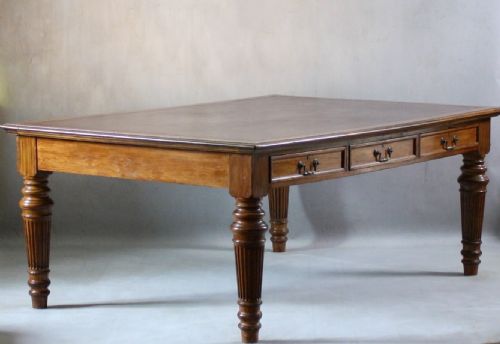
Fluted Leg Library Table
A fluted leg library table balances sturdy utility with refined classical proportion, offering a grand writing surface for any study.
Fluted Leg Library Table
A fluted leg library table is a substantial piece of furniture designed for reading, writing, and administrative work in domestic or institutional settings. These tables typically feature rectangular writing surfaces, often inset with leather, alongside functional drawers for papers and stationery.
The examples seen on this page span several distinct periods including the Georgian era, the Regency period, and the nineteenth century, alongside later revivals. Formats range from freestanding centre tables to large partners desks and bureau plat designs.
Makers drew upon classical architectural motifs, translating stone carving traditions into finely turned and fluted wooden supports. Buyers seeking this form will encounter both English mahogany iterations and French pieces adorned with gilt mounts.
How they were made
Makers relied primarily on mahogany and oak as the structural timbers for these tables, selecting dense grain for stability and carved detail. Cabinetmakers shaped the signature fluted legs by hand, gouging vertical channels into the timber to emulate classical columns.
Many surfaces incorporated tooled leather writing inserts, fixed securely within moulded wooden borders. Brass hardware, ormolu mounts, and gilt bronze details completed the construction on finer French and English models.
The selection spans from eighteenth-century pieces through the Victorian era and into the twentieth century.
What varies in quality
Quality in a fluted leg library table rests upon the precision of the timber selection and the crispness of the carved fluting on the legs. Superior pieces display harmonious proportions where the weight of the top matches the robustness of the underframe.
The secondary timbers used within drawer construction and the quality of the dovetailing reveal the standard of workshop execution. Furthermore, original brass handles, integrated leather inserts, and well-executed ormolu mounts elevate the standing of a piece.
W. Priest·Henry Dasson·Johnstone Jeanes and Co·Gillows
The Fluted Leg Library Table Glossary
- Fluting
- Vertical rounded grooves carved into columns or furniture legs for decorative effect. This classical detail draws the eye downward and lightens the appearance of heavy timber supports.
- Bureau Plat
- A French freestanding writing table, typically fitted with drawers across the frieze. These tables are finished on all sides so they can stand in the centre of a room rather than against a wall.
- Partners Table
- A large desk designed with drawers on both opposing sides, allowing two people to work face-to-face. They often feature extensive mahogany surfaces and robust pedestals or legs.
- Ormolu
- Gilt bronze ornamentation applied to furniture, popular in French cabinetmaking. The technique involves a mercury and gold amalgam fired onto cast bronze.
- Campaign Table
- Portable furniture designed for military officers on the move, often featuring clever folding mechanisms and recessed brass handles. These pieces combine practicality with robust timber construction.
Fluted Leg Library Table: Frequently Asked Questions
Where should I place a library table?
These tables work well freestanding in the middle of a study or home office, particularly finished bureau plat and partners formats that look correct from every angle.
Position the table away from direct heat sources to protect the timber and any leather writing surfaces from drying out.
How do I care for a leather top?
Clean the leather surface gently with a dry or barely damp cloth, avoiding harsh chemical cleaners that can strip the natural finish and gold tooling.
Applying a specialist leather balsam periodically helps maintain suppleness and prevents cracking over time.
Can I use a library table for daily work?
Many buyers utilise these tables as functional desks for laptops and paperwork, benefiting from the generous surface area and sturdy construction.
The inclusion of frieze drawers provides convenient storage for modern stationery and devices.
How do I distinguish Regency from Victorian examples?
Regency tables often display restrained classical lines, sometimes drawing inspiration from ancient Greek and Roman forms with sabre or turned legs.
Victorian pieces tend to be heavier in scale, frequently utilising rich mahogany and incorporating deeper mouldings.