



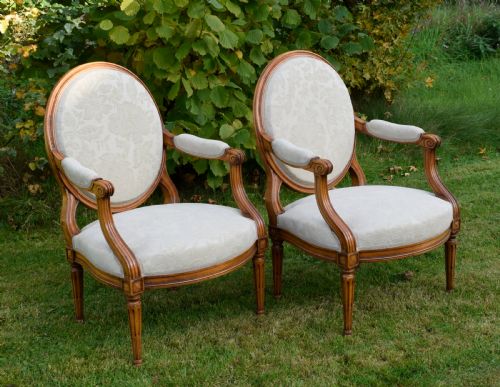
Fluted Leg Fauteuils
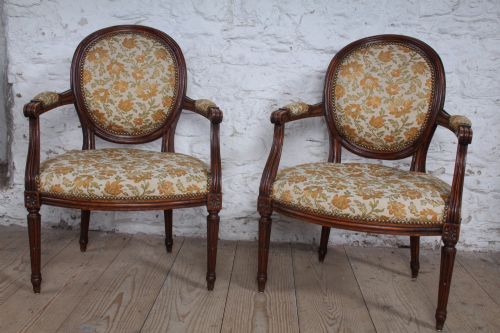
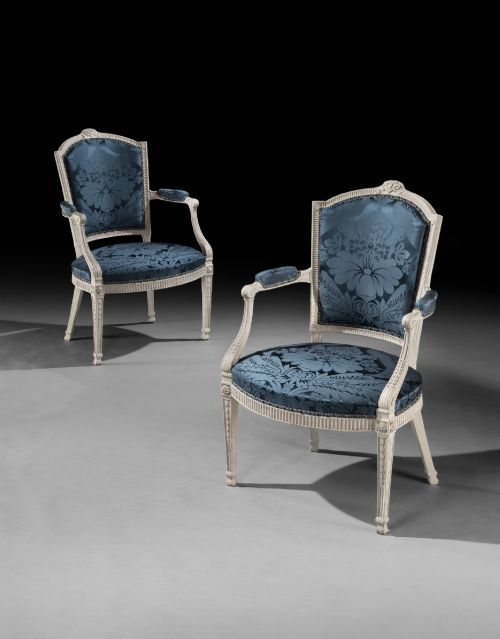
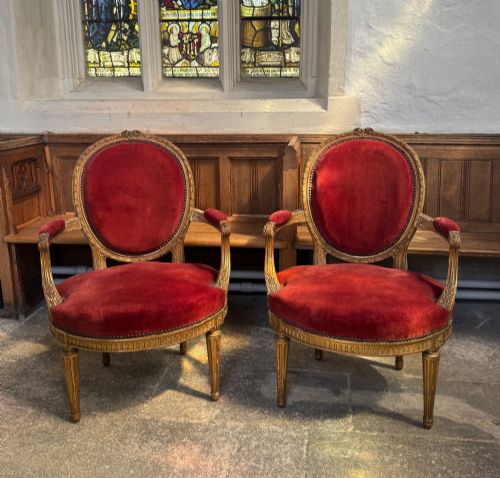
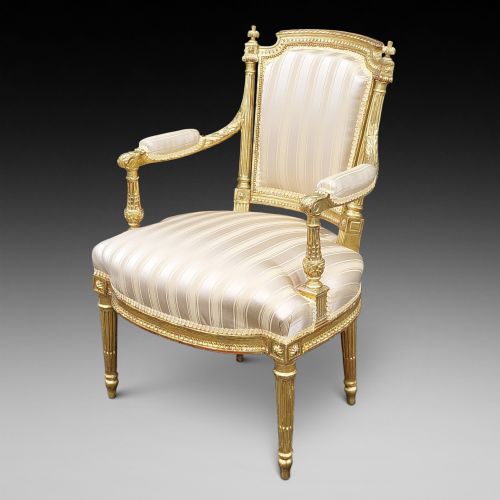
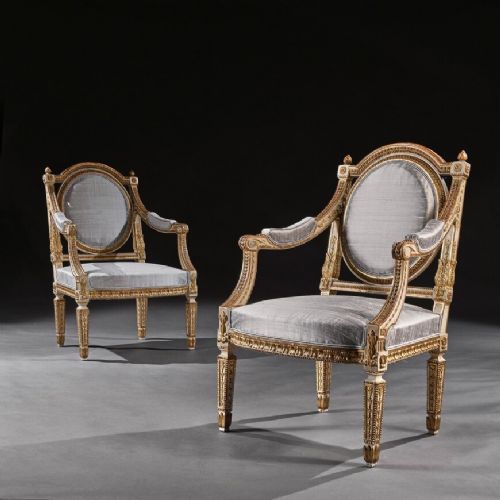
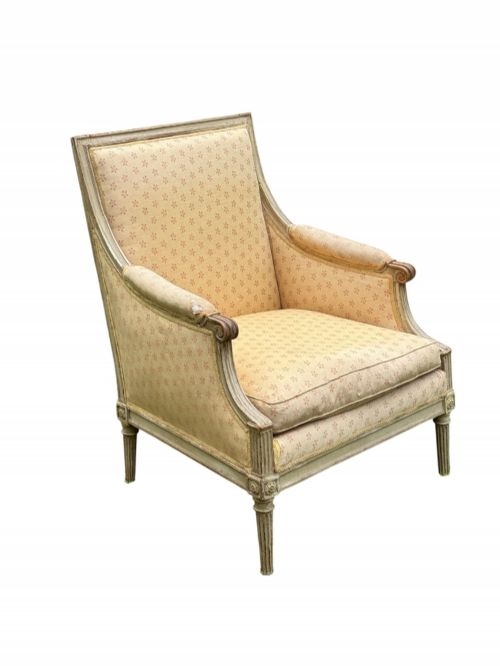
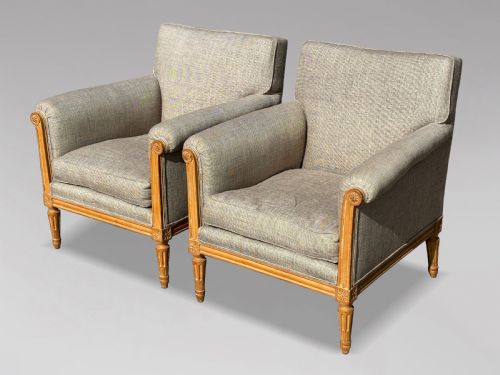
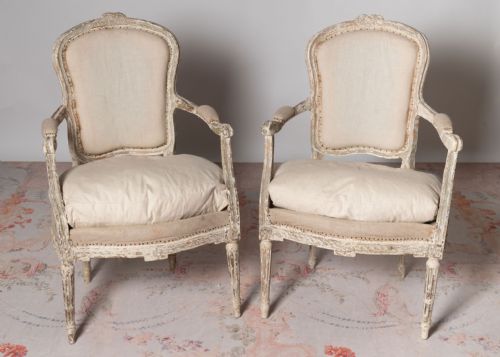
Fluted leg fauteuils are French-inspired open armchairs defined by columnar, channel-carved supports that bring classical proportion to any room.
Fluted Leg Fauteuils
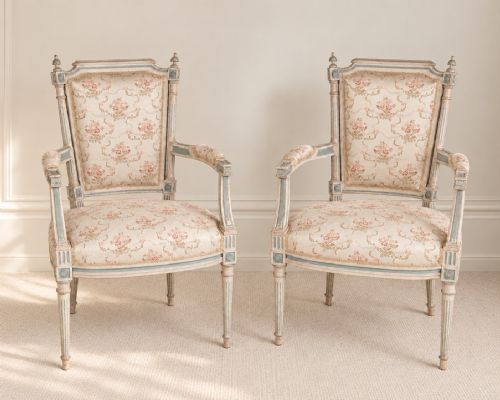
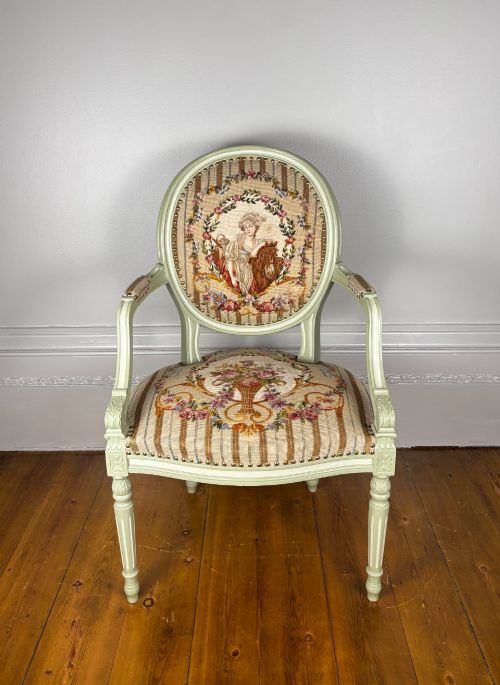
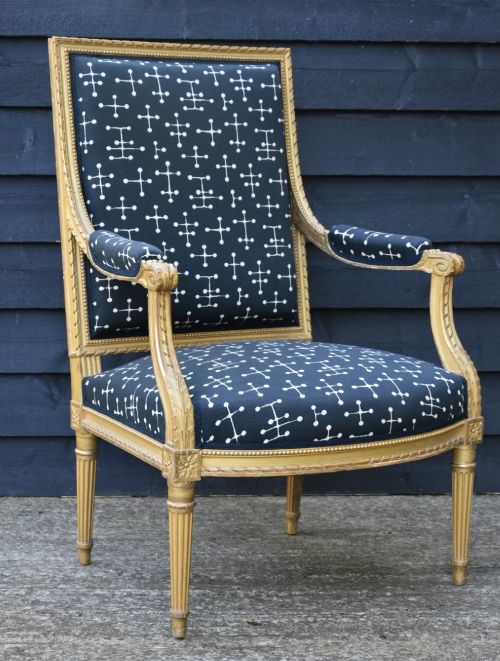
When searching for fluted leg fauteuils, buyers encounter elegant seating dating from the eighteenth century through to the early twentieth century. The selection spans authentic period examples alongside later revivals, including Louis XVI style pieces and Edwardian interpretations.
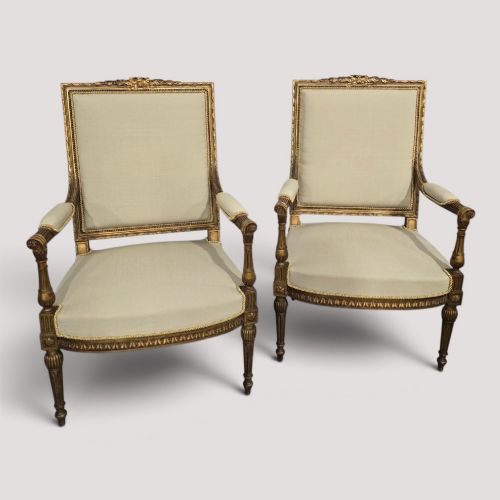
Most examples appear as pairs of armchairs or salon chairs upholstered in various fabrics, silk damask, and textiles. Alongside standard armchairs, related forms like settees occasionally share the characteristic channel-carved supports.
How they were made
Joinery relies on solid timbers such as beech, walnut, and mahogany, shaped into supportive frames with open armrests. Carvers applied precise vertical channels into the wooden legs to mimic classical columns.
Surface finishes include painted wood, parcel gilt, and full giltwood treatments. Upholstery methods evolved across periods, securing textiles and silk damask over internal stuffing.
Fluted Leg Fauteuils Retail Price Guide 2026
Typical asking prices for fluted leg fauteuils among the pieces listed under this phrase on Sellingantiques today, from the lower quarter to the upper quarter. They describe what is for sale here now, not the wider market.
Listings span from the eighteenth century through the Edwardian era, featuring painted wood, beech, walnut, and giltwood finishes.
What varies in quality
The distinction between standard items and superior examples lies in the crispness of the wood carving along the fluted supports and frame details. Hand-carved depth and precision outshine softer, machine-milled lines on later revivals.
Original surface treatments carry more weight than stripped or later re-painted finishes. Original giltwood and early painted wooden surfaces hold greater integrity than later coats.
Henri Jacob
The Fluted Leg Fauteuils Glossary
- Fauteuil
- An open-arm armchair with an exposed wooden frame, typically originating from France. These chairs feature upholstered seats and backrests flanked by open wooden armrests.
- Fluted leg
- A columnar furniture support carved with vertical parallel grooves. This detail draws directly from classical architecture.
- Giltwood
- Timber coated with a thin layer of gold leaf or gesso and gold paint. It provides a bright, reflective surface finish on formal seating.
- Louis XVI style
- A neoclassical design aesthetic characterised by straight lines, symmetry, and geometric forms. Furniture from this design vocabulary frequently employs fluted column legs.
- Silk damask
- A reversible figured fabric traditionally woven from silk with contrasting matte and lustrous patterns. It serves as a formal upholstery textile for period seating.
Fluted Leg Fauteuils: Frequently Asked Questions
Are these armchairs comfortable for daily seating?
Period open armchairs offer upright support rather than deep lounging comfort. Their proportions suit formal reception spaces and bedrooms.
Later revival pieces often incorporate softer cushioning while maintaining the historic aesthetic of the wooden frame.
How do I identify a true period piece?
Examination of the timber construction, tool marks, and joinery methods reveals the age of the wooden frame. Eighteenth-century pieces display hand-cut joinery distinct from nineteenth and twentieth-century manufacturing.
Stylistic cues, such as the sharpness of the carved fluting and the composition of the painted or gilt finishes, help separate original eras from revival periods.
Can I reupholster these chairs safely?
Traditional upholstery techniques preserve the structural integrity of antique chair frames without altering the wooden elements. Professional upholsterers work with historic webbing and stuffing methods.
Selecting appropriate textiles like silk damask or traditional fabric helps maintain the visual harmony of the piece.
What rooms suit these salon chairs?
Pairs of open armchairs function effectively in drawing rooms, bedrooms, and quiet seating areas. Their open frames keep sightlines clear in smaller spaces.
Matching sets or near-pairs add symmetrical balance when placed beside a fireplace or beneath a mirror.