


Fluted Leg Card Table
A fluted leg card table brings tactile elegance and clever folding mechanics together, offering an authentic piece of period craftsmanship for modern entertaining.
What a fluted leg card table is
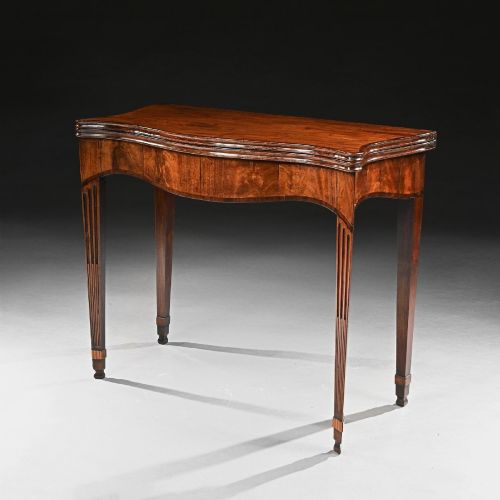
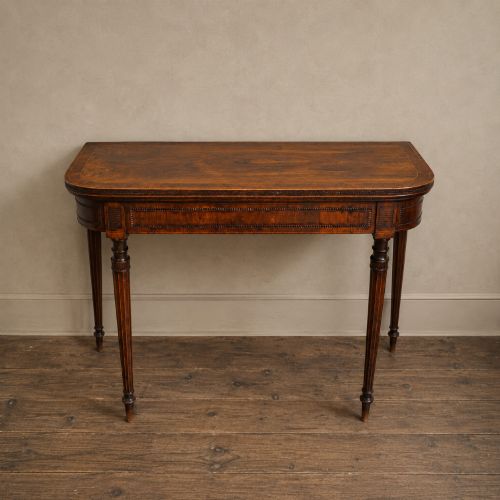
A fluted leg card table is a folding piece designed for gaming and social card play, appearing primarily from the eighteenth and nineteenth centuries. You will most frequently encounter mahogany and rosewood examples from the Regency and Georgian eras, showcasing clever hinged tops that pivot open.
The objects span formal George III designs and later Victorian interpretations, including serpentine shapes and crossbanded surfaces. Walnut and burr yew also feature among the materials, reflecting diverse cabinet-making traditions across different reigns.
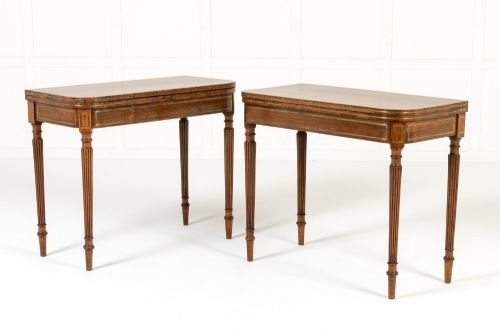
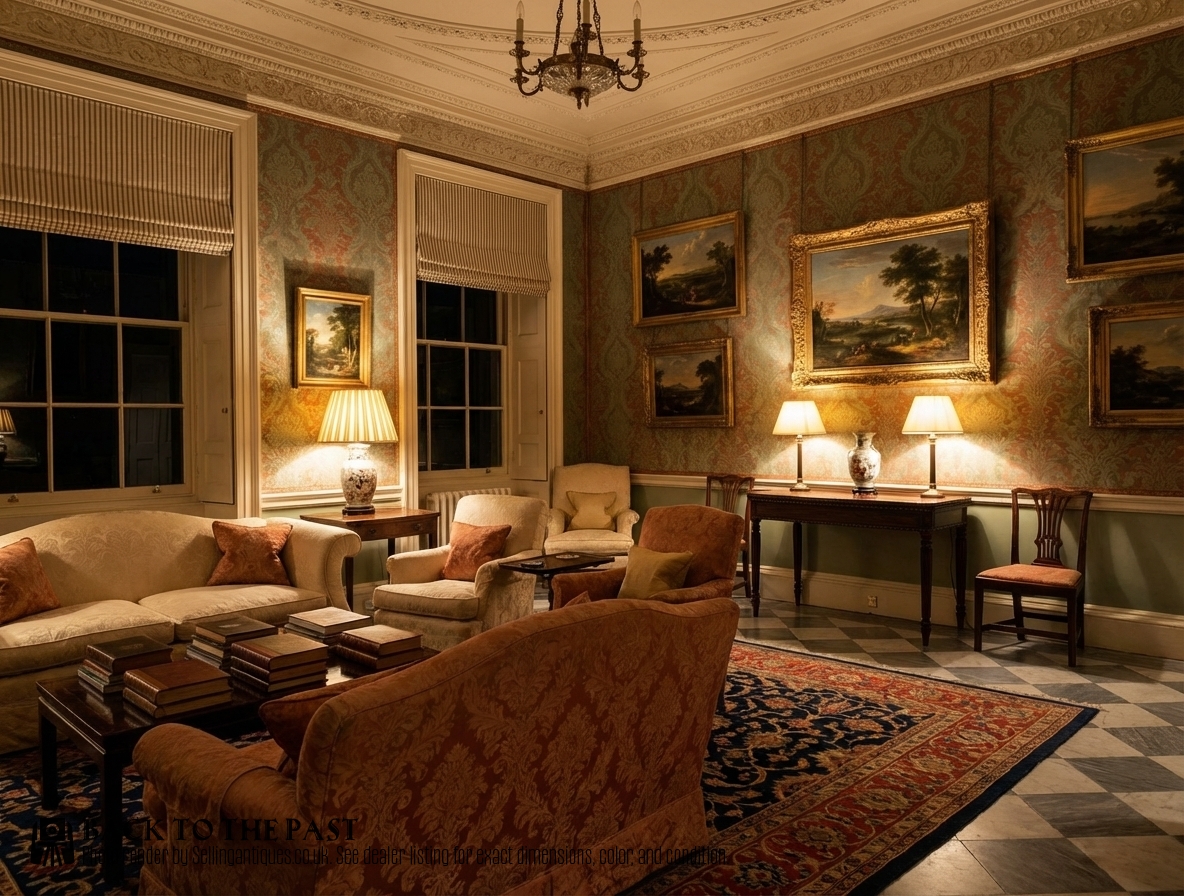
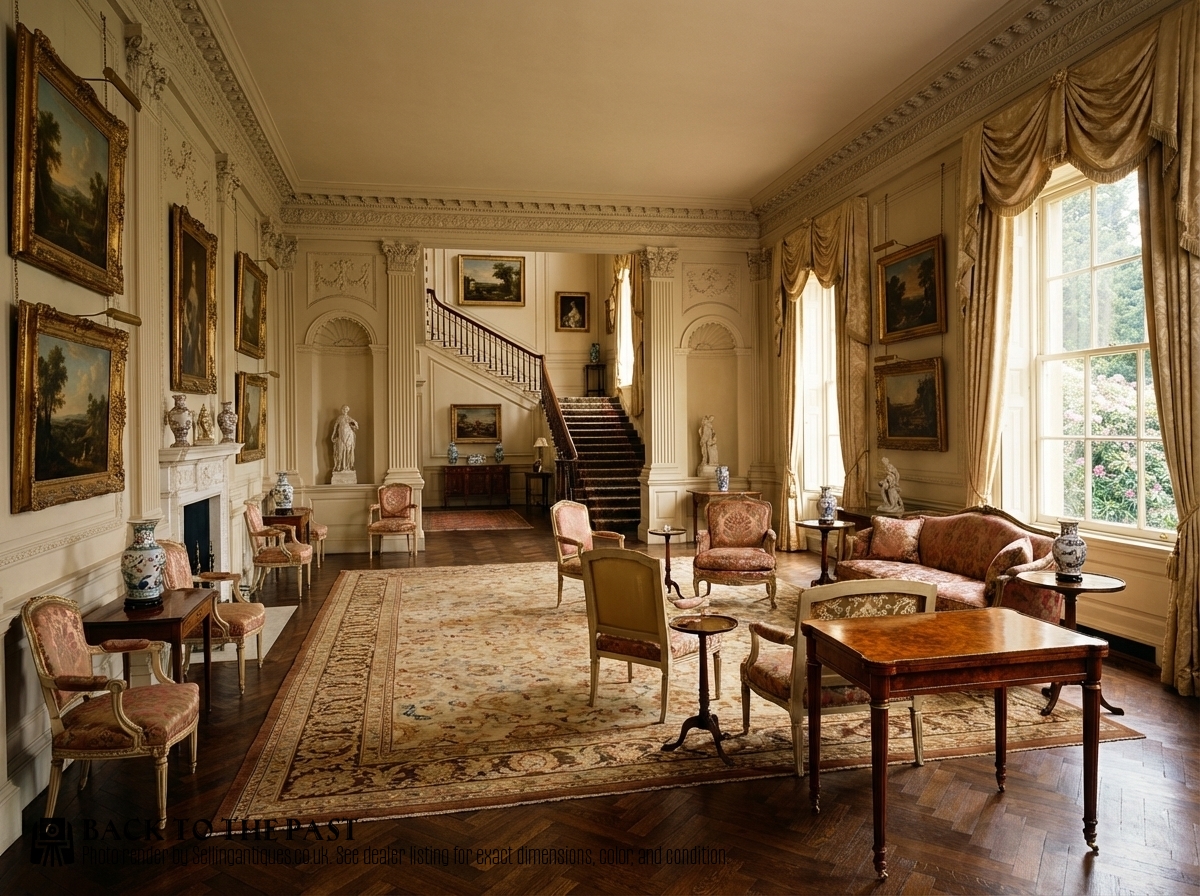
These tables typically serve as console tables against a wall when folded shut, before expanding to reveal baize-lined playing surfaces. The combination of structural utility and decorative timber makes them enduring additions to a period interior.
How they were made
Cabinet makers constructed these tables from dense timbers such as mahogany, walnut, and rosewood, often applying burr yew or contrasting crossbanding to the top. Solid timber frames provided the necessary stability for the hinged folding mechanisms.
Legs were meticulously carved with vertical fluting, channelling straight lines down the wood to catch the light and add classical proportion. Brass hardware and hinges were fitted flush to ensure smooth rotation and folding actions.
Retail Price Guide 2026
Typical UK retail prices for fluted leg card table, calculated from the Sellingantiques database of over a million retail prices indexed since 2003. This retail price guide relies exclusively on Sellingantiques data; no external sources or auction records are used, so the figures do not describe the wider market.
Listings span the 18th Century, Regency, William IV, and Victorian periods, utilising mahogany, rosewood, burr walnut, and solid walnut.
What varies in quality
Quality rests upon the crispness of the hand-carved fluting and the selection of figured timber veneers, such as burr walnut or rosewood. Superior pieces exhibit seamless joinery where the grain matches perfectly across the fold.
The ingenuity and smoothness of the internal pivoting mechanism separate fine workshops from standard production. Makers like Gillows demonstrated precision engineering that ensured the heavy folding tops remained stable over centuries of use.
Gillows
The Fluted Leg Card Table Glossary
- Fluting
- Vertical parallel grooves carved into the surface of a leg or column. This classical architectural detail adds slender elegance to the support structure.
- Crossbanding
- A border veneer applied around the edge of a table top where the wood grain runs perpendicular to the central panel. This technique creates a neat framing effect using contrasting timbers like burr yew.
- Serpentine
- A gently undulating curved shape resembling a snake's path, seen along the front edges of specific eighteenth-century tables. It requires high skill to shape timber in this manner.
- Foldover
- A hinged table top design that doubles the surface area when opened out for play. The mechanism often involves a pivoting rear leg to support the leaf.
Frequently Asked Questions
What is a fluted leg card table used for?
These tables served primarily for card games and social gatherings in polite society during the eighteenth and nineteenth centuries.
When closed, they functioned as side or console tables against drawing room walls.
How do I date a card table?
Dating relies on examining the timber species, secondary woods, hinge types, and stylistic details like leg carving.
Georgian and Regency pieces exhibit distinct characteristics compared to later Victorian iterations.
Are these tables sturdy enough for daily use?
Solid mahogany and rosewood frames provide robust structural integrity, making them practical for modern living.
The folding mechanisms require careful handling when opening the top leaf.
What woods were commonly used?
Mahogany and rosewood dominate the surviving examples, supported by walnut and burr yew veneers.
Craftsmen selected these dense hardwoods for their durability and rich natural grain patterns.