

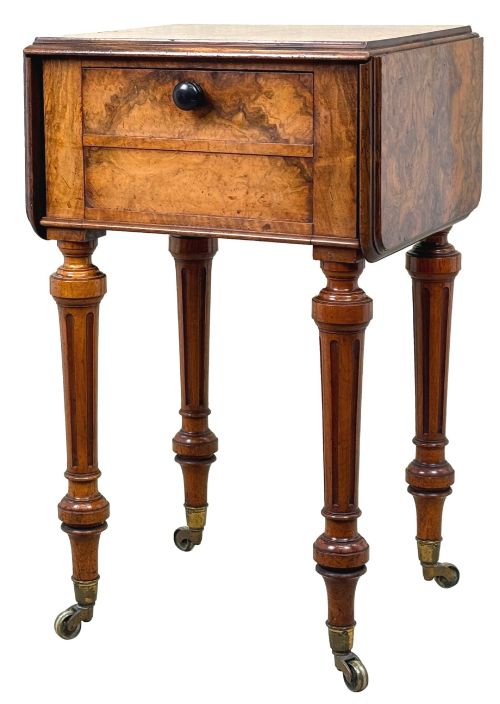
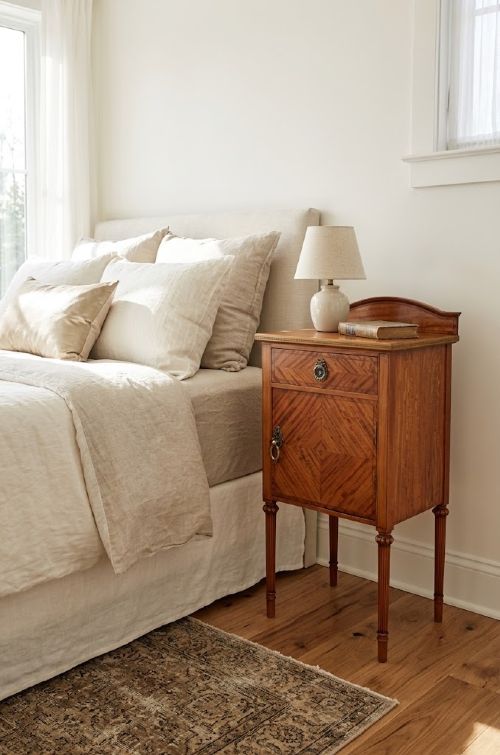
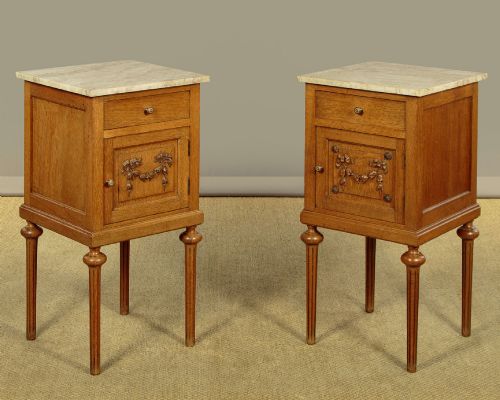
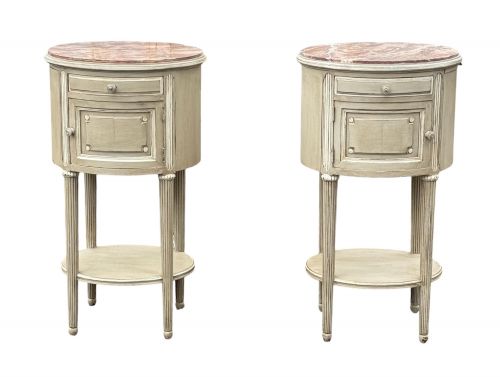


Fluted Leg Bedside Cupboard
A fluted leg bedside cupboard brings refined proportions and practical bedside storage to a room.
Fluted Leg Bedside Cupboard
A fluted leg bedside cupboard combines enclosed storage with a compact footprint suited to the bedroom. These pieces appear in forms such as bedside tables, cabinets, and nightstands across various periods.
The selection ranges from Edwardian satinwood and walnut pieces to Victorian examples featuring marble tops. Buyers frequently encounter pairs alongside single cabinets originating from English, French, and Swedish workshops.
Stylistic influences span Sheraton Revival, Gustavian, and Louis XVI, incorporating classical column details and turned supports. The fundamental purpose remains a bedside surface with a concealed compartment below.
How they were made
Construction relies upon cabinet timbers such as mahogany, walnut, oak, satinwood, and pine, often finished with painted surfaces or decorative veneers. Selected examples incorporate marble tops for durability and contrast.
Hardware details typically involve brass for handles, hinges, and key escutcheons. Joinery techniques secure the upright frames and enclose the storage spaces beneath the top surfaces.
Fluted Leg Bedside Cupboard Retail Price Guide 2026
Typical asking prices for fluted leg bedside cupboard among the pieces listed under this phrase on Sellingantiques today, from the lower quarter to the upper quarter. They describe what is for sale here now, not the wider market.
Listings span the Victorian and Edwardian eras, featuring materials from marble and brass to mahogany, satinwood, walnut, oak, and pine.
What varies in quality
Distinctions in quality rest upon the choice of primary timber and secondary veneers, such as figured mahogany or satinwood against painted pine. The precision of the carved fluting and the integration of marble tops influence the overall presence of the piece.
Cabinetmaking standards appear in the snugness of door closures, the stability of the legs, and the selection of brass mounts. Pieces reflecting specific regional styles like French Transitional or Sheraton Revival display greater attention to classical proportions.
The Fluted Leg Bedside Cupboard Glossary
- Fluted leg
- A vertical post carved with parallel shallow grooves. This classical detail draws inspiration from ancient architectural columns.
- Demi lune
- Half moon shape. This describes tables with a flat back edge designed to stand flush against a wall.
- Satinwood
- A light yellowish timber with a lustrous sheen. Cabinetmakers utilised it during the late nineteenth and early twentieth centuries for fine veneering.
Fluted Leg Bedside Cupboard: Frequently Asked Questions
Where did bedside cupboards originate?
These cabinets developed as domestic bedrooms required dedicated furniture for chamber pots, water jugs, and night necessities.
Over the nineteenth and twentieth centuries, workshops across England, France, and Sweden adapted the form to prevailing classical styles.
Are pairs common for these cabinets?
Matching pairs frequently appear in the listings, reflecting the convention of placing symmetrical bedside tables on either side of a bed.
Single cabinets also occur, often originating from rooms where space permitted only one bedside piece.
How do I identify an Edwardian piece?
Edwardian furniture often employs lighter timbers such as satinwood or mahogany, frequently drawing inspiration from earlier eighteenth-century designs.
These pieces typically date from the period around nineteen hundred to nineteen ten, displaying crisp lines and refined hardware.
What materials top these cupboards?
While many cabinets feature wooden surfaces of matching mahogany, walnut, or painted pine, others incorporate inset marble slabs.
Marble provided a practical, wipe-clean surface for water pitchers and bedside items in nineteenth-century bedrooms.