
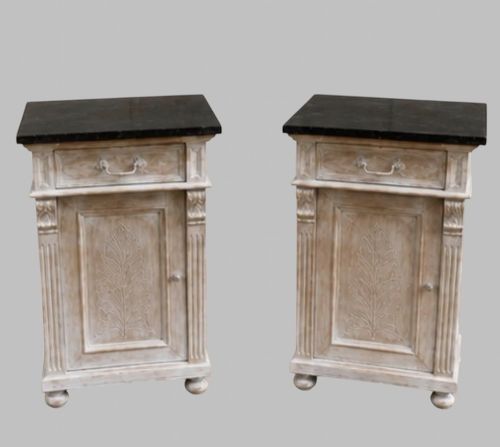


Gustavian Nightstand Pair
A gustavian nightstand pair brings symmetrical Scandinavian restraint to a bedroom, offering practical surface space alongside refined painted or wood-finished storage.
Gustavian Nightstand Pair
When you search for a gustavian nightstand pair, you encounter matched sets of bedside storage designed primarily in the nineteenth century and the early twentieth century. These pieces draw heavily on Scandinavian country traditions, French chateau aesthetics, and Swedish Gustavian design principles.
The forms on this page include bedside cabinets, bedside cupboards, bedside tables, two-drawer commodes, side tables, and small chests of drawers. Most examples originate from Sweden and reflect the clean lines and balanced proportions characteristic of northern European cabinet-making.
Buyers are most likely to meet painted surfaces in white or traditional hues, alongside natural wood grains such as satin birch. Many of these bedside pieces function as compact chests of drawers or small commodes rather than simple open tables.
Materials and construction
Makers constructed these pairs predominantly using solid pine and wood carcasses, often applying layers of paint to achieve the traditional Scandinavian finish. Some examples incorporate satin birch for a warmer, figured wood grain.
Top surfaces frequently feature fitted marble or faux marble slabs, adding durability and a contrasting texture to the painted wooden bodies. Brass hardware appears selectively on drawers and cupboards, while ebonised wood details provide subtle visual definition.
Listings feature pieces spanning the nineteenth century up to nineteen-twenty, constructed from pine, satin birch, and ebonised wood.
What separates the fine examples
Quality in these paired bedside pieces rests on the integrity of the timber construction and the careful application of historical paint finishes. Examples that retain well-preserved hand-painted surfaces or genuine marble tops demonstrate superior original craftsmanship.
Proportion and symmetry define the better items in a pair, ensuring both cabinets match precisely in height, drawer alignment, and decorative detailing. Subtle differences in hardware or timber selection reveal the hand-built nature of nineteenth-century workshop production.
The Gustavian Nightstand Pair Glossary
- Gustavian
- A Swedish neoclassical style popularised during the reign of Gustav III, known for restrained ornamentation, pale paint finishes, and classical proportions. It draws inspiration from French Louis XVI design.
- Satin Birch
- A pale, lustrous hardwood with a fine grain, frequently utilised in Scandinavian furniture for decorative veneer or solid construction. It offers a warm contrast to painted pine frameworks.
- Commode
- A low chest of drawers or cabinet with doors, commonly used in bedrooms as bedside storage. Nineteenth-century examples often feature two or more drawers.
- Ebonised Wood
- Timber treated with a chemical stain or finish to imitate expensive ebony. This dark treatment highlights mouldings and structural edges.
- Faux Marble
- A painted decorative technique designed to simulate natural marble veining on wooden surfaces. It provides the visual weight of stone without the heavy load.
Gustavian Nightstand Pair: Frequently Asked Questions
What defines a gustavian nightstand pair?
A gustavian nightstand pair consists of two matched bedside storage units influenced by eighteenth-century Swedish neoclassical design. They typically feature painted timber finishes, restrained classical details, and balanced proportions suitable for placement on either side of a bed.
These pieces bridge decorative elegance and everyday utility, offering enclosed cupboard space or stacked drawers tailored for bedroom use.
How were these bedside cabinets used historically?
Historically, such cabinets served as practical bedside furniture for storing personal items, nightwear, and chamber pots before modern plumbing became standard. Their enclosed cupboards and small drawers kept necessities hidden from view while providing a solid surface for a candle or lamp.
In grander Scandinavian homes, matched pairs created visual symmetry flanking the sleeping quarters.
How do I care for antique painted wood?
Antique painted surfaces require gentle dusting with a soft, dry cloth and protection from direct sunlight and excessive moisture. Avoid harsh chemical cleaners that can lift historic paint layers or damage the underlying wood.
Wax polish should be used sparingly, and only on unpainted wooden elements or sealed finishes.
How can I tell different periods apart?
Nineteenth-century pieces often display hand-mixed paints, dovetail joinery cut by hand, and heavier pine construction. Early twentieth-century examples tend toward lighter internal framing and more uniform machine-finished components.
Examining the drawer linings, backboards, and fastener types reveals the manufacturing era of each cabinet.
Are marble tops original to these tables?
Many nineteenth-century bedside cabinets and commodes were manufactured with fitted marble or faux marble tops to protect the wooden structure from water and cosmetic spills. Genuine stone slabs add considerable weight to the furniture.
Inspect the seating of the stone within the wooden frame to understand how the top integrates with the carcass.