





Fluted Glass Mirror
A fluted glass mirror brings bright architectural rhythm to a room through crisp vertical channels.
Fluted Glass Mirror
A fluted glass mirror is a reflective wall or floor piece defined by rhythmic linear channels cut or moulded into its frame or glass. Buyers seek these objects for their ability to anchor a room while casting reflected light across interior spaces.
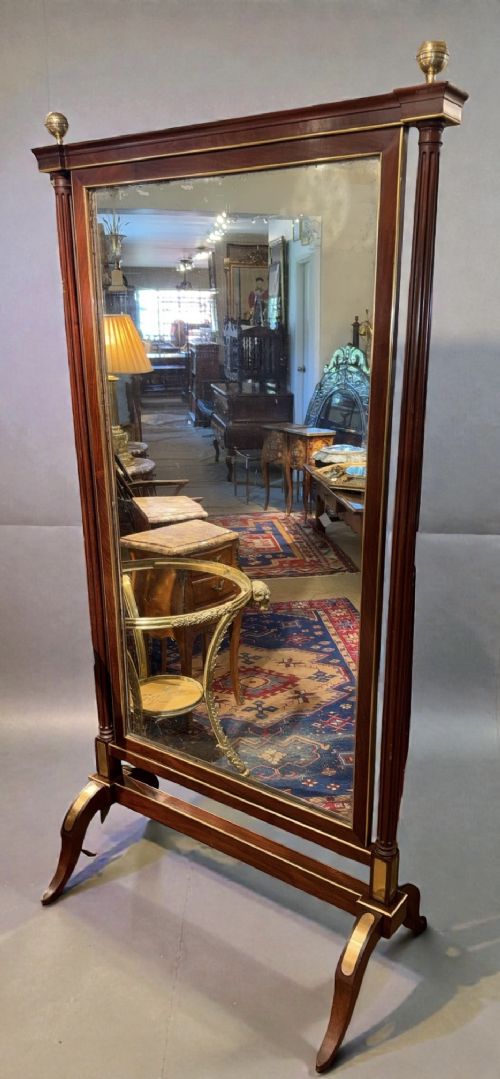
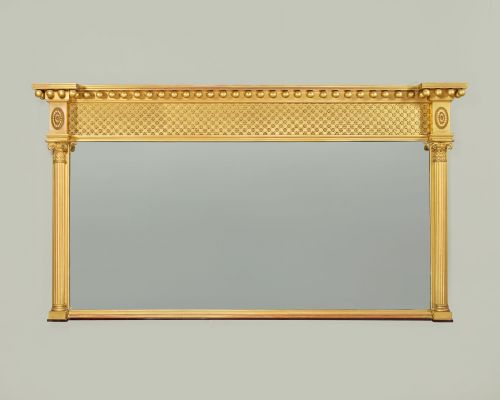
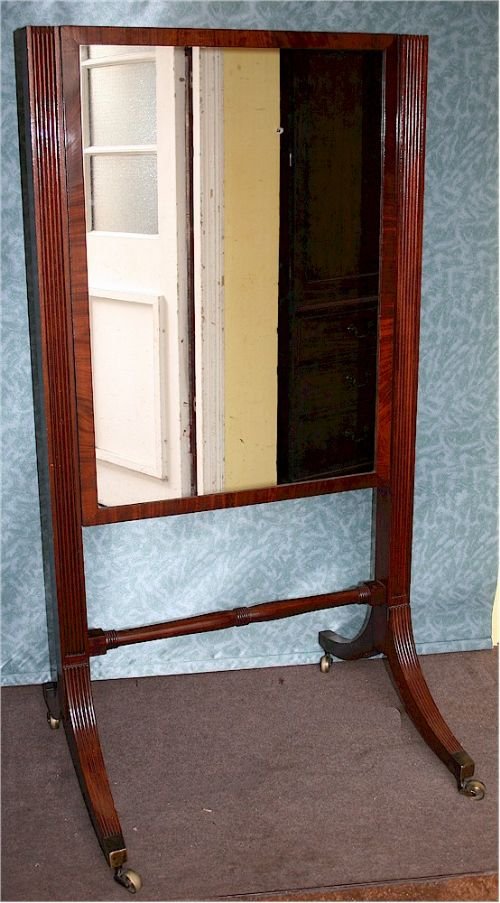
The pieces appearing on this page span the 18th century, the Regency era, and the Victorian period, alongside Edwardian examples. Forms range from grand overmantel mirrors and tall cheval mirrors to pier mirrors and landscape mirrors designed for specific architectural spaces.
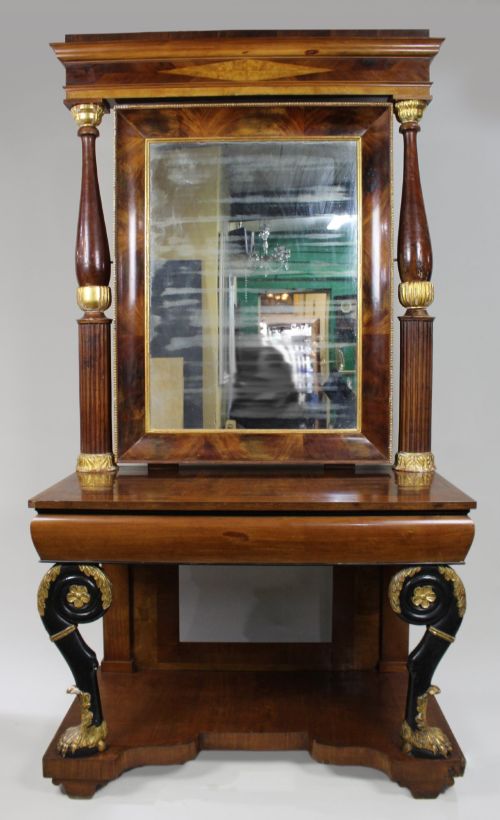
Most examples lean towards neoclassical, Regency, and Victorian styles, constructed as wall mirrors or console table combinations. They suit formal reception rooms and hallways alike, functioning as both functional looking glasses and decorative focal points.
How they were made
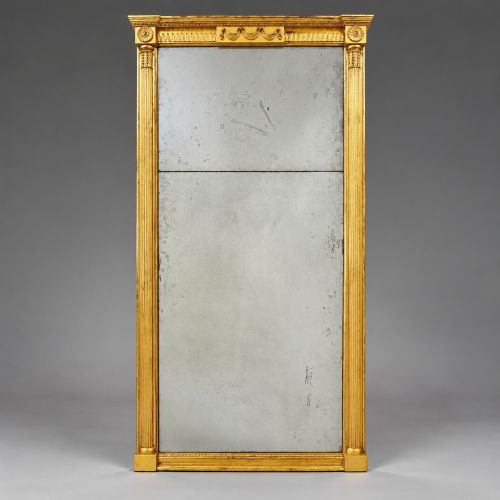
Makers built these frames using traditional timbers such as mahogany, walnut, and carved wood, often applying gesso and gold leaf to create gilded surfaces. Plaster and giltwood also feature prominently, providing the foundation for intricate surface decoration.
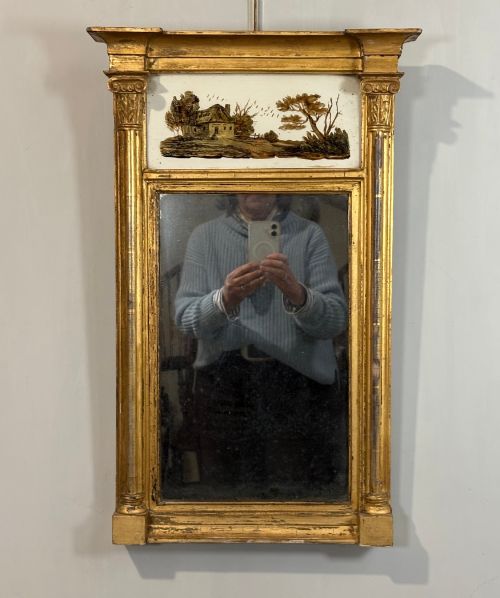
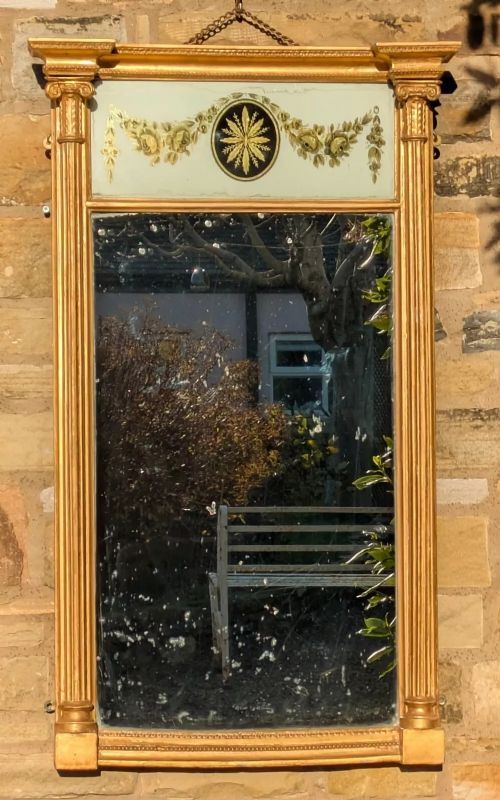
Reflective surfaces utilise mirror glass alongside specialised elements like verre eglomise panels and painted or ebonised details. Brass fittings appear on adjustable cheval mirrors and console table mounts, supporting the heavy glass plates securely.
Fluted Glass Mirror Retail Price Guide 2026
Typical asking prices for fluted glass mirror among the pieces listed under this phrase on Sellingantiques today, from the lower quarter to the upper quarter. They describe what is for sale here now, not the wider market.
Some Regency mirrors kept guests honest by stationing fierce carved lion masks right above the glass to watch the room.
What varies in quality
The distinction between ordinary and exceptional pieces rests upon the crispness of the carving and the depth of the gilding. Superior examples display sharply defined fluting and harmonious proportions that integrate the frame with the glass plate.
Materials also dictate standard; solid mahogany and finely applied gold leaf signify careful workshop production. Lesser pieces rely on simpler painted finishes or heavier, less refined plaster mouldings that lack the refined hand of earlier periods.
Gillows
The Fluted Glass Mirror Glossary
- Pier mirror
- A tall, narrow glass designed to hang on the wall space between windows. These pieces often sat above matching console tables to maximise light in dark rooms.
- Cheval mirror
- A freestanding full-length looking glass hung on a pivoted frame between four upright pillars. They allow the viewer to adjust the tilt of the glass.
- Verre eglomise
- A cold decoration technique involving the application of gold or silver leaf to glass, then etched and painted from the reverse side. It creates a rich, dark panel often seen in upper mirror sections.
- Giltwood
- Wood carved and coated with thin sheets of gold leaf over a prepared gesso ground. It provides a luminous surface that catches candlelight and daylight.
Fluted Glass Mirror: Frequently Asked Questions
Where should I hang a pier mirror?
A pier mirror belongs on the narrow wall between two windows or above a console table. This placement bounces natural light directly back into the room.
Ensure the wall fixings match the weight of the gilded wood and glass frame to support the piece safely.
How do I identify a Regency mirror?
Regency mirrors frequently display classical motifs, ebonised details, and bold giltwood frames influenced by neoclassical tastes. Look for architectural lines and decorative elements like lion masks.
Proportions during this era lean towards strong vertical statements designed for prominent entertaining spaces.
Can I adjust a cheval mirror?
Cheval mirrors utilise brass pivot pins mounted on upright side supports to tilt the glass plate. This mechanism allows you to adjust the viewing angle easily.
Check that the pivoting hardware moves smoothly without putting undue stress on the surrounding mahogany or walnut frame.
What is an overmantel mirror used for?
An overmantel mirror serves to fill the wide wall space situated directly above a fireplace mantel. It visually expands the room by reflecting the hearth and opposite windows.
These landscape formats often feature substantial carved frames designed to anchor the entire chimney breast.