

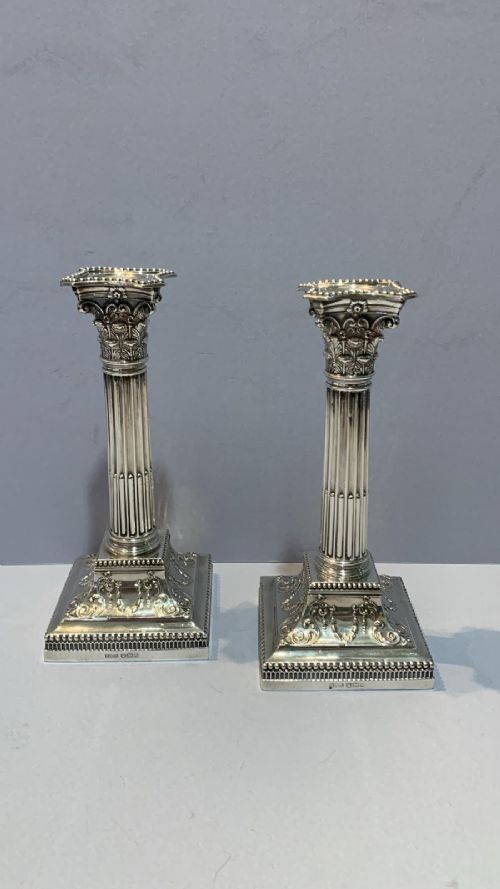


Fluted Column Silver Candlesticks
Fluted column silver candlesticks bring classical order to a room, cast in bright sterling or plated metal with vertical channels that catch the candlelight.
Fluted Column Silver Candlesticks
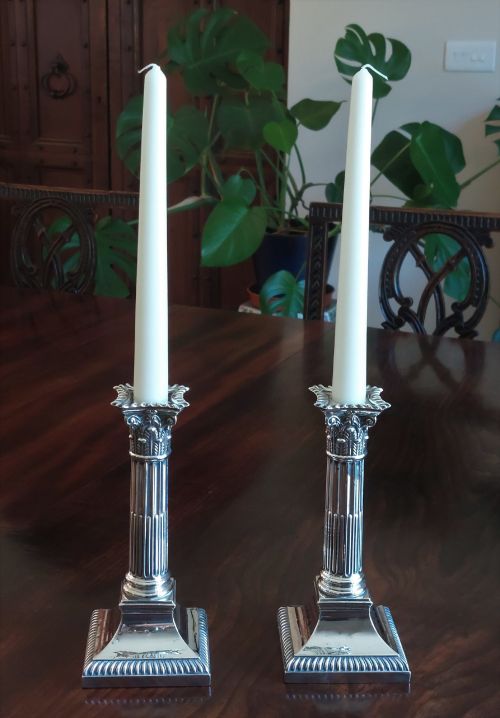
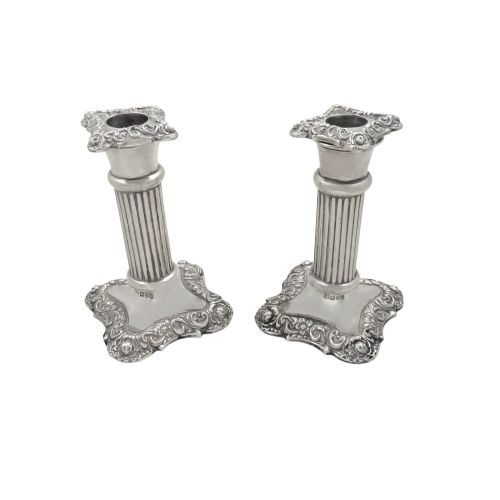
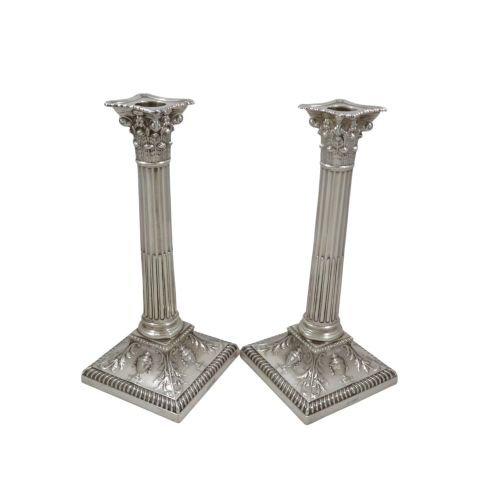
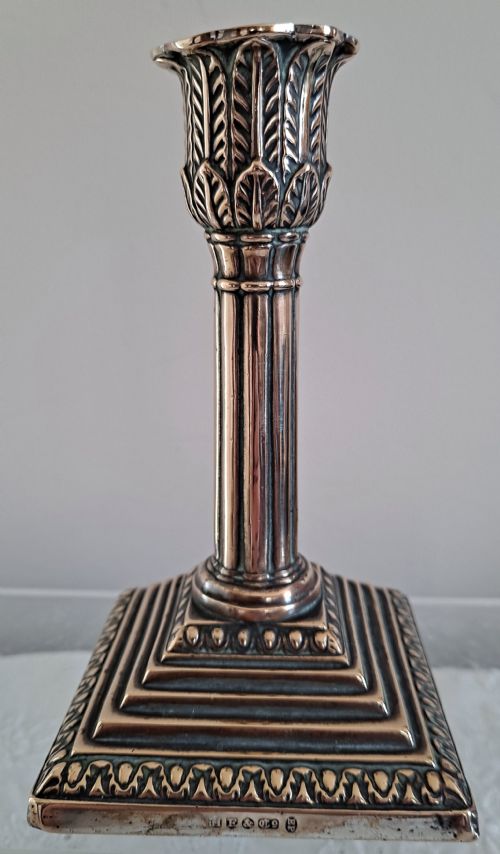
These fluted column silver candlesticks span several periods, with Victorian and Edwardian examples appearing alongside Georgian and early twentieth-century pieces. The form draws directly from classical architecture, translating stone columns into domestic metalwork intended for dining tables, sideboards and desks.
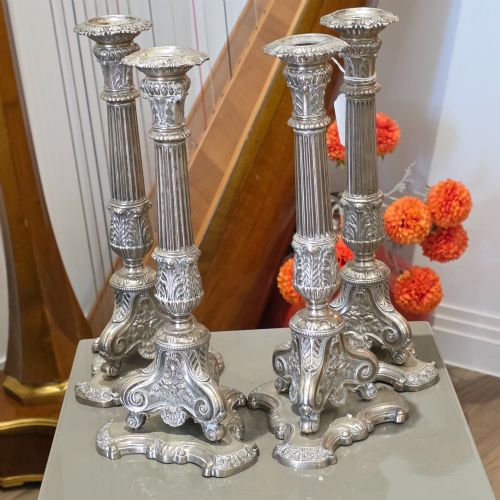
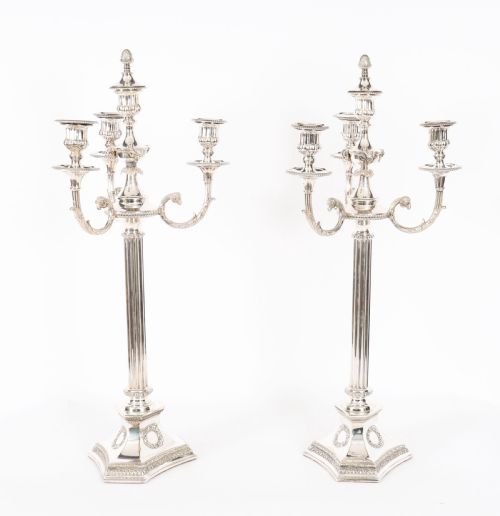
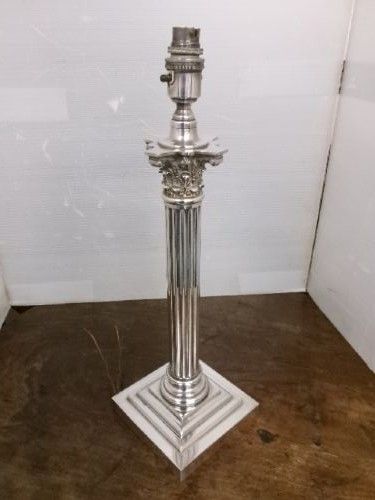
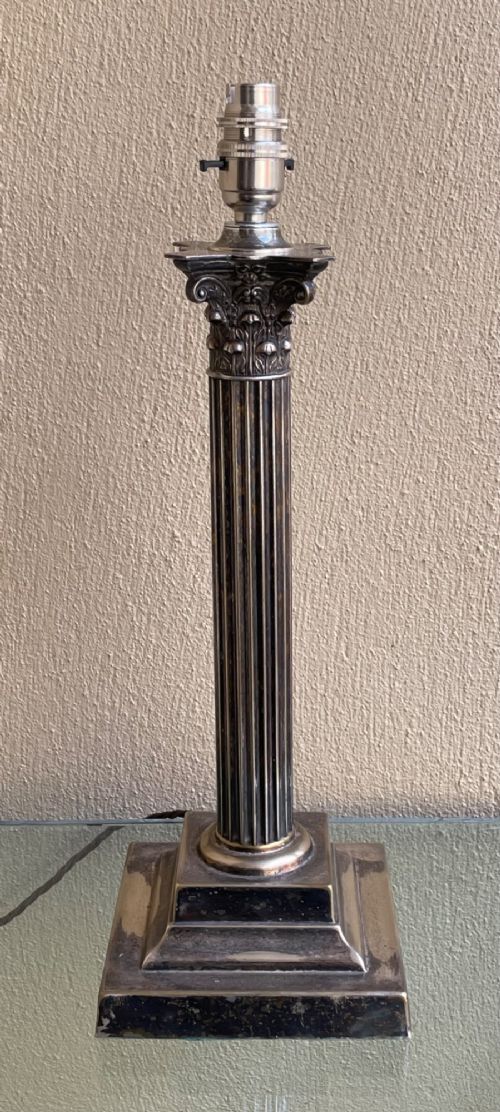
Most pieces encountered here are pairs, though sets of four and individual desk examples also occur in the listings. Alongside standard candlesticks, the selection includes converted table lamps, multi-light candelabra and extending designs with removable sconces.
Makers and origins vary across the inventory, ranging from English workshops in London to continental makers such as Conrad Eduard Mappe. Materials shift between solid sterling silver, Old Sheffield plate and later silver plate over copper, brass or nickel silver bases.
Materials and construction methods
Silversmiths and manufacturers formed these pieces using solid sterling silver or applied silver layers over base metals like copper, brass and nickel silver. Older examples utilise Old Sheffield plate, where a thin sheet of silver is fused to a copper core.
Columns and bases were frequently cast or spun in sections before being soldered or assembled together, allowing for crisp vertical fluting and weighted bases for stability. Removable sconces, often called drip pans, were shaped separately to sit at the top of the shaft.
Listings feature items spanning the Georgian, Victorian and Edwardian periods, executed in sterling silver, silver plate, copper, brass and nickel silver.
Distinctions in craftsmanship and condition
Quality rests in the crispness of the fluting and the integrity of the underlying metal, where finer pieces retain sharp architectural detail without softening from wear or over-polishing. Proportion also dictates worth, as well-balanced shafts and stepped square or circular bases display greater harmony.
The choice of material creates a distinct tier between solid sterling silver and plated wares, while the survival of original components such as detachable sconces elevates a pair. Maker marks and clear hallmarks on silver and plated items provide verifiable origin and date.
Conrad Eduard Mappe·Garrard and Co·Goldsmiths
The Fluted Column Silver Candlesticks Glossary
- Sconce
- The detachable pan or nozzle that sits at the top of a candlestick to catch melting wax. It lifts out for easy cleaning.
- Old Sheffield Plate
- An early plating technique fusing a thin sheet of silver to a copper base before fabrication. This method often reveals faint traces of copper along edges and seams.
- Corinthian Column
- An architectural column style featuring an ornate capital decorated with acanthus leaves. It forms the upper portion of many classical candlesticks.
- Pricket
- A sharp metal spike set in the centre of a candle holder to secure a large candle or church taper. It replaces the standard socket found on domestic sticks.
- Hallmark
- A stamp or series of stamps applied to precious metals to indicate the maker, standard of purity, and year of assay. They offer a reliable guide to age and origin.
Fluted Column Silver Candlesticks: Frequently Asked Questions
How do I clean silver plated candlesticks?
Use a soft cloth and a gentle silver polish formulated specifically for plated items. Avoid harsh scrubbing that can wear through the thin silver layer to the base metal beneath.
Take care around raised fluting and engraved details where polish can accumulate. A soft brush helps clear residue from these tight vertical channels.
What is the difference between sterling and plate?
Sterling silver is a solid precious metal alloy containing a set proportion of pure silver throughout the entire piece. Silver plate consists of a thin layer of silver bonded to a cheaper base metal such as copper or brass.
Over time, plated items may show base metal through wear at the high points. Sterling pieces can be polished indefinitely without changing their fundamental composition.
Why do some candlesticks have removable tops?
Removable sections, known as sconces or drip pans, catch molten wax before it runs down the fluted column. They lift out to make removing hardened wax much easier.
Original matching sconces add to the completeness of an antique pair. Many lost these small components over centuries of use and cleaning.
How do I date a Georgian candlestick?
Examine the weight, construction seams, and any visible hallmarks or maker marks stamped into the metal. Georgian pieces in Old Sheffield plate often display characteristic copper seams.
Stylistic cues such as stepped square bases and neoclassical fluting also point toward the late eighteenth century. Comparing proportions with documented examples helps narrow the decade.