


Flower Jug Still Life
A flower jug still life captures domestic quiet on canvas or paper, bringing botanical colour and ceramic form into a room.
Flower Jug Still Life
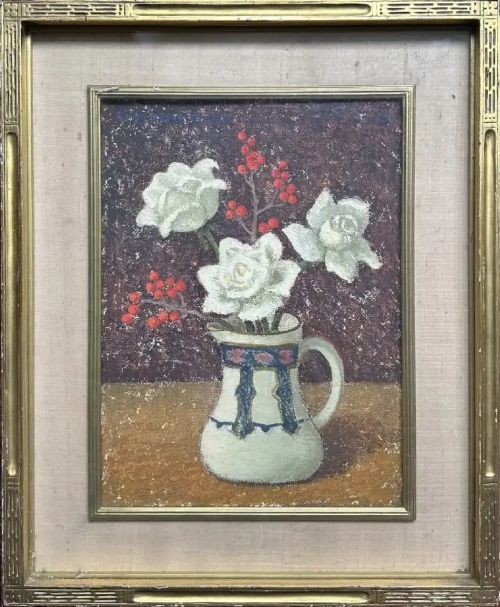
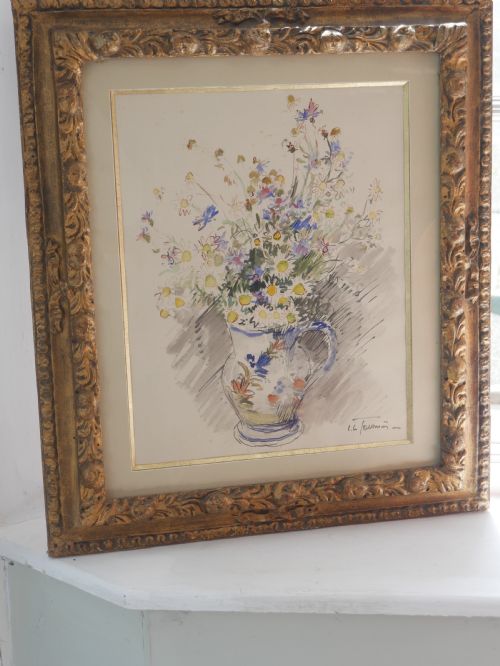
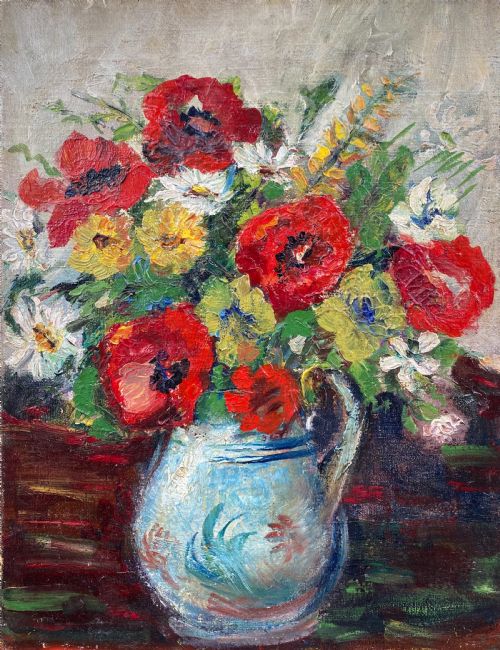
A flower jug still life centres on botanical subjects arranged in vessels, rendered across various decades and styles. These pieces range from early works through mid-century expressions, showing how artists captured simple indoor scenes.
Watercolour paintings and oil paintings dominate the selection, often framed behind glass or stretched on canvas. The compositions typically pair garden stems with domestic pottery, creating balanced studies of colour and container.
Origins stretch from British and Scottish studios to French and American hands, reflecting diverse regional approaches to the same domestic arrangement. The periods span the nineteenth century up to the nineteen-sixties, offering a broad chronological range.
Materials and Methods
Artists relied primarily on oil paint or watercolour applied to canvas, paper, board or metal surfaces. These mediums allowed for varying degrees of transparency and texture, depending on whether the creator sought fluid washes or rich impasto.
Support materials include traditional stretched canvas, heavy watercolour paper and wooden panels, often secured within period frames of wood and gilt. Some compositions incorporate ink details to sharpen the outlines of petals and handles.
Listings feature works in oil, watercolour and ink across the nineteenth and twentieth centuries, using canvas, paper, wood, glass and metal.
Assessing Quality and Execution
The strength of a composition rests on the balance between the vessel and the stems it holds. Superior examples demonstrate confident brushwork that defines the weight of the ceramic and the delicate structure of individual petals.
Palette control distinguishes accomplished works from simpler studies. The interplay of light across the jug surface and the depth within the background foliage reveal the painter's command of tone and space.
Emma Fordyce MacRae·James Tower·Owen Bowen·Margaret Laing·Jabez Bligh·Marion Broom·Edith Alice Andrews·Albert E Jackson·E M Davies·Olive Higginbottom·Madeleine Felix
The Flower Jug Still Life Glossary
- Watercolour
- A painting method where pigment is suspended in water-based solution on paper. It yields transparent washes that capture light effectively.
- Impasto
- Paint applied thickly to a canvas or board so that it stands proud of the surface. This technique adds tactile dimension to petals and leaves.
- Gilt
- A thin layer of gold applied to wood frames. It provides a warm border that complements traditional oil paintings.
- Canvas
- Woven fabric stretched across a wooden frame to serve as a painting surface. It remains the standard support for oil compositions.
- Board
- A rigid wooden or composite panel used as a painting support. Artists often utilised board for smaller studies and outdoor sketches.
Flower Jug Still Life: Frequently Asked Questions
What periods do these paintings span?
The available selection covers works from the nineteenth century through the mid-twentieth century. Mid-century and wartime decades are particularly well represented.
Creators from various British, French and American schools contributed to this tradition over several generations.
How should I frame a watercolour?
Watercolour paintings require protection under glass and mounting away from direct sunlight. This preserves the delicate pigments on paper.
Original frames often complement the age of the piece, though acid-free conservation mounting ensures long-term preservation.
What surfaces are used for these works?
Artists painted on stretched canvas, heavy paper, wooden board and occasionally metal sheets. Each material interacts differently with oil or watercolour mediums.
Canvas supports tend to carry heavier oil applications, while paper suits fluid watercolour washes.
How do I identify a mid-century piece?
Mid-century works often reflect modernist influences through simplified forms and brighter palettes. The brushwork tends to be looser and more expressive.
Dates inscribed on the reverse or within the signature often confirm the specific decade of creation.