
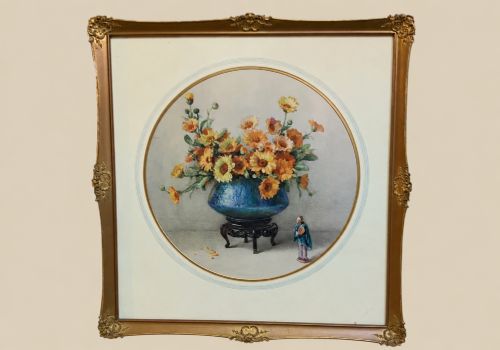
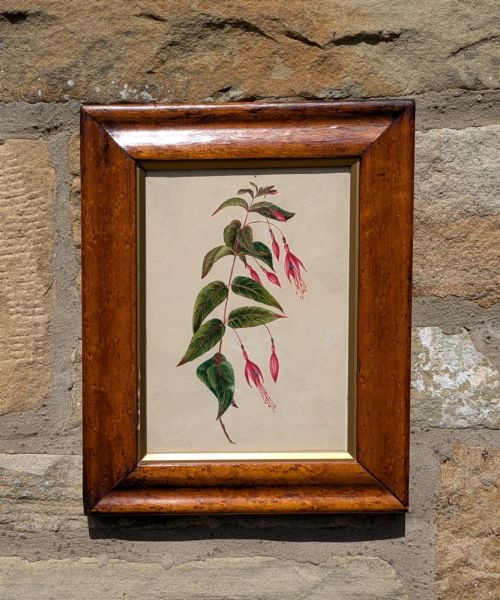
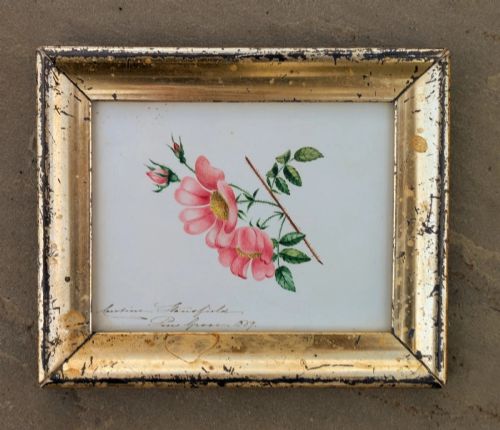
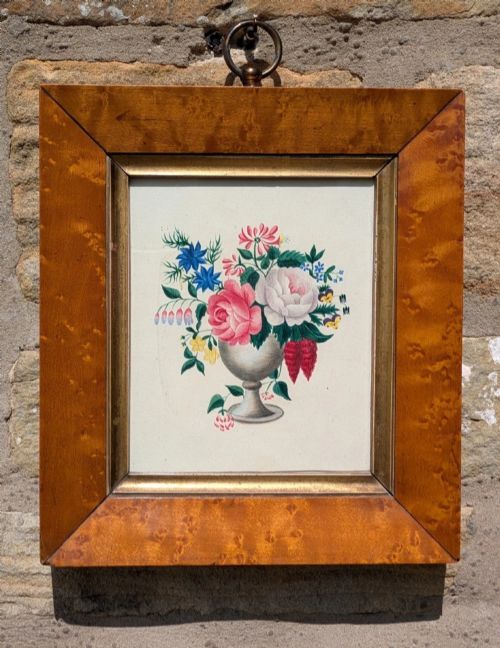



Floral Watercolour Artwork
Floral watercolour artwork captures natural botanical forms on paper through fluid pigments, spanning periods from the nineteenth century to the mid-twentieth century.
Floral Watercolour Artwork
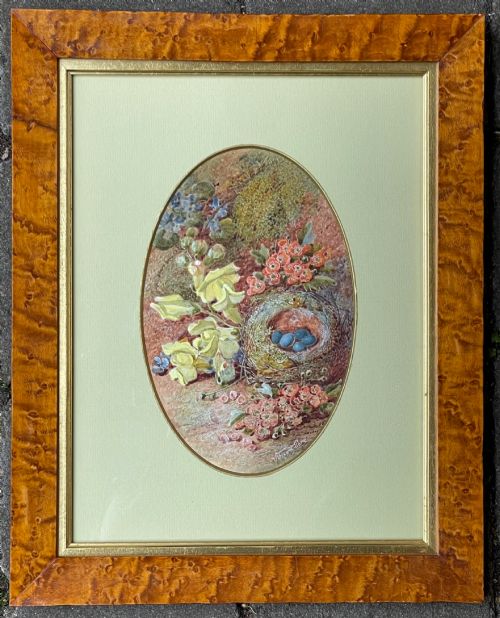
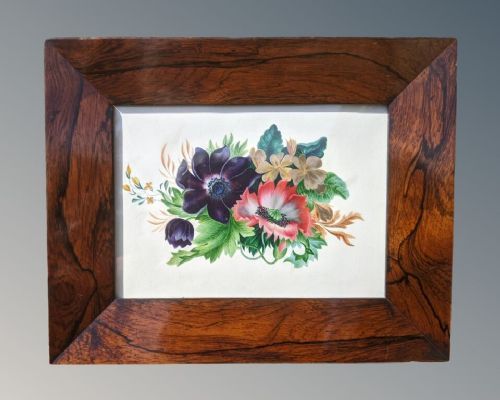
Floral watercolour artwork encompasses paper-based paintings executed in water-soluble pigments, gouache, and pencil, recording botanical studies, cottage gardens, and still-life arrangements of roses, pansies, and azaleas. Buyers encounter various formats on this page, ranging from Victorian botanical illustrations and Aesthetic Movement framed pieces to British Impressionism and mid-century modern studies.
Materials and execution
Artists create floral watercolour artwork by applying water-based pigments and gouache onto paper supports, sometimes combining pencil underdrawing with opaque and transparent washes to render petals and leaves. The physical structure typically relies on a paper base housed within wood, gilt wood, or pewter frames, which are glazed with glass.
The technique relies on the fluidity of watercolour paint to capture the translucent qualities of floral subjects, while bodycolour or gouache introduces opaque highlights to define light and texture within botanical still lifes.
Several Victorian artists specialised exclusively in painting pelargoniums, bringing intense botanical scrutiny to windowsill flora.
Distinctions in quality
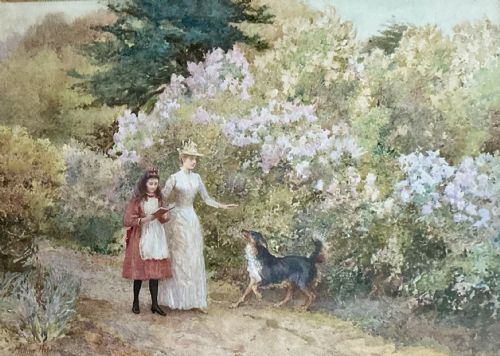
The distinction between standard examples and exceptional pieces rests upon the surety of the brushwork, the precision of botanical observation, and the preservation of the pigment against fading. Stronger works display accomplished handling of light within compositions such as garden landscapes or structured vase arrangements.
Context also defines the standing of a piece, with named artists possessing recorded exhibition histories commanding closer attention than anonymous school studies, while the integrity of the original frame and paper condition further influence the overall standing.
Vincent Clare·Catherine Thomas·James Tower·Alice Anne Renshaw·Harry Wanless·Henrietta Creswell·Arthur Hopkins·William Edward Fox·Theresa Stannard·Lester Sutcliffe·Lilian Stannard·William Hough·Eloise Harriet Stannard·Edith Barrow·Rowland Henry Hill·Grace Hastie·Margaret Laing·Phyllis I Hibbert·Marian Chase·Alfred W. Parsons·Jabez Bligh·Owen Bowen·Charlotte Isa James·David Woodlock·Alice Macallan Swan
The Floral Watercolour Artwork Glossary
- Watercolour pigment
- A colour substance ground in water-soluble binders, utilised to create transparent washes on paper.
- Gouache
- An opaque water-based paint containing pigment, water, and a binding agent, often combined with watercolour for highlights.
- Botanical study
- A detailed visual record of plant forms, structure, and flowers, historically executed for scientific or aesthetic purposes.
- Aesthetic Movement
- A late nineteenth-century design style emphasising visual beauty over narrative, seen here in decorative frames.
- Gilt wood
- Wood carved and coated with gold leaf or metallic gilt, commonly used for period picture frames.
Floral Watercolour Artwork: Frequently Asked Questions
How should I hang floral watercolour artwork?
Display these paper-based paintings away from direct sunlight to prevent the watercolour pigments from fading over time. Maintaining stable indoor humidity levels also protects both the paper support and the historical frame.
Ensure the piece hangs securely using appropriate wall fixings suited to the weight of the wood or gilt frame. Professional framing with conservation-grade backing further safeguards the artwork from environmental damage.
Are these paintings original or prints?
The pieces featured are original hand-painted works executed directly onto paper using watercolour, gouache, or pencil. Each brushstroke is unique to the individual artist's hand rather than mechanically reproduced.
Close inspection under magnification reveals the texture of the paper fibres and the pooling of pigment. Signatures and dates inscribed by the artists further confirm their status as original paintings.
How do I identify the period of a piece?
Dating relies on stylistic markers, artist signatures, framing materials, and accompanying documentation recorded in the listing details. Victorian pieces often feature dense botanical arrangements, while mid-century examples display looser brushwork.
Examining the back of the paper or frame can reveal historical labels, inscriptions, or exhibition stamps that help narrow the timeline. Comparing the technique to known works by recorded makers also clarifies the date of execution.