
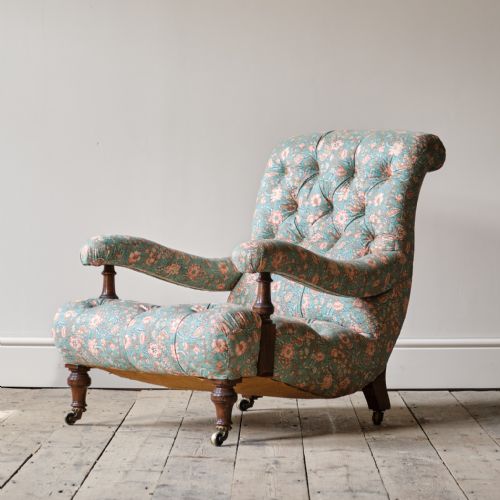
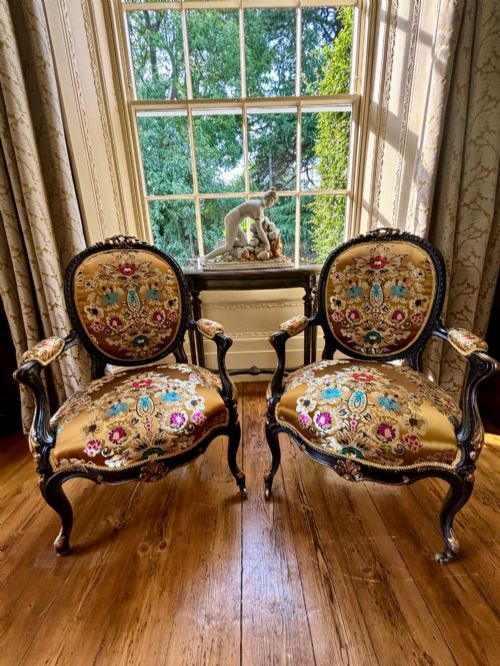
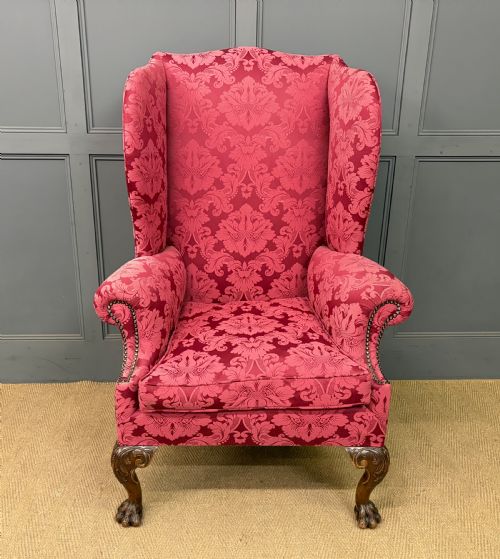
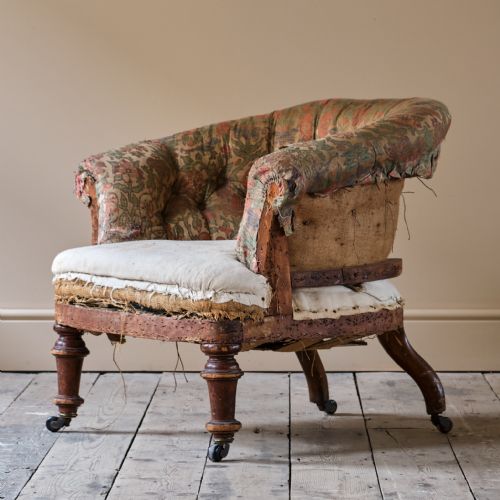
Floral Victorian Armchair
A floral victorian armchair brings period comfort to a room, offering patterned upholstery and turned or carved frames from the nineteenth century.
Floral Victorian Armchair
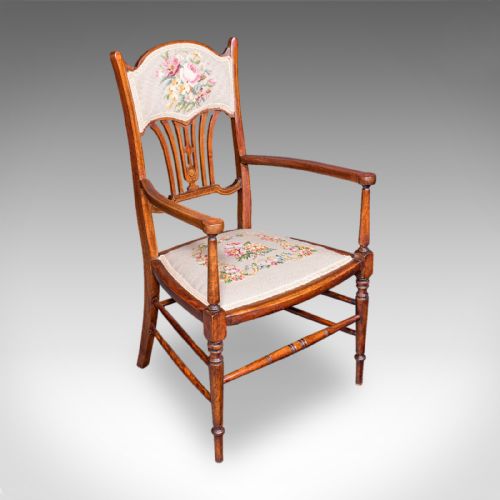
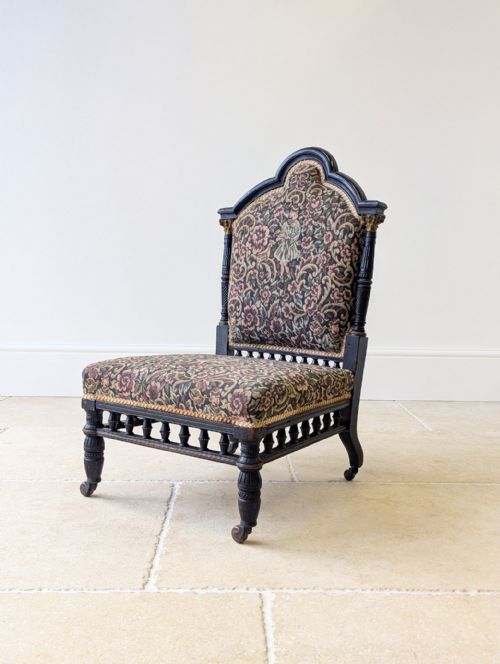
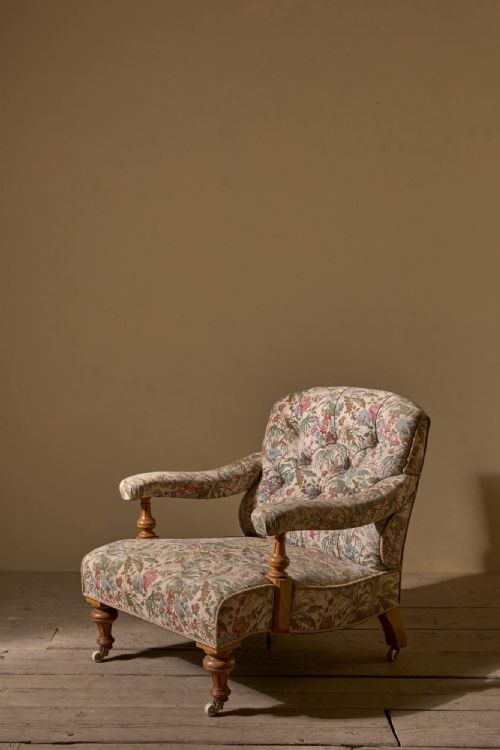
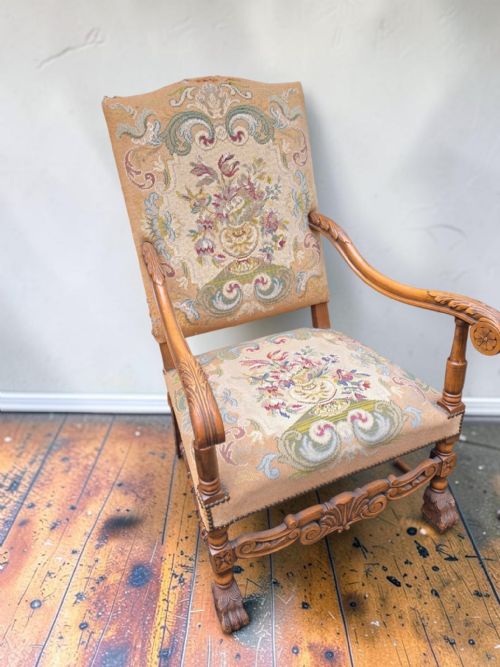
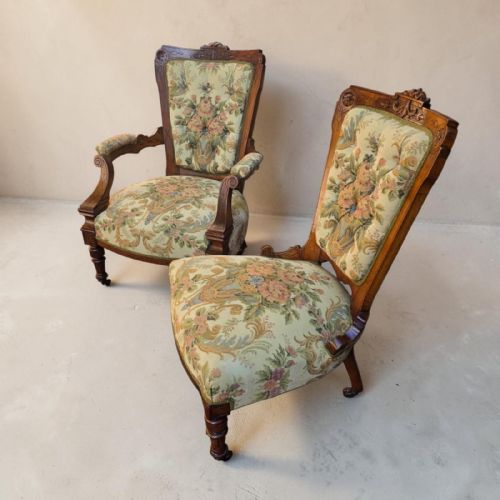
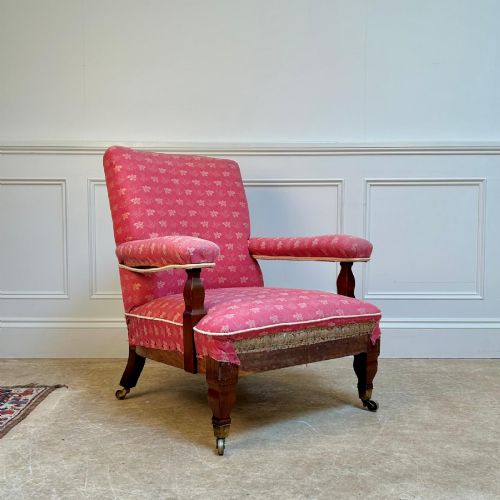
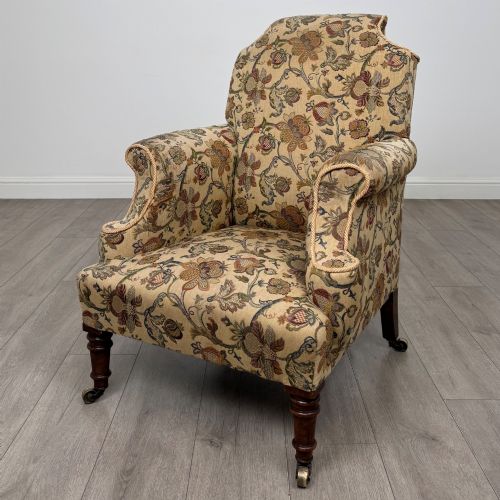
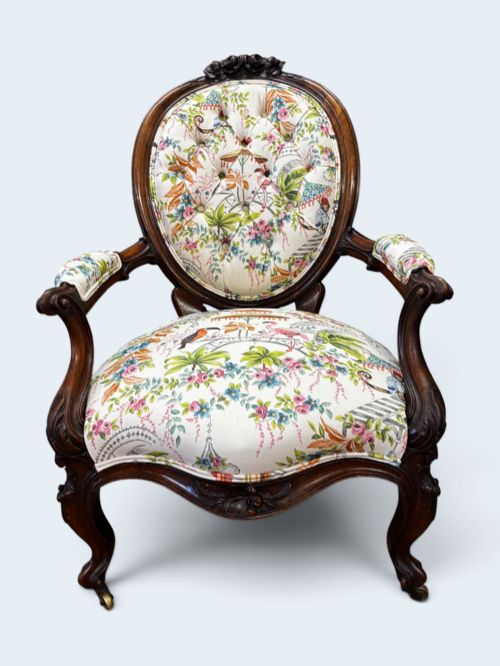
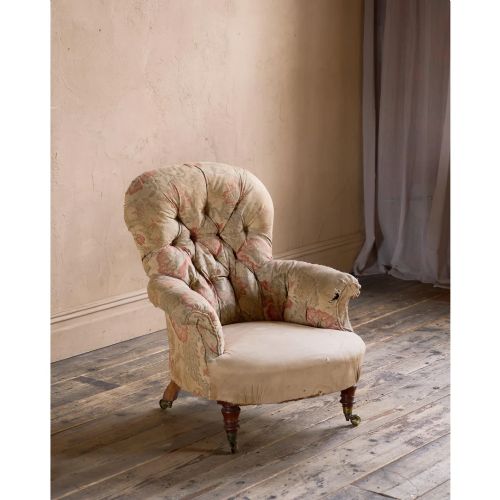
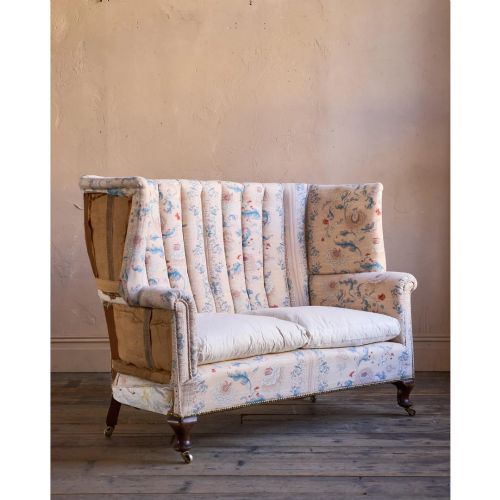
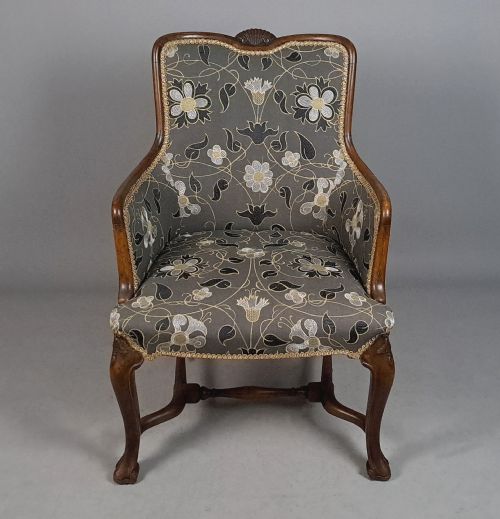
A floral victorian armchair brings nineteenth-century seating into a modern interior, drawing on periods from the Regency era through to the late Victorian decades. These pieces span comfortable low lounge chairs, deep country house armchairs, and carved salon seating designed for drawing rooms and morning rooms.
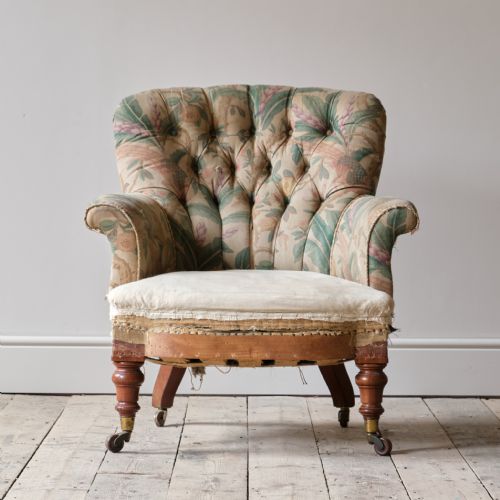
The versions most commonly found here feature upholstered frames covered in textiles, tapestry, needlework, or crewelwork, often paired with exposed wooden elements. Makers and workshops of the period utilised various forms, ranging from button-backed nursing chairs to large mahogany and walnut wingbacks.
Materials and construction methods
Frames rely on hardwoods such as walnut, mahogany, oak, and beech, sometimes ebonised or inlaid, providing structural stability beneath the upholstery. Exposed woodwork frequently displays carving, cabriole legs, or brass castors.
Upholstered surfaces utilise traditional textiles including velvet, tapestry, and patterned fabric, often supported by iron frames or webbed interiors. Detailed hand-stitching secures the needlework and crewelwork finishes seen across the period designs.
Listings feature nineteenth-century seating across materials including mahogany, walnut, brass, and velvet.
Assessing quality and craftsmanship
Quality rests in the integrity of the timber frame and the precision of the carving, with walnut and rosewood frames often showing superior cabinetmaking. The weight and jointing of the timber dictate the lasting stability of the armchair.
The grade of the textile and the fidelity of the upholstery work also define the standard of the piece. Retaining period fabric or high-level needlework elevates the historical character of the chair.
George Jack For Morris·Holland & Sons·Howard and Sons·Morris & Co
The Floral Victorian Armchair Glossary
- Cabriole leg
- A furniture leg that curves outward and then tapers inward, typically ending in a pad or scroll foot. This form appears frequently on mid-nineteenth-century seating.
- Bergere
- An enclosed upholstered armchair with wooden framing around the sides and back. The style provides a structured profile while maintaining deep seat comfort.
- Needlework
- Hand-stitched textile covering worked on canvas or coarse mesh. It forms the decorative floral surface on many period seat covers.
- Wingback
- An armchair with high back and flanking side panels designed to shield the sitter from draughts. Versions in mahogany and walnut date across the nineteenth century.
- Salon chair
- A smaller, decorative seat designed for formal entertaining rather than heavy lounging. These frames often showcase ebonised wood or carved walnut.
Floral Victorian Armchair: Frequently Asked Questions
How do I identify a Victorian armchair?
Look for characteristic nineteenth-century timber frames in walnut, mahogany, or rosewood, combined with upholstered seats and period decorative styles.
Examine the legs, woodwork, and joinery to determine whether the piece aligns with Victorian production methods.
Were these chairs used in bedrooms?
Many smaller forms, such as nursing chairs and slipper chairs, were designed specifically for bedrooms and dressing rooms.
Their lower profiles and upholstered frames suited private rooms rather than the main formal reception spaces.
What is a country house armchair?
A country house armchair is typically a deeply cushioned, generously proportioned seat built for comfort in traditional domestic settings.
These pieces often feature upholstered arms and heavy textile covers suited to prolonged daily use.
Can I mix these chairs with modern interiors?
These armchairs sit well alongside contemporary furniture by adding texture, pattern, and historical contrast to a room.
The varied wood tones and floral textiles integrate easily into diverse decorating schemes.