


Chintz Upholstered Armchair
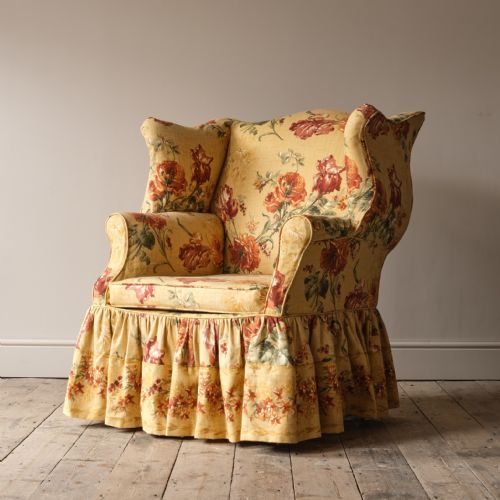
These chintz upholstered armchair pieces bring pattern and deep comfort to a room, offering the classic English country house look collectors prize.
Chintz Upholstered Armchair
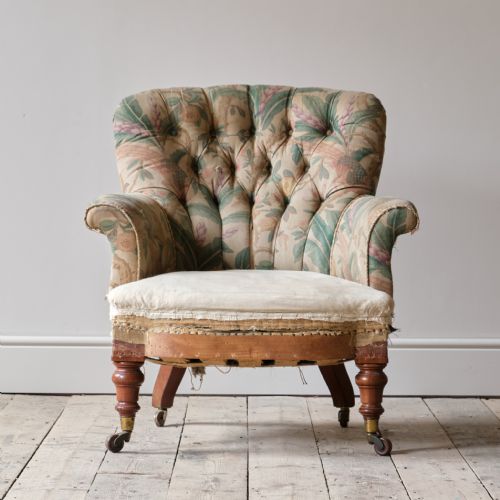
When you search for a chintz upholstered armchair, you find seating designed for comfort, spanning the Georgian, Victorian, Edwardian, and early twentieth-century periods. The examples on this page range from large wingbacks and deep-seated country house armchairs to nursing chairs, slipper chairs, and open armchairs in the Howard style.
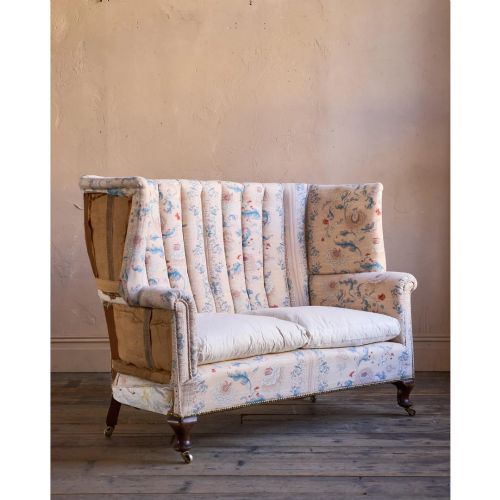
Most pieces date from the nineteenth and early twentieth centuries, reflecting the enduring appeal of traditional upholstery forms. You will encounter styles described as English Country House, French Napoleon III, and George III, alongside occasional sofas.
Makers such as Maple & Co appear among the listings, alongside robustly constructed country house seating built for everyday drawing room use.
Materials and construction
The underlying frames utilise sturdy hardwoods such as mahogany and timber, providing the solid structural skeleton required for deep-seated upholstery. Brass details and exposed wooden elements occasionally accent the design.
Traditional stuffing relies on materials like hessian beneath the outer textiles, which include cotton chintz, vintage linen, and standard patterned fabrics. This layered method ensures the firm yet yielding support characteristic of period seating.
Current listings span from the Georgian period through the nineteenth century to nineteen-twenty, utilising mahogany, timber, brass, cotton chintz, and hessian.
Judging quality
The distinction between ordinary and exceptional pieces lies in the proportion of the frame and the integrity of the underlying woodwork. A well-proportioned wingback or deep country house armchair possesses an inherent balance that lesser examples lack.
Original maker stamps, such as those from Maple & Co, elevate a piece's historical interest. Furthermore, the quality of the surviving frame timbers, whether mahogany or general timber, dictates the longevity and structural stability of the seating.
Maple And Co
The Chintz Upholstered Armchair Glossary
- Chintz
- A printed and glazed cotton fabric featuring floral or multi-coloured designs. It provides the characteristic bright aesthetic seen on traditional English country house seating.
- Wingback
- An armchair with side panels or wings attached to the back, originally designed to shield the sitter from drafts. Georgian and nineteenth-century examples are particularly prominent.
- Bergere
- An enclosed upholstered armchair with wooden framing, often featuring cane work or tightly upholstered sides. The style lends a refined silhouette to nineteenth-century pieces.
- Hessian
- A coarse woven fabric typically utilised as a foundational layer in traditional upholstery. It holds the internal stuffing securely within the frame.
Chintz Upholstered Armchair: Frequently Asked Questions
What periods do these armchairs span?
The pieces available range from the Georgian era through the nineteenth century up to the early twentieth century. This covers George III, Victorian, Edwardian, and nineteen-twenty designs.
Each period brings distinct proportions and stylistic details, from expansive wingbacks to lower nursing chairs.
Are these chairs suitable for daily use?
These armchairs were originally constructed for domestic drawing rooms and country houses, built with robust timber frames designed for sitting. Their deep seats and upholstered backs prioritise comfort.
While period pieces benefit from gentle treatment, their sturdy construction suits everyday living spaces.
How do I identify a Howard style armchair?
Howard style open armchairs typically feature low, scrolling arms and deep, sprung seating designed for relaxation. Nineteenth-century examples demonstrate characteristic nineteenth-century joinery and comfort.
They represent a specific benchmark of English upholstery design from the Victorian period.
What is a slipper chair?
A slipper chair is a low-set upholstered chair traditionally used in bedrooms for changing shoes. The evidence includes nineteenth-century examples covered in vintage linen.
Their compact height distinguishes them from standard drawing room armchairs.