



Floral Upholstered Salon Chairs
Floral upholstered salon chairs bring nineteenth-century reception rooms into modern spaces with carved mahogany, walnut, and silk-panelled seating.
Floral Upholstered Salon Chairs
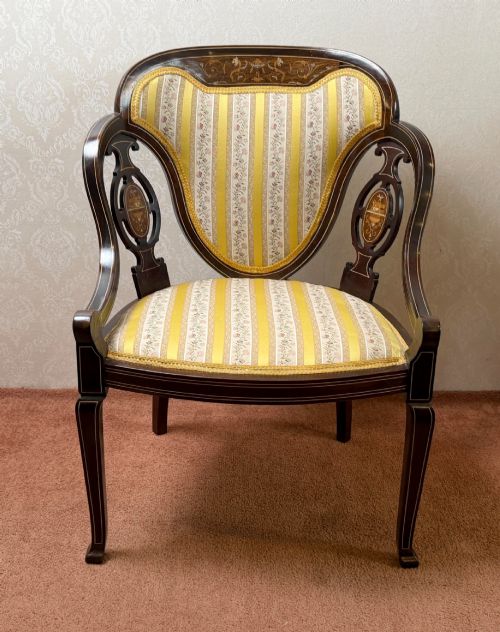
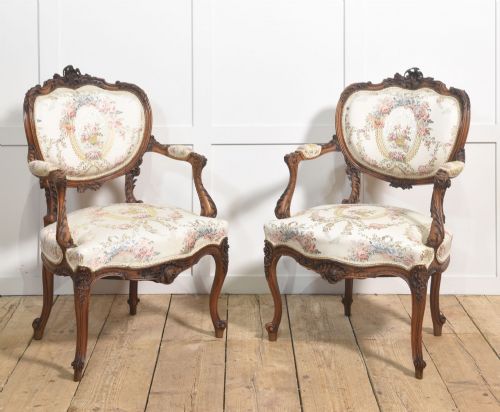
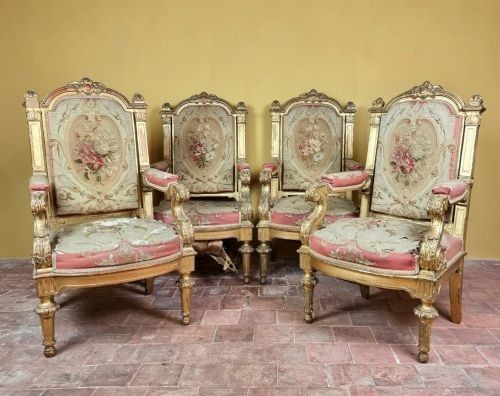
Floral upholstered salon chairs cover nineteenth-century and early twentieth-century seating designed for formal rooms, spanning Victorian and Edwardian periods. The selection includes individual armchairs, pairs of open armchairs, and larger sets originating from English and French workshops.
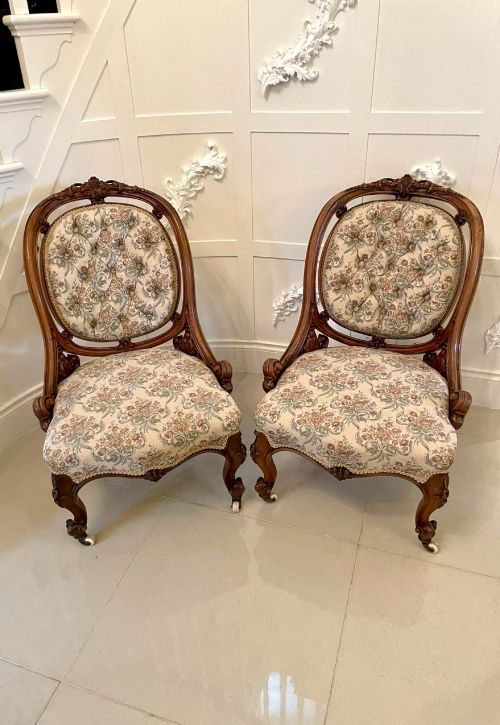
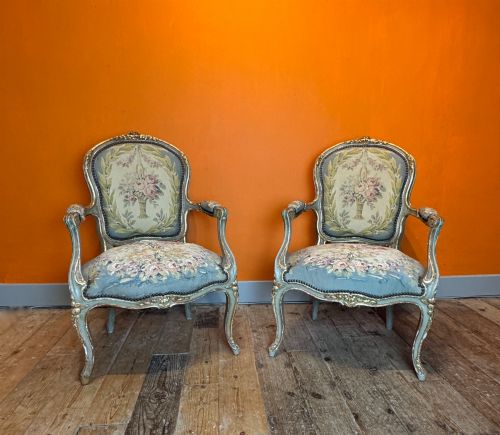
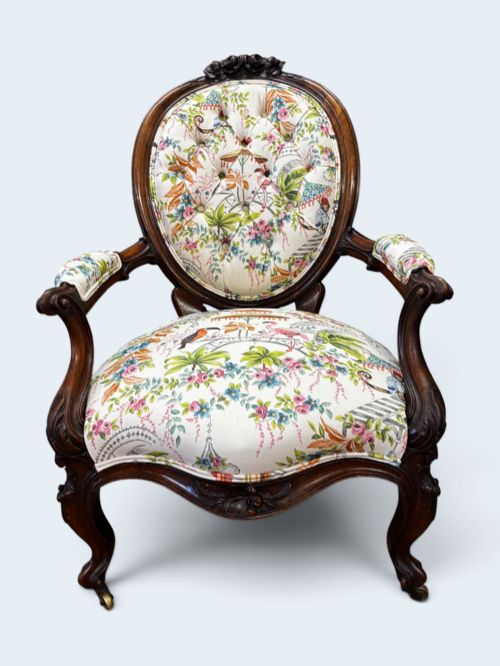
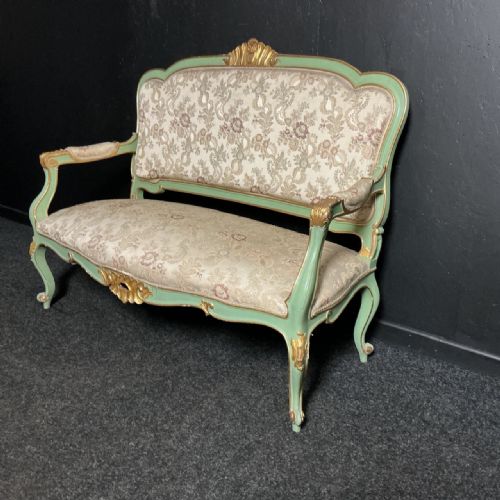
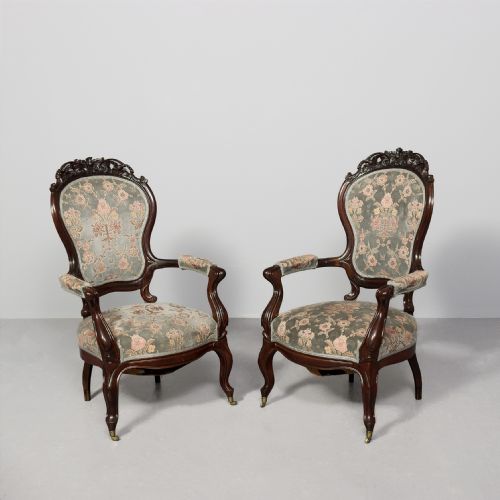
The dominant forms present sturdy mahogany, walnut, or rosewood frames paired with botanical textile coverings. Examples range from carved Victorian spoon-back chairs to French revival fauteuils displaying gilded or painted finishes.
What varies in quality
The refinement of timber carving and the originality of the wooden frame determine the upper tier of pieces. Crisp detailing on cabriole legs and arms distinguishes superior workshop output from simpler production.
The execution and survival of the textile cover influence overall merit, with hand-stitched needlepoint and period tapestry panels commanding higher regard than later replacement cloth.
Floral Upholstered Salon Chairs Retail Price Guide 2026
Typical asking prices for floral upholstered salon chairs among the pieces listed under this phrase on Sellingantiques today, from the lower quarter to the upper quarter. They describe what is for sale here now, not the wider market.
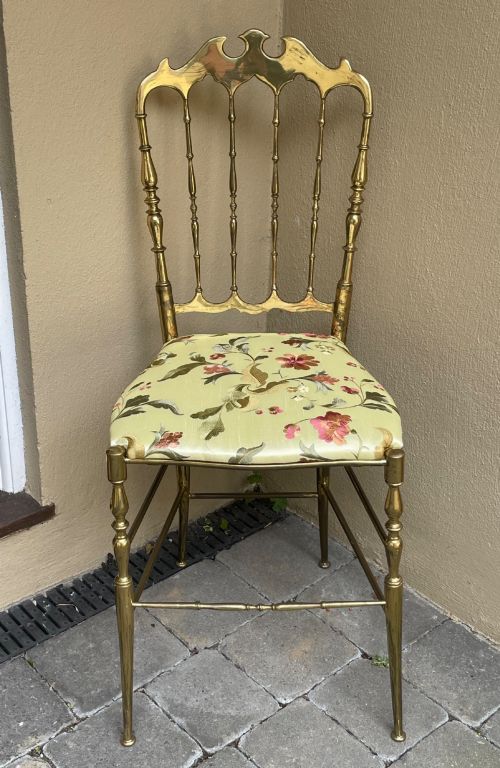
One brass salon chair stands out among the timber frames, proving that Victorians loved metallic novelty just as much as carved walnut.
Holland and Sons
The Floral Upholstered Salon Chairs Glossary
- Fauteuil
- An open-armed upholstered armchair originating in France, typically featuring an exposed wooden frame. These chairs gained prominence during revival periods in the nineteenth century.
- Spoon back
- A padded chair back shaped to resemble the bowl of a spoon, common in Victorian seating. This contour provides ergonomic support.
- Cabriole leg
- A furniture leg that curves outward at the knee and tapers inward toward the foot, inspired by animal limbs. It appears frequently on eighteenth-century revival seating.
- Needlepoint
- Embroidery stitched onto a stiff open-weave canvas ground to form dense pictorial or floral patterns. It serves as durable upholstery on period salon chairs.
- Parcel gilt
- A surface treatment where selected portions of a carved wooden frame receive a thin application of gold leaf. The remaining areas display painted or polished wood.
Floral Upholstered Salon Chairs: Frequently Asked Questions
How do I identify a Victorian salon chair?
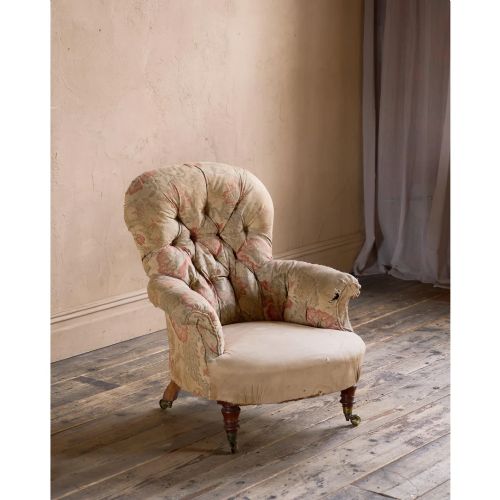
Victorian examples generally utilise dense timbers like mahogany and walnut with dark finishes, often featuring button-backed upholstery or spoon backs.
Cabinetmakers of this era favoured sturdy proportions and carved details that distinguished domestic parlour seating from earlier light French forms.
Where were these chairs used originally?
These seats belonged in formal reception spaces, drawing rooms, and private parlours where hosts entertained visitors.
Their decorative frames and patterned textile panels suited environments dedicated to social interaction and display.
Are French and English styles different?
French revival models lean toward lighter painted or gilded beech and walnut frames with open arms and floral needlepoint. English versions tend toward heavier mahogany structures with darker polishing and tighter buttoned upholstery.
Both traditions utilised botanical textile patterns suited to formal nineteenth-century interiors.
How should I care for antique upholstery?
Protect the fabric from direct sunlight to prevent fading of historical tapestries and needlepoint panels. Regular gentle vacuuming using a low suction attachment removes dust without abrading fragile textile fibres.