


Floral Transferware Platter
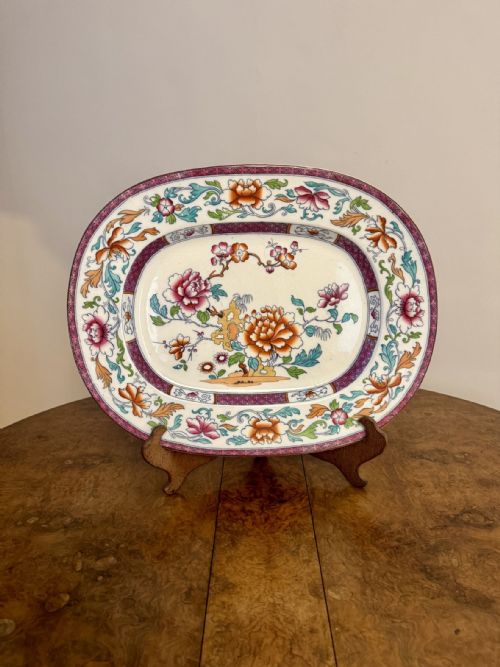
These floral transferware platter examples are earthenware and ironstone serving pieces decorated with printed patterns, offering practical charm for a traditional table.
Floral Transferware Platter
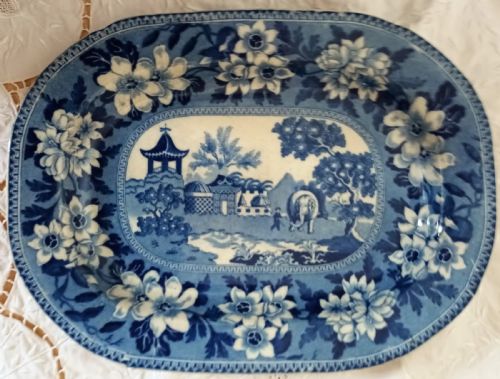
A floral transferware platter is a large serving dish designed for meat or large courses, featuring intricate designs applied through a copperplate printing process. These pieces emerge from the Georgian and Victorian eras, carrying centuries of dining history into modern homes.
Buyers meet examples spanning Pearlware, Ironstone, and Creamware, often decorated in classic blue and white tones or enriched with additional enamel colours. Forms range from large meat platters to serving trays and dinnerware sets, reflecting the diverse output of nineteenth-century potteries.
The selection includes specific named patterns such as the Elephant pattern and the London Bridge pattern, alongside botanical and Chinoiserie styles. Each platter demonstrates the practical ambition of historical English dining, meant just as much for display today as for serving food.
How they were made
Potters shaped bodies from earthenware, creamware, pearlware, or ironstone, preparing a porous ceramic base ready to receive decoration. Artisans then transferred engraved copperplate designs onto tissue paper before pressing them onto the biscuit ceramic surface.
Workers applied a transparent glaze over the transferred pattern before firing the piece in a kiln to fuse the decoration permanently into the ceramic body. Some items received hand-painted enamel highlights over the glaze to add extra colour to the printed floral motifs.
Elephants march across Georgian serving dishes, proving that nineteenth-century dinner tables enjoyed a surprising touch of global wildlife alongside their roast meat.
What varies in quality
Quality rests in the crispness of the transfer print and the balance of the ceramic form, where finer plates show sharp lines without blurring. The weight and refinement of the underlying ironstone or creamware also distinguish standard utility wares from superior productions.
The sophistication of the pattern and the application of any additional enamel colours elevate certain platters above plain blue and white domestic items. Preservation of the glaze surface and the depth of the historical potting contribute substantially to the standing of each piece.
John Rogers & Son·John Ridgway·Elkin Knight & Bridgwood
The Floral Transferware Platter Glossary
- Transferware
- Pottery decorated by printing an engraved design from a copper plate onto paper and then transferring it onto unglazed or biscuit ceramic. This technique allowed factories to produce complex pictorial patterns efficiently during the nineteenth century.
- Pearlware
- A refined earthenware body developed in the late eighteenth century featuring a subtle bluish glaze that pooled in crevices. It bridged the gap between creamware and later white ironstone.
- Ironstone
- A heavy, durable type of ceramic patented in the early nineteenth century designed to resist chipping. It provided a robust surface for large serving platters and dinner services.
- Creamware
- A pale yellow-hued earthenware perfected by English potters, known for its warm tone and light weight. It formed the base of many fine eighteenth and nineteenth-century table services.
- Enamel
- Opaque vitreous colours painted over the fired glaze of a ceramic piece to add bright accents to the transfer-printed design. These details were fixed with a low-temperature kiln firing.
Floral Transferware Platter: Frequently Asked Questions
Are these platters safe for everyday food use?
These historical earthenware and ironstone pieces can serve dry foods, but modern dishwashers and microwaves should be avoided to protect the nineteenth-century glaze.
Hand washing in warm water with mild soap keeps the ceramic stable and preserves the transferred patterns for years to come.
How do I date an antique platter?
Dating relies on identifying the ceramic body, such as pearlware versus ironstone, along with stylistic cues from the Victorian or Georgian periods.
Maker marks and named patterns also help narrow the production era, though many nineteenth-century pieces carry only faint impressed numbers or pattern titles.
What is the difference between earthenware and ironstone?
Earthenware is a porous, traditional pottery body that requires a complete glaze seal, whereas ironstone is a denser, heavier ceramic fired at higher temperatures.
Ironstone offers greater resistance to daily wear, making it particularly common for large nineteenth-century meat platters and heavy serving dishes.
How should I display a large meat platter?
Large platters look striking mounted on sturdy wall hangers designed for heavy ceramics or displayed upright on plate stands within a cabinet.
Ensuring the support securely takes the weight of the ceramic protects the piece from accidental slips while highlighting the detailed transfer print.