
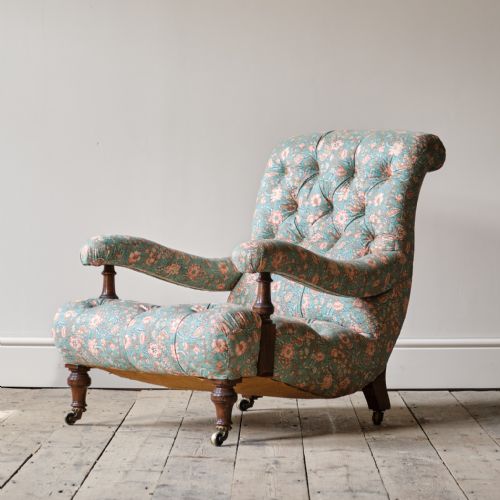


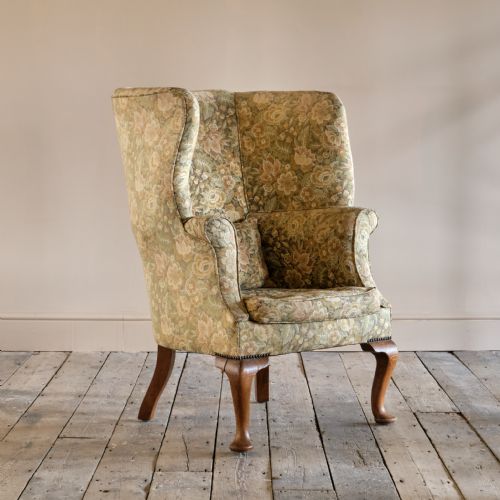


Floral Pattern Armchair
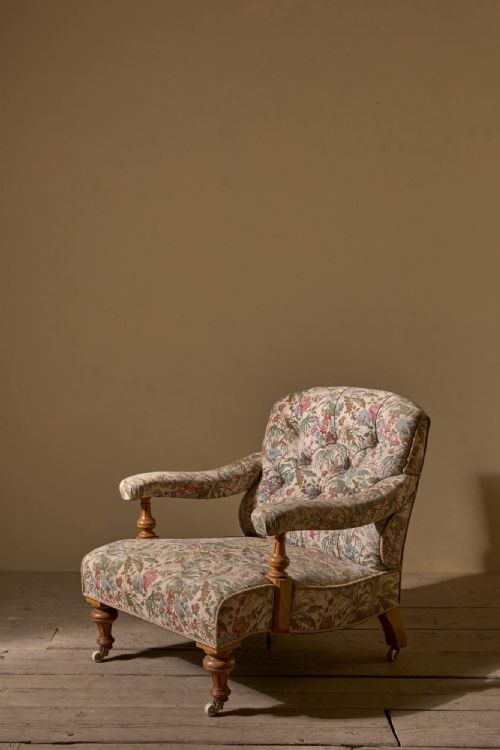
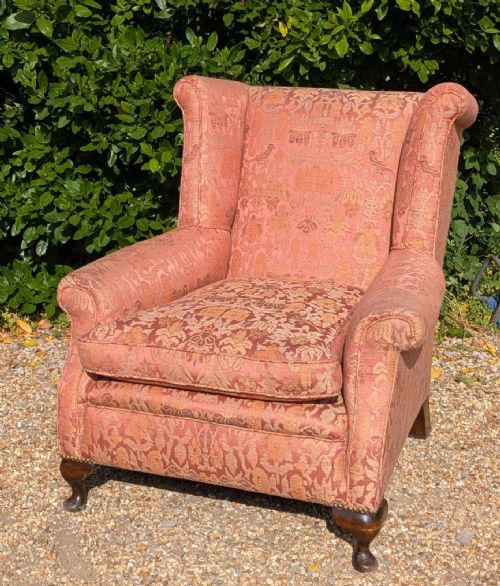
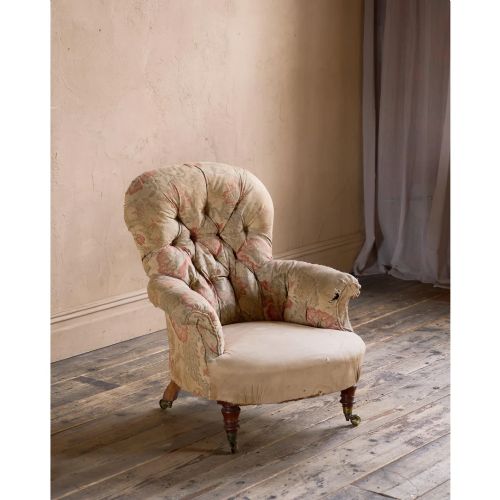
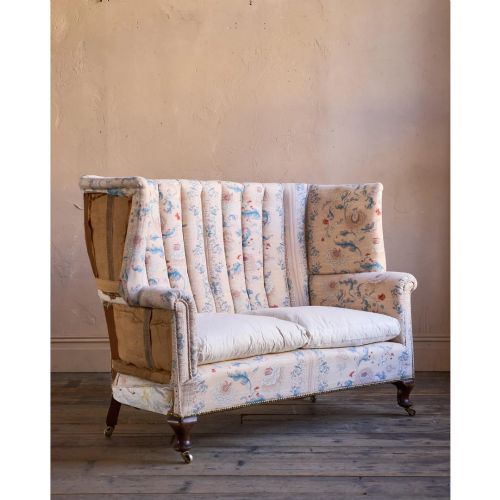
These floral pattern armchair examples range from button-backed Victorian designs to Edwardian country house seating, offering both comfort and period character.
Floral Pattern Armchair
A floral pattern armchair brings traditional textiles and seating forms together, spanning periods from the eighteenth century through to the twentieth century. Buyers seeking a floral pattern armchair encounter various stylistic expressions, including Victorian, Edwardian, and Queen Anne Revival forms.
Originating largely from British country house traditions and continental workshops, these chairs serve both decorative and functional roles in period interiors. The most frequent encounters on this page include nineteenth-century framed armchairs and early twentieth-century upholstered seating.
Materials and construction
Frames are constructed from solid hardwoods such as mahogany, walnut, and oak, providing structural integrity for the upholstered bodies. Joinery methods reflect traditional cabinet-making practices suited to each specific period.
Upholstery techniques utilise fabric, velvet, tapestry fabric, and specialised textiles stretched over supportive interiors like feather fillings. Exposed timber elements often feature carved details, fluting, or polished wood surfaces.
Materials documented across the pieces include traditional hardwoods like walnut and mahogany, paired with diverse textiles including velvet, tapestry, and floral fabrics.
Indicators of quality
Quality rests upon the structural integrity of the hardwood frame and the retention of original timber characteristics beneath the upholstery. Finer examples display precise carving, balanced proportions, and robust joinery that withstands centuries of use.
The standard of upholstery and the choice of textile covering dictate the tactile and visual distinction of each piece. Superior items retain supportive interior stuffing, such as feather fillings, and feature high-grade period fabrics aligned thoughtfully with the frame.
Holland and Sons·Howard and Sons·William Morris
The Floral Pattern Armchair Glossary
- Spoon back
- An upholstered chair back shaped in a concave oval resembling the bowl of a spoon, popular in Victorian seating. This design supports the sitter's spine closely.
- Wingback
- An armchair with side panels or wings attached to the back, designed to shield the occupant from drafts. These chairs frequently feature deep upholstery for fireside use.
- Cabriole leg
- A furniture leg that curves out and then in, resembling the leg of an animal in motion. It commonly terminates in a pad or ball and claw foot.
- Open armchair
- A chair featuring un-upholstered wooden armrests that expose the structural frame. These pieces often showcase the grain of walnut or mahogany.
- Barrel back
- A seating form where the back and arms form a continuous semi-circular curved enclosure. This style creates a snug, enveloping seat.
Floral Pattern Armchair: Frequently Asked Questions
How do I identify a Victorian armchair?
Victorian armchairs often feature dark timber frames made of mahogany or walnut, deep button-backed upholstery, and rounded forms such as spoon backs. Stylistic revivals like Rococo or Gothic elements frequently appear on these pieces.
Makers from this era utilised sturdy hardwood structures combined with sprung seats and heavy textile coverings. Examining the turnings and underframe helps confirm the nineteenth-century origin.
What is a wingback armchair used for?
Wingback armchairs were originally placed near fireplaces to protect sitters from cold drafts and trap heat around the head and shoulders. Their tall backs and side panels offered both warmth and privacy in large rooms.
Over time, they transitioned into general living spaces and reading rooms as decorative yet practical seating. Their high backs make them prominent focal points in traditional interiors.
How are Edwardian armchairs different from Victorian ones?
Edwardian armchairs typically display lighter proportions, often incorporating Sheraton or Queen Anne revival influences alongside simplified forms. The framing timbers tend to be brighter or more refined than the heavier woods of the preceding century.
Upholstery during the Edwardian period also shifted toward brighter floral textiles and less congested ornamentation. This reflected a growing preference for airy, country house aesthetics.
Can I reupholster an antique armchair?
Reupholstering antique armchairs is a common practice to preserve functional use while refreshing worn or damaged textile covers. Many pieces are acquired specifically for recovering to match contemporary interiors.
Retaining the original webbing, springs, and frame structure during the process preserves the historical integrity of the piece. Traditional techniques should be employed to maintain the correct profile of the chair.