



Floral Painted Drawers
Floral painted drawers bring hand-finished colour and botanical ornament directly into a room, offering practical storage alongside decorative character.
Floral Painted Drawers
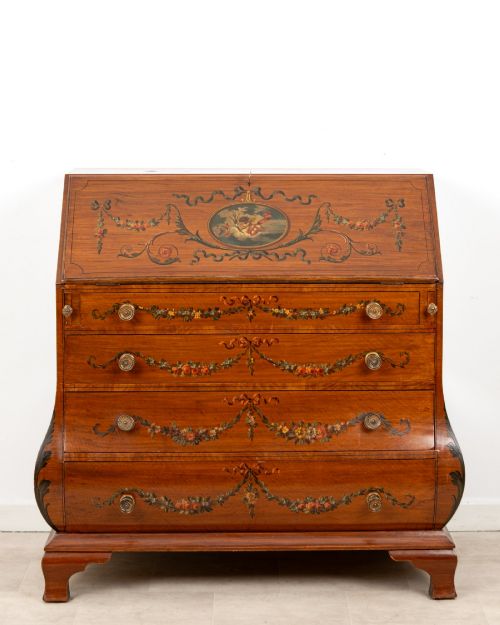
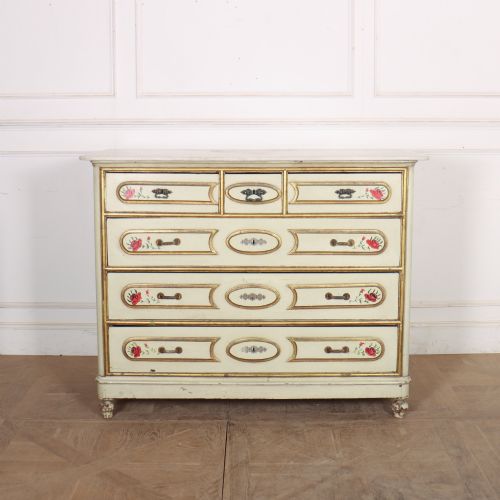
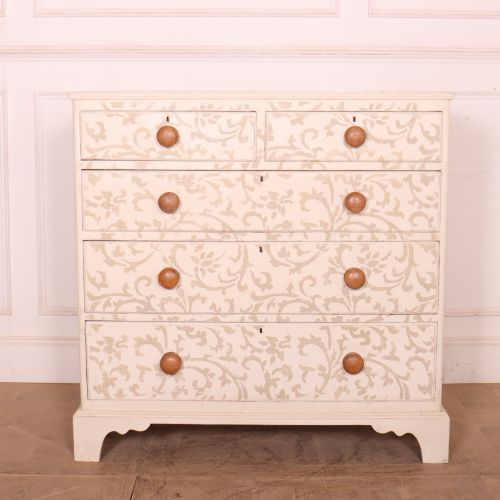
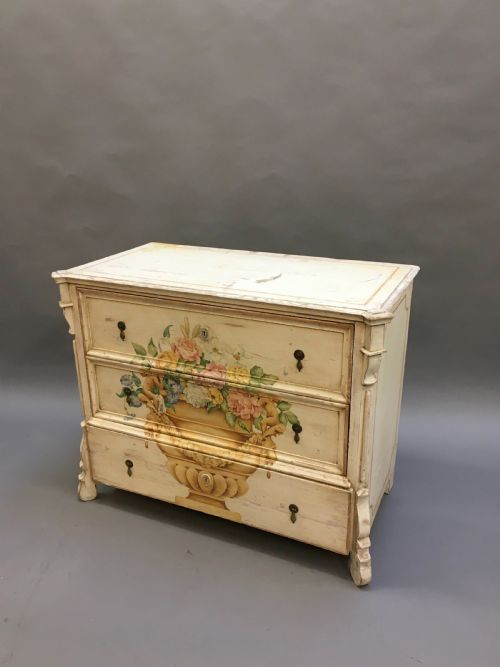
Floral painted drawers encompass chests of drawers, bureaux, commodes, and writing desks produced across the Georgian, Regency, and Victorian eras, extending into Edwardian revival pieces. These items serve as functional storage furniture transformed by decorative floral surface work.
Buyers on this page most frequently encounter satinwood chests of drawers and commodes featuring delicate painted botanical motifs, often influenced by the Sheraton revival style or 19th-century continental traditions. Each piece marries traditional cabinetry with hand-applied floral ornamentation.
The category ranges from substantial bow-fronted chests and knee-hole desks to compact collectors' cabinets and serving tables. Their shared identity lies in the combination of wooden construction and surface floral painting.
How they were made
Construction relies on timber foundations such as satinwood, pine, and general hardwoods, providing stable carcasses for decorative surfaces. Cabinet makers utilised traditional joinery techniques appropriate to the period, shaping drawer fronts and writing compartments to receive ornamentation.
Surface decoration involves gesso priming and hand-applied paint, creating smooth fields for floral motifs. Artisans painted botanical details directly onto the wood or gesso ground, sometimes incorporating brass fittings like handles and escutcheons to complement the visual design.
Floral Painted Drawers Retail Price Guide 2026
Typical asking prices for floral painted drawers among the pieces listed under this phrase on Sellingantiques today, from the lower quarter to the upper quarter. They describe what is for sale here now, not the wider market.
Every painted petal relies on someone keeping a steady hand while painting centuries ago.
What varies in quality
Quality rests primarily in the finesse and preservation of the painted decoration, where fluid brushwork and detailed botanical rendering separate superior work from simpler commercial output. The crispness of the timber framing and the subtlety of the satinwood grain further distinguish finer cabinetwork.
The integrity of the structural joinery and the original pairing of brass hardware also influence overall execution. Pieces that retain their untouched painted surfaces without excessive overpainting represent the higher end of the scale.
The Floral Painted Drawers Glossary
- Satinwood
- A durable, lustrous timber with a golden sheen, frequently used as a canvas for fine painted decoration during the Georgian and Edwardian periods.
- Commode
- A low cabinet or chest of drawers, often of continental origin, designed with decorative proportions for principal rooms.
- Gesso
- A plaster-like mixture applied to wood surfaces to prepare a smooth, absorbent ground for painting and gilding.
- Serpentine
- A curved furniture front characterised by a convex centre flanked by concave ends, creating a flowing contour.
- Bow front
- A convex, outward-curving front profile commonly found on 19th-century chests of drawers and side tables.
Floral Painted Drawers: Frequently Asked Questions
Where should I place floral painted drawers?
These pieces suit reception rooms, bedrooms, or hallways where their decorative painted surfaces can act as a focal point without heavy competition from other furniture.
Because they combine storage with detailed artwork, position them away from direct strong sunlight to protect the pigments and satinwood finishes over time.
How do I clean painted wooden furniture?
Dust surfaces gently with a soft, dry cloth and avoid liquid cleaners, abrasive cloths, or modern chemical polishes that can damage the historical paint layer.
Maintain a stable indoor humidity to prevent the underlying timber from expanding or contracting, which helps protect both the joinery and the gesso.
Are these drawers suitable for daily use?
Most examples function effectively for storing lighter items like linen, stationery, or accessories, provided the drawer runners operate smoothly within their carcasses.
Treat the painted surfaces with care, as heavy daily friction or sharp objects can chip the historical decoration over extended periods of use.
How can I tell a revival piece from an earlier one?
Examine the timber species, construction methods, and the style of the floral painting, noting that Edwardian Sheraton revival pieces often feature bright satinwood and distinct pigment handling.
Georgian and Regency originals display period-specific secondary timbers and hand-forged elements that differ subtly from later 1900s interpretations.