

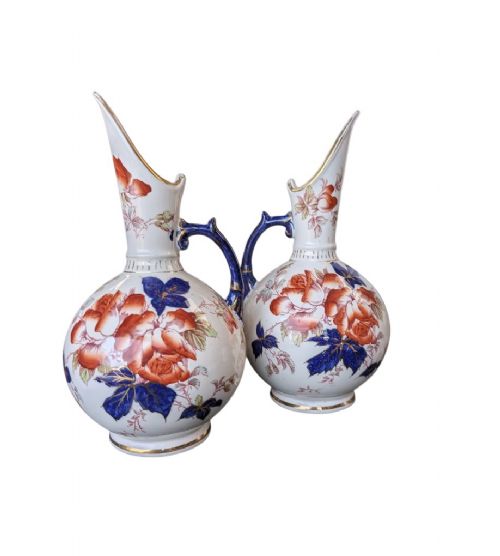


Floral Painted Decorative Ewer
A floral painted decorative ewer brings graceful nineteenth-century ceramic form and botanical colour to a room.
Floral Painted Decorative Ewer
When you search for a floral painted decorative ewer, you find ceramic vessels created for display rather than utility. These pieces take the traditional handled pitcher shape and elevate it through hand-painted botanical decoration, often rendered during the Victorian and Edwardian eras.
You are most likely to meet English porcelain examples on this page, particularly pieces originating from Royal Worcester. The selection spans various periods from the early nineteenth century through the early twentieth century, incorporating forms such as cleft jugs, wine ewers, and pedestal vases.
Styles range widely across the inventory, touching upon Victorian Rococo Revival, Japanese Imari, and Aesthetic Movement influences. While some items function purely as ornamental ewers, others double as vases or scent bottles, maintaining the distinctive poured profile throughout.
How they were made
Makers shaped these items primarily from porcelain and hard-paste porcelain, employing traditional ceramic moulding and throwing techniques. Skilled artisans then applied hand-painted floral motifs directly onto the ceramic body.
Many examples incorporate gold leaf, gilt, or gilding to highlight handles, rims, and sculptural panels. Certain pieces also feature raised flower encrustations or contrasting bronze and cast metal mounts.
Floral Painted Decorative Ewer Retail Price Guide 2026
Typical asking prices for floral painted decorative ewer among the pieces listed under this phrase on Sellingantiques today, from the lower quarter to the upper quarter. They describe what is for sale here now, not the wider market.
Listings feature hard-paste porcelain, bronze, and enamel materials across nineteenth and twentieth-century periods.
What varies in quality
The distinction between standard production and exceptional manufacture rests in the execution of the hand-painted floral details. Finer pieces demonstrate precision and delicacy in the botanical artwork, often combined with intricate gilt work.
Structural complexity also dictates the tier of the piece, with sculptural elements like blush ivory finishes, cleft handles, and applied floral encrustations requiring advanced ceramic craftsmanship.
Royal Worcester·Doulton Burslem·Rockingham Porcelain·Minton
The Floral Painted Decorative Ewer Glossary
- Ewer
- A large jug with a wide spout and handled body, traditionally used for pouring water but frequently made as a decorative object in ceramics.
- Gilt
- A thin layer of gold applied to the surface of porcelain or metal to provide ornamental highlights and metallic lustre.
- Hard-paste porcelain
- A durable ceramic material fired at high temperatures, composed of kaolin and petuntse, yielding a dense and vitrified body.
- Blush ivory
- A specialist matte cream porcelain ground developed by Royal Worcester, typically decorated with soft floral colours and gold accents.
- Cleft jug
- A pitcher featuring an indented or split body profile, often utilised in Victorian ornamental ceramic design.
Floral Painted Decorative Ewer: Frequently Asked Questions
Were these ewers used for water?
Most pieces listed under this category served a purely decorative function in period interiors. Their delicate hand-painted surfaces and gilt details suited them better for display on mantelpieces or pedestal tables than for daily utility.
Certain forms derived from functional pitchers, but their primary role evolved into ornamental display during the nineteenth century.
How do I date a Royal Worcester ewer?
Dating involves examining the factory marks stamped on the base of the ceramic body. Factory codes and puce marks provide specific chronological indicators for pieces produced in the nineteenth and twentieth centuries.
Stylistic cues such as blush ivory grounds and aesthetic movement shapes also help narrow down the production decade.
What is blush ivory porcelain?
Blush ivory is a distinctive matte cream ceramic finish developed during the Victorian period. It mimics the appearance of ivory and provides a soft background for floral painting.
Factories like Royal Worcester utilised this finish extensively on decorative ewers and vases alongside gilt detailing.
How should I display a ceramic ewer?
These vessels require stable placement away from high-traffic areas due to their porcelain composition and protruding handles. Placing them on sturdy shelving or cabinets highlights their sculptural profile.
Keeping them out of direct sunlight helps preserve the vibrancy of the hand-painted floral enamel over time.