
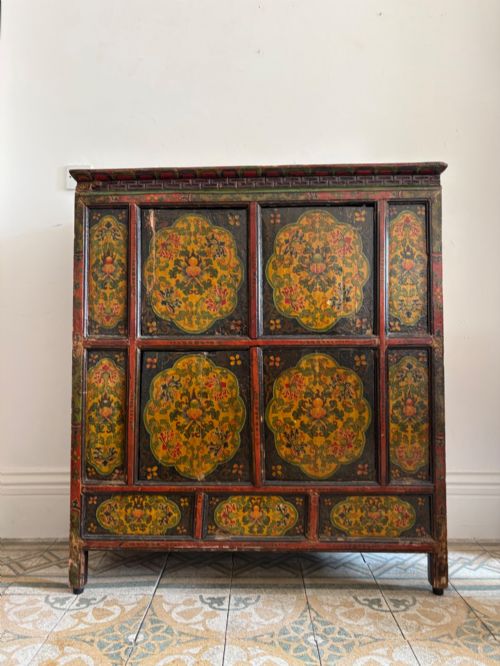

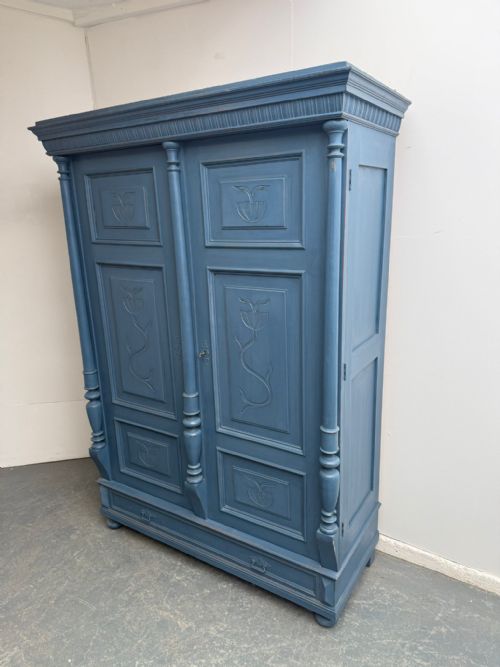


Floral Painted Cupboard
A floral painted cupboard brings hand-brushed botanical colour and historic storage into a room.
Floral Painted Cupboard
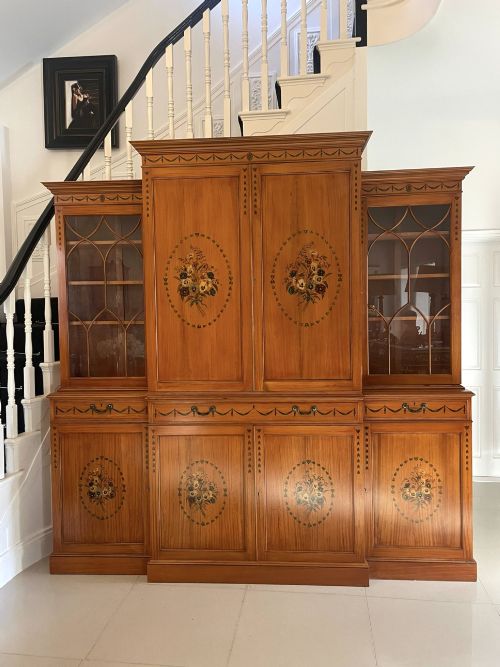
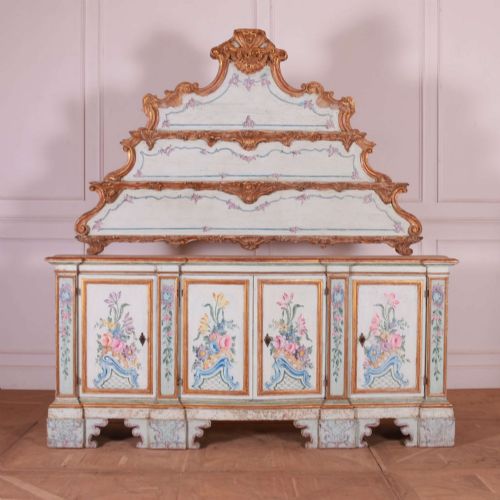
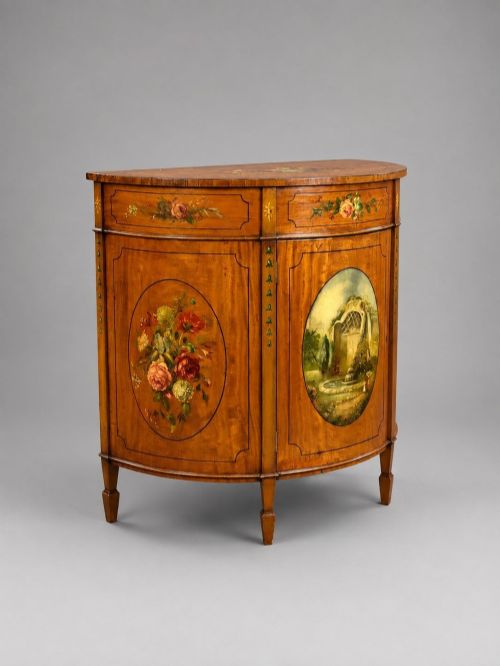
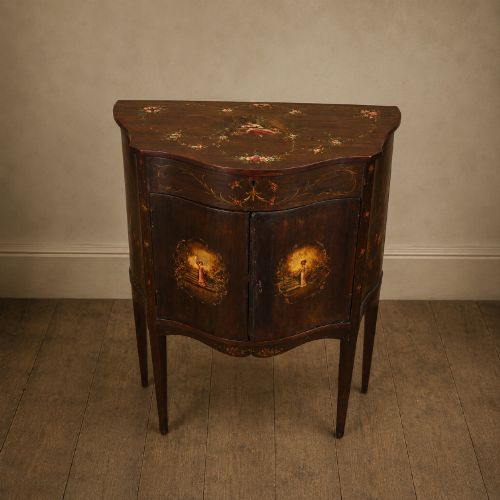
A floral painted cupboard combines practical storage with decorative surface artistry, appearing across periods from the eighteenth century to the mid-twentieth century. These pieces range from compact bedside cabinets and corner units to large armoires, sideboards, and breakfront bookcases.
The selections span diverse regional traditions including Venetian, Italian, Hungarian, Tibetan, and French provincial workshops. Buyers frequently encounter Edwardian satinwood pieces alongside earlier pine and mahogany examples adorned with floral and classical motifs.
Materials and Construction
Carpenters utilised native and imported timbers including satinwood, mahogany, pine, and walnut as solid carcases or supportive foundations for fine veneers. Brass hardware such as hinges and handles complete the structural assembly of these cabinets.
Artisans applied pigment directly onto prepared wooden surfaces, sometimes incorporating carved details, inlaid stringing, or glass panels. Many items preserve original polychrome or monochrome brushwork depicting flowers, birds, and classical panels.
Assessing Quality and Execution
The distinction between tiers rests upon the harmony of the timber selection, the crispness of any inlaid marquetry, and the finesse of the brushwork. Superior examples display confident, detailed floral artistry executed by skilled hands rather than generic stencilling.
Structural integrity of the timber carcase, the retention of original painted surfaces, and the quality of period brass fittings dictate desirability. Pieces retaining unblemished or patinated historic decoration command greater interest from collectors.
Maple Co·Melissa White
The Floral Painted Cupboard Glossary
- Demi-Lune
- Half-moon shape in furniture design. This curved profile is frequently seen on Edwardian satinwood cabinets and commodes.
- Polychrome
- Decorated in multiple colours. Artisans utilised this technique to render vibrant floral arrangements across cabinet doors and panels.
- Chinoiserie
- European imitation of Chinese artistic traditions. These cupboards often feature delicate depictions of birds and flowers against dark backgrounds.
- Breakfront
- A piece of furniture where the central section projects forward from the sides. This architectural form provides visual depth to large cabinets and bookcases.
- Serpentine
- A gently curved line that undulates inward and outward. This contour adds elegance to the fronts of Venetian buffets and side cabinets.
Floral Painted Cupboard: Frequently Asked Questions
Where should I place a floral painted cupboard?
These cabinets work well as focal points in living rooms, hallways, or bedrooms where their decorative surfaces can be appreciated. Smaller versions function effectively as bedside storage or corner display units.
Ensure the piece is positioned away from direct sunlight and excessive heat fluctuations to protect the painted wooden surfaces over time.
How do I clean a painted cupboard?
Dust the exterior gently with a dry, soft cloth on a regular basis to prevent particle buildup. Avoid harsh chemical cleaners or abrasive sponges that could damage the historic pigment.
If moisture is necessary for stubborn marks, use a damp cloth followed immediately by a dry one to prevent water absorption into the timber.
Are these cupboards suitable for daily use?
Most pieces offer robust internal shelving and hanging space suitable for everyday storage needs. Solid wood construction ensures they remain functional items of furniture.
Care should be taken with delicate glass doors and historic painted finishes to prevent accidental scratching or impact damage during use.
How can I tell the period of a painted cabinet?
Examine the underlying timber construction, joinery methods, and the style of the painted decoration. Edwardian and Sheraton Revival pieces often showcase bright satinwood with refined floral motifs, whereas eighteenth-century examples display heavier pine or regional European forms.
Look closely at the brass hardware and the ageing of the paint layer for further clues regarding the age of the piece.