




Floral Marquetry Round Table
These floral marquetry round table pieces bring intricate wood inlay and warm walnut or kingwood tones directly into domestic spaces.
Floral Marquetry Round Table
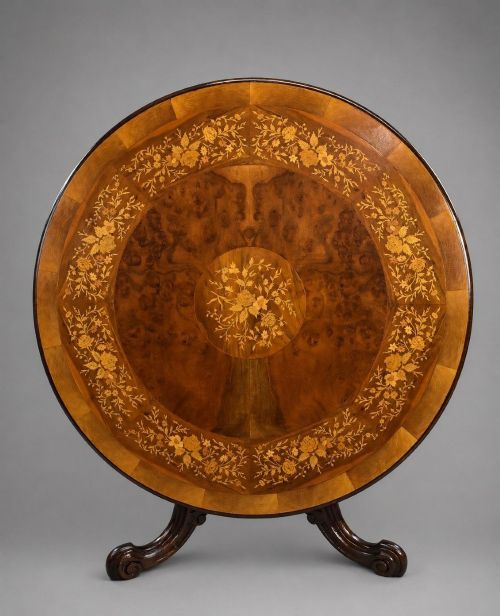
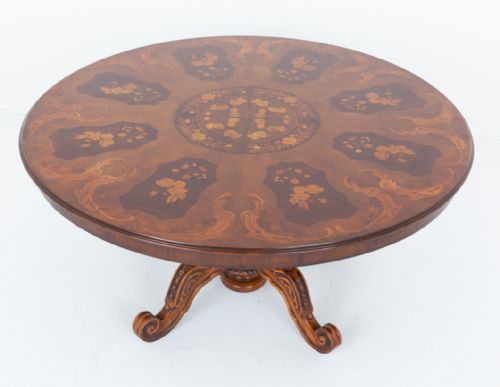
A floral marquetry round table typically manifests as a centre table, occasional table, or breakfast table created during the Victorian era or the nineteenth century. These circular pieces function well in reception rooms and parlours where a central surface displays detailed wood inlay.
Makers drew heavily upon French Louis XV style and Louis XVI style revivals, alongside standard Victorian aesthetics. The forms range from compact occasional furniture to larger dining tables resting on carved supports.
Materials and construction methods
Craftsmen utilised foundational timbers like walnut, burr walnut, rosewood, and kingwood to build the primary structure and circular top. Marquetry inlay and wood inlay techniques applied contrasting veneers to create floral motifs across the surface.
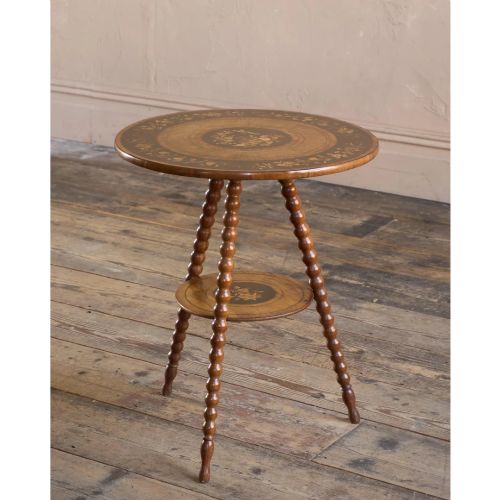
Metal ornamentation such as brass and ormolu mounts frequently decorated the edges, legs, and aprons. Some examples incorporated turned wooden supports, including bobbin legs or carved walnut pedestals.
Floral Marquetry Round Table Retail Price Guide 2026
Typical asking prices for floral marquetry round table among the pieces listed under this phrase on Sellingantiques today, from the lower quarter to the upper quarter. They describe what is for sale here now, not the wider market.
Object forms span across centre tables, occasional tables, coffee tables, and breakfast tables, often incorporating French stylistic influences.
Factors determining quality
The sophistication of the marquetry inlay separates standard production from superior examples. Finely cut veneers display crisp botanical details and complex tonal variations across the tabletop.
The choice of primary timber significantly alters the character of the piece. Selecting highly figured burr walnut or rich kingwood paired with cast ormolu mounts indicates a higher grade of craftsmanship.
The Floral Marquetry Round Table Glossary
- Marquetry
- Decorative veneer work arranged in pictorial patterns on a wooden ground. Craftsmen assemble precisely cut pieces of various timbers to form floral or geometric designs.
- Ormolu
- Gilded bronze ornamentation applied to furniture mounts. This technique gained popularity in French revival pieces during the nineteenth century.
- Kingwood
- A dense, richly figured tropical timber utilised in high-end cabinet making. Its dark contrasting grain complements detailed inlay work.
- Burr walnut
- Wood taken from walnut tree growths, producing swirling grain patterns. This material forms striking tabletops in Victorian designs.
- Gueridon
- A small circular table designed for occasional use. Originating in France, these tables often feature slender legs and decorative marquetry tops.
Floral Marquetry Round Table: Frequently Asked Questions
Where should I place a floral marquetry round table?
These tables sit comfortably as a centrepiece in a drawing room or entrance hall where the circular top remains fully visible. They function equally well as occasional surfaces for lamps or decorative objects.
Because the wood inlay covers the primary surface, positioning the table away from direct, harsh sunlight protects the delicate veneers from fading over time.
How do I clean and care for the surface?
Dust the tabletop regularly with a soft, dry cloth to prevent particles from settling into the veneer joints. Avoid using harsh chemical sprays or abrasive polishes that might damage the polished wood finish.
Applying a traditional beeswax occasionally helps nourish the walnut, rosewood, or kingwood timbers while maintaining a gentle, protective sheen across the marquetry.
Are these tables suitable for daily dining?
While certain larger examples functioned as breakfast or dining tables, most surviving circular pieces serve better as centre or occasional furniture. Using protective mats helps prevent heat and moisture marks on the antique veneer.
Everyday heavy usage can put strain on the antique joints and delicate brass or ormolu mounts fitted around the edges.
How do I distinguish French styles from Victorian pieces?
French Louis revival designs often incorporate kingwood, ormolu mounts, and slender cabriole legs. Victorian examples frequently utilise burr walnut and heavier pedestal or bobbin leg supports.
Both traditions embraced intricate floral marquetry, though French-inspired pieces generally lean towards lighter decorative accents and Ormolu detailing.