


Floral Marquetry Card Table
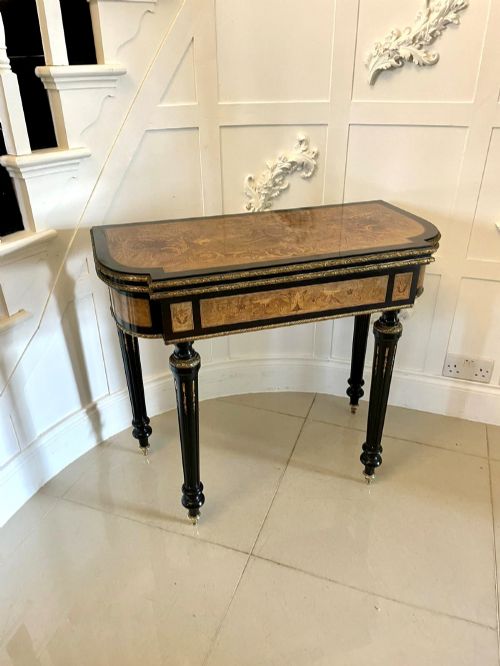
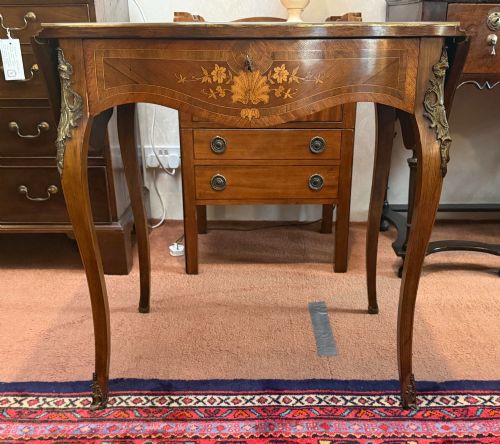
A floral marquetry card table brings together timber, brass, and floral wood inlay across the 18th and 19th centuries.
Floral Marquetry Card Table
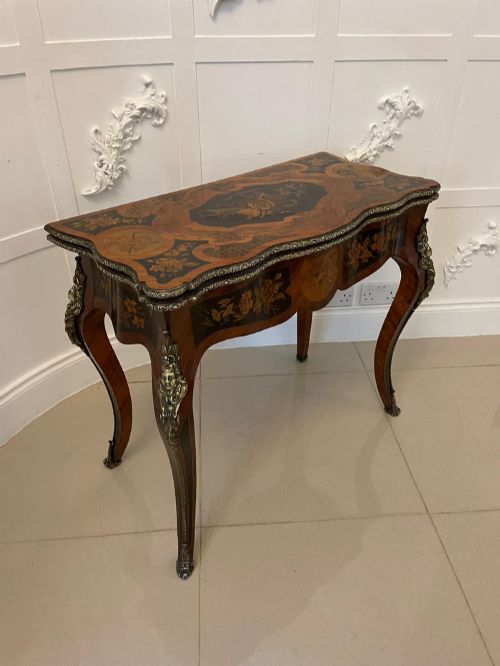
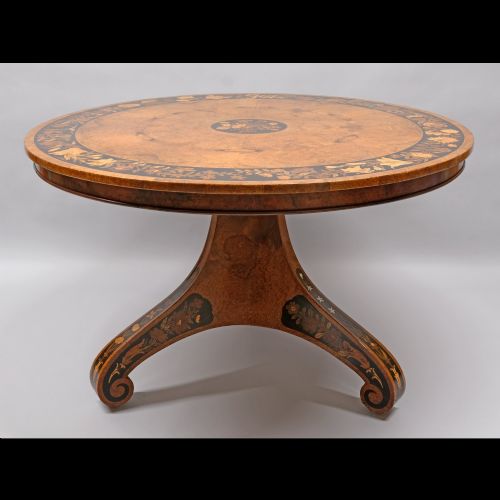
A floral marquetry card table is a folding or pivoting games surface decorated with detailed botanical wood inlay, appearing in various forms across the 18th and 19th centuries. Buyers searching for a floral marquetry card table will find pieces ranging from Dutch Baroque and Neoclassical designs to Victorian and French Louis Revival interpretations.
The objects served primarily as games tables, side tables, centre tables, and console tables within domestic interiors. Walnut, burr walnut, and kingwood serve as the primary foundational timbers for these items, often paired with fruitwood inlay to render the floral motifs.
The selection includes 18th-century Dutch examples alongside Victorian and French pieces from the 1850s to the 1880s. These tables adapt easily to modern rooms as occasional display surfaces or functional card tables.
Materials and construction methods
Cabinet makers utilised walnut, burr walnut, and kingwood as the structural base and visible surfaces for these pieces. Fruitwood inlay was carefully cut and fitted into the primary timber to create the floral marquetry designs seen across the tops and borders.
Makers incorporated brass and ormolu mounts to edge and highlight the cabinet work, particularly on French Louis Revival pieces. Timber selection dictated how the grain surrounded the intricate wood inlay work.
Several tables include hidden compartments beneath the folding tops once intended for storing stray playing cards.
Factors determining quality
Quality rests in the precision of the wood inlay and the depth of the botanical rendering. The choice of burr walnut or kingwood as a ground timber elevates the visual richness of the surface.
The integration of cast ormolu mounts and the crispness of the fruitwood details distinguish finer examples from standard production. Construction stability in the folding mechanism and the grain continuity across the hinges also mark the standard of the piece.
Holmes Baldock·Henry Dasson
The Floral Marquetry Card Table Glossary
- Marquetry
- Decorative veneer work applied to a structure to form pictures or patterns, utilising various coloured woods.
- Ormolu
- Gilded bronze mounts applied to furniture for decorative and structural accent.
- Kingwood
- A dense, richly figured timber often used in fine cabinet work and marquetry borders during the 18th and 19th centuries.
- Burr walnut
- Walnut timber taken from a growth on the tree, yielding a swirling, highly figured grain pattern.
- Console table
- A table designed to stand against a wall, sometimes secured to it with brackets.
Floral Marquetry Card Table: Frequently Asked Questions
How do I use a card table today?
These tables function well as console or side tables against a wall when folded shut. Opening the top reveals a baize or polished wood surface suitable for display or occasional use.
Position the table in a hallway, drawing room, or living space where its floral marquetry top remains visible. Avoid placing them in direct sunlight to protect the fruitwood inlay and walnut veneers.
How do I tell Dutch and French styles apart?
Dutch pieces from the 18th and 19th centuries frequently feature darker walnut grounds with dense, pictorial floral marquetry covering the entire top and frieze. They often exhibit a distinct dog-eared or serpentine outline.
French Louis Revival examples tend to incorporate ormolu mounts, kingwood veneers, and lighter fruitwood contrast, leaning towards curved cabriole legs and gilt bronze detailing.
What woods are most common?
Walnut and burr walnut form the primary corpus for the majority of these tables. Kingwood also appears frequently on French examples.
Fruitwood is the standard medium used for the contrasting floral inlay work. Brass accents and ormolu mounts supplement the timber construction.
Are all these tables from the Victorian period?
While many listed pieces date to the 19th century and the Victorian era, the selection includes 18th-century Dutch examples. Dates span from the 1700s through to the 1880s.
Stylistic revivals during the Victorian period often drew inspiration from earlier French and Dutch designs. Checking the construction details and timber age helps clarify the exact period.