


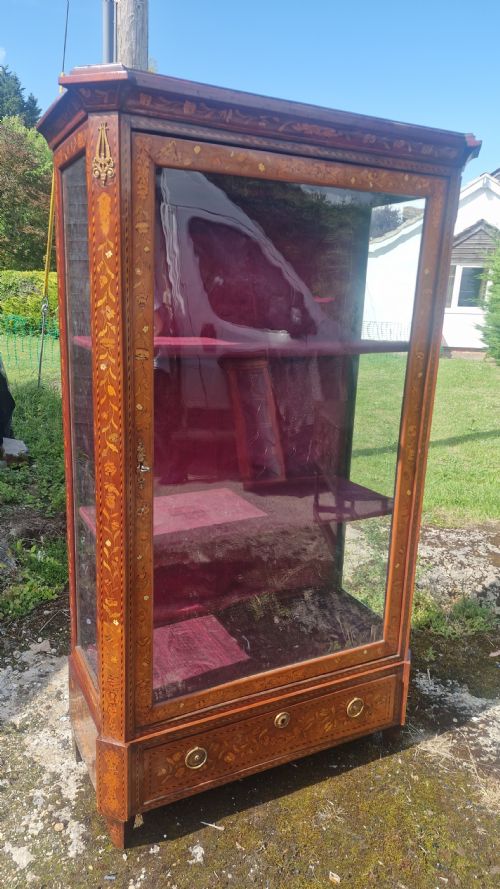
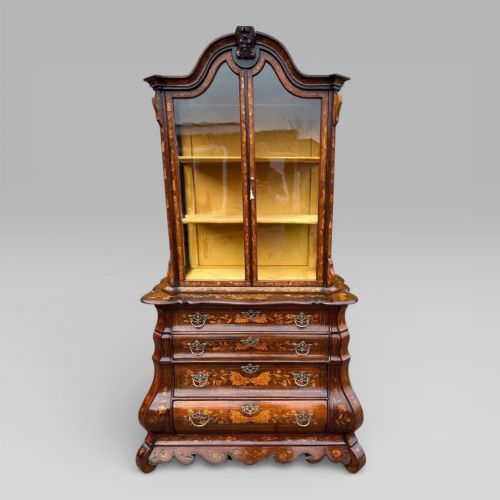


Floral Inlay Vitrine
A floral inlay vitrine brings together delicate botanical marquetry and glazed display space, offering the ideal showcase for treasured collections.
Floral Inlay Vitrine
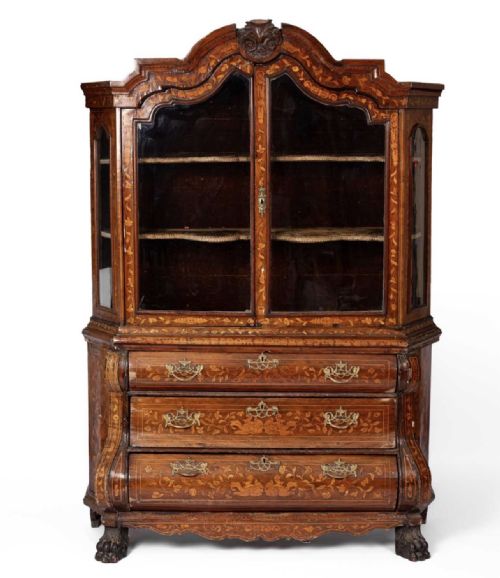
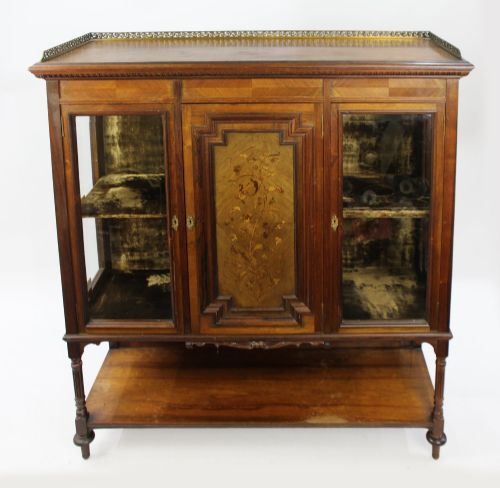
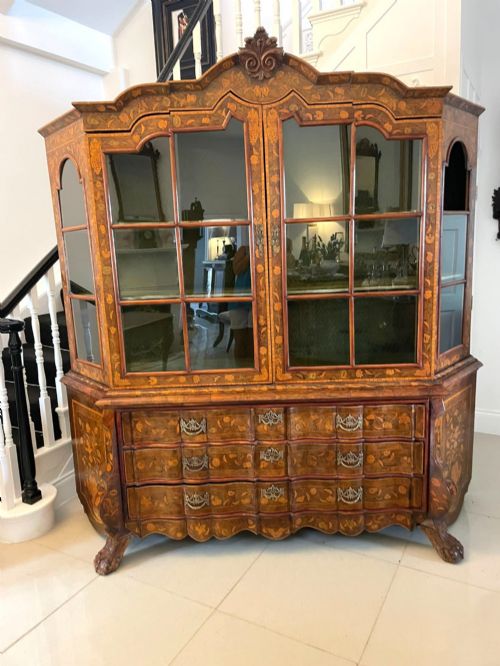
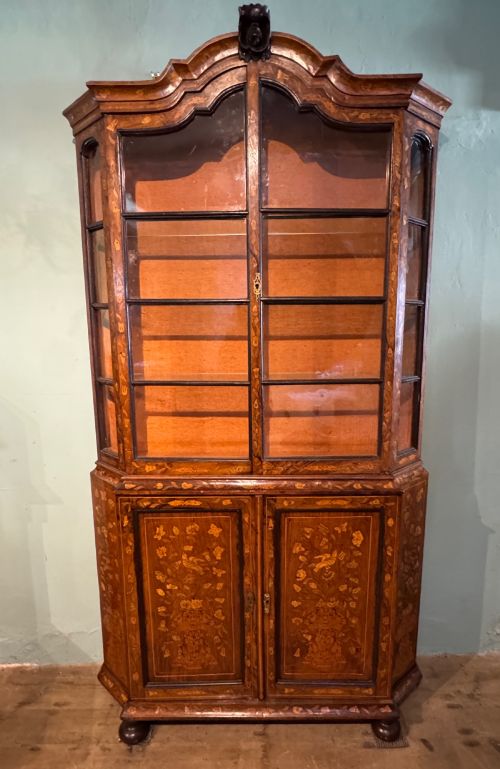
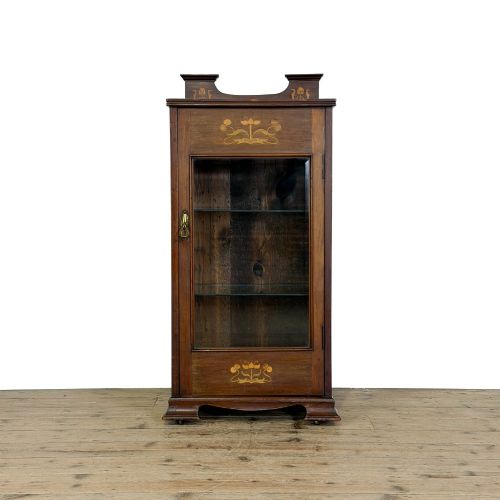
A floral inlay vitrine encompasses a variety of glazed display furniture, from tall cabinets on chests to compact pier cabinets and corner cupboards. Buyers seeking this style will frequently encounter Edwardian mahogany examples alongside robust walnut pieces from the eighteenth and nineteenth centuries.
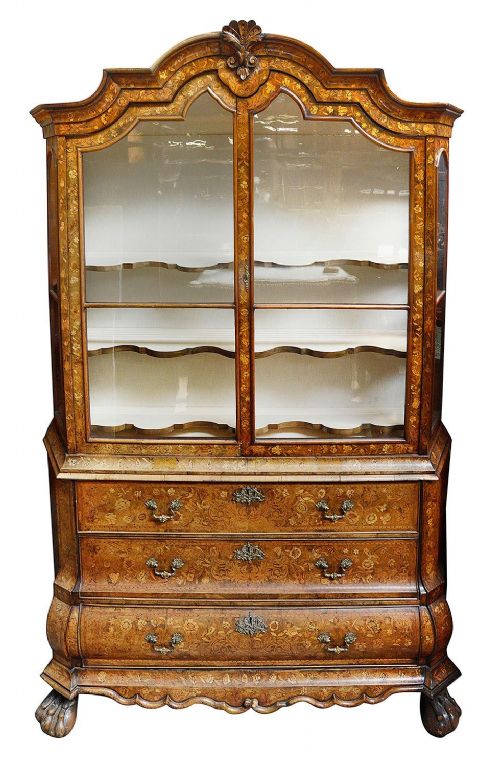
Many of these display cabinets originate from British workshops influenced by Sheraton Revival designs, or come via continental makers producing elaborate Dutch marquetry pieces. The selection ranges from serpentine and bombé shapes to simpler side tables and freestanding glass-fronted cases.
Materials and Construction
Cabinet makers utilised foundational timbers such as mahogany, walnut, and satinwood, often embellishing the carcase with intricate fruitwood and wood inlay. Glass panels protect the contents while brass mounts and ormolu details provide structural and decorative accents.
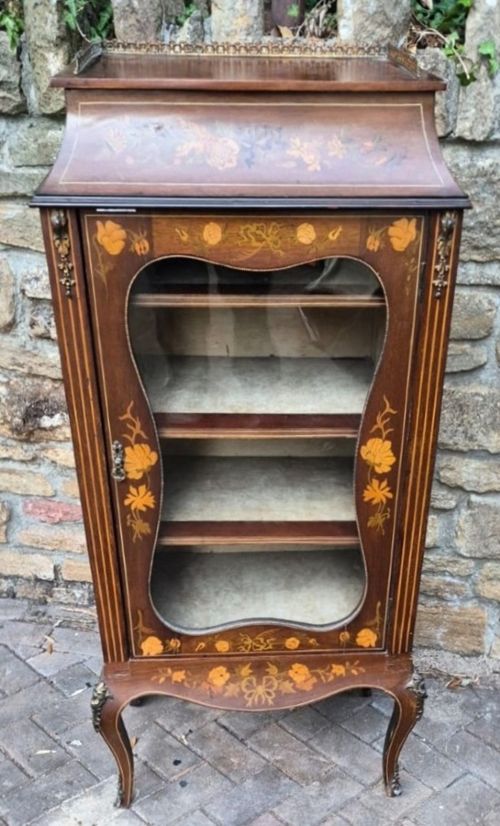
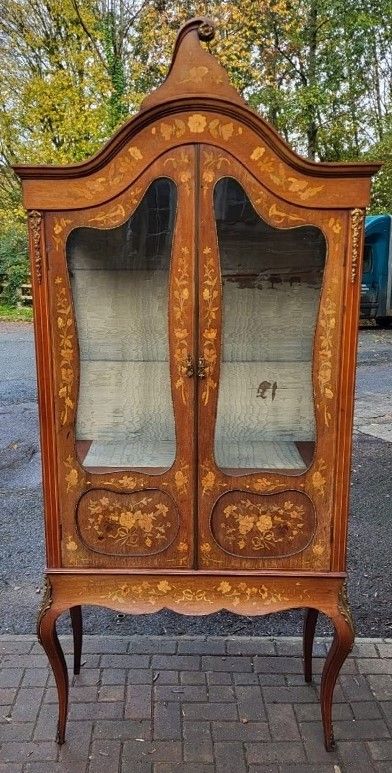
The floral decoration relies on marquetry techniques, where different veneer timbers are cut and fitted together to form elaborate botanical motifs across the doors and drawer fronts.
Floral Inlay Vitrine Retail Price Guide 2026
Typical asking prices for floral inlay vitrine among the pieces listed under this phrase on Sellingantiques today, from the lower quarter to the upper quarter. They describe what is for sale here now, not the wider market.
Even lamp tables get the royal treatment here, arriving with kidney shapes and inlaid flowers.
Craftsmanship and Proportion
The distinction between standard examples and the finest pieces lies in the crispness of the floral marquetry and the choice of figuring in the underlying timber, such as fiddle back mahogany or burr walnut. Finer items exhibit precise cabinetmaking with harmonious proportions, particularly in complex shapes like serpentine fronts and bombé silhouettes.
Attention to detail extends to the integration of quality ormolu mounts, well-fitted glass doors, and painted elements that remain crisp and balanced rather than heavy-handed.
Edwards & Roberts
The Floral Inlay Vitrine Glossary
- Vitrine
- A glass-fronted cabinet designed for displaying porcelain, curiosities, or books. These pieces protect objects from dust while allowing all-round visibility.
- Marquetry
- A decorative technique where thin pieces of wood veneer are assembled to create pictorial or botanical patterns on a furniture surface. This method defines the floral decoration seen across many cabinet doors and panels.
- Bombé
- A swelling, outward-curving furniture shape associated with continental cabinetmaking. This contour requires advanced woodworking skill to match the veneer smoothly over curved surfaces.
- Ormolu
- Gilded bronze used for mounts, feet, and decorative handles on furniture. It adds metallic contrast to the timber carcase.
- Pier cabinet
- A low display cabinet designed to fit the narrow wall space between windows. These pieces often feature glass doors and inlaid timber surfaces.
Floral Inlay Vitrine: Frequently Asked Questions
What is a floral inlay vitrine used for?
These glass-fronted cabinets serve primarily to exhibit decorative objects, porcelain, and small collectables while keeping them safe from dust.
The glazed doors and often glass-panelled sides allow light to enter from multiple angles, illuminating the contents within a refined setting.
How do I tell an Edwardian piece from an eighteenth-century one?
Eighteenth-century examples frequently feature heavy walnut construction, often with Dutch marquetry and distinct forms like bombé shaping or cabinet-on-chest configurations.
Edwardian pieces tend to utilise lighter timbers such as satinwood and painted mahogany, often drawing on Sheraton Revival aesthetics with more delicate proportions.
What is Dutch marquetry?
Dutch marquetry involves dense, elaborate floral and foliate inlay work executed across walnut or fruitwood surfaces, often featuring multiple contrasting timbers.
This style appears on cabinets spanning the eighteenth and nineteenth centuries, giving the furniture a pictorial and highly decorative finish.
How should I care for a wood inlaid cabinet?
Keep the timber away from direct sunlight and steady temperature fluctuations to prevent the delicate veneers and wood inlay from lifting or drying out.
Regular dusting with a dry cloth and occasional light waxing will maintain the lustre of the mahogany, walnut, or satinwood surfaces.