




Floral Inlay Centre Table
A floral inlay centre table brings patterned timberwork to the middle of a room, offering both a surface for display and intricate craftsmanship from past centuries.
Floral Inlay Centre Table
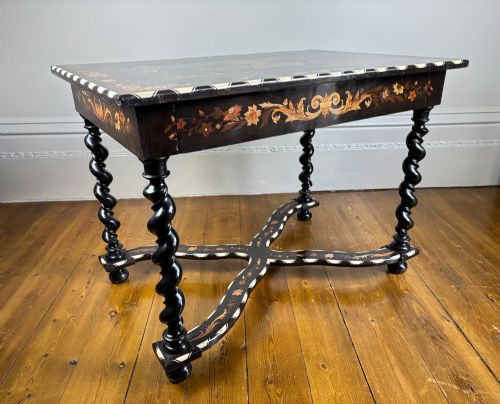
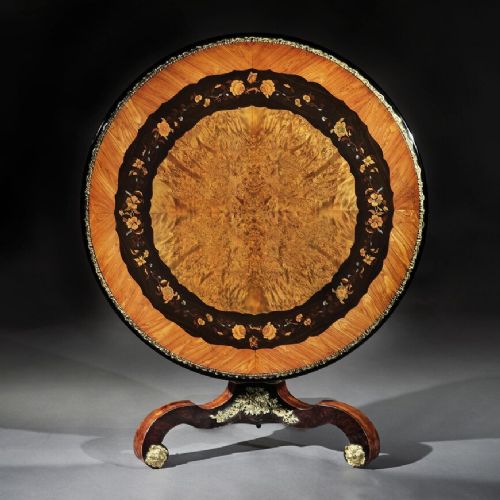
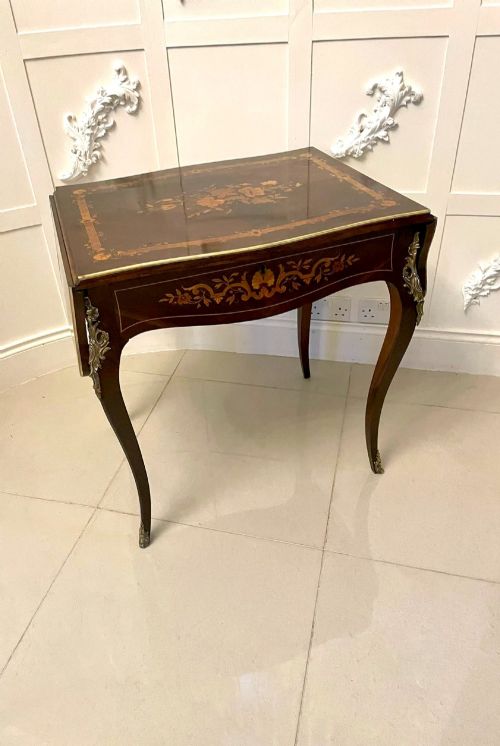
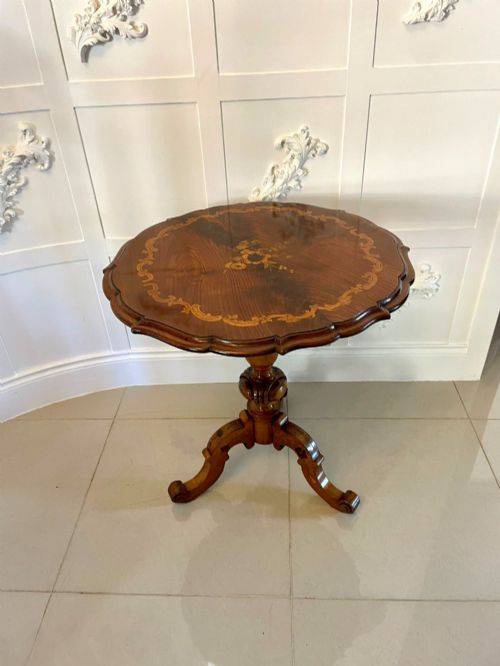
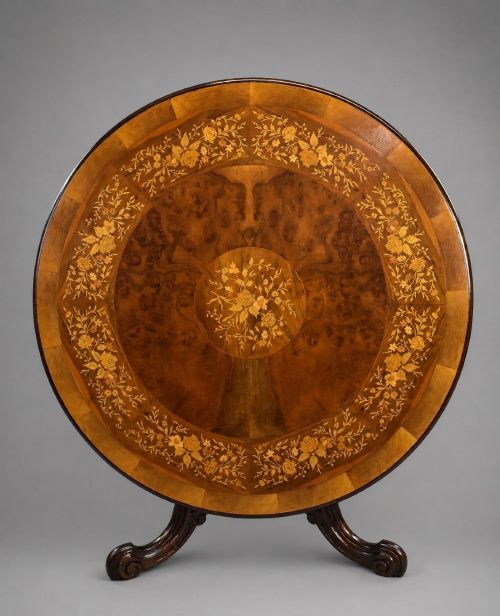
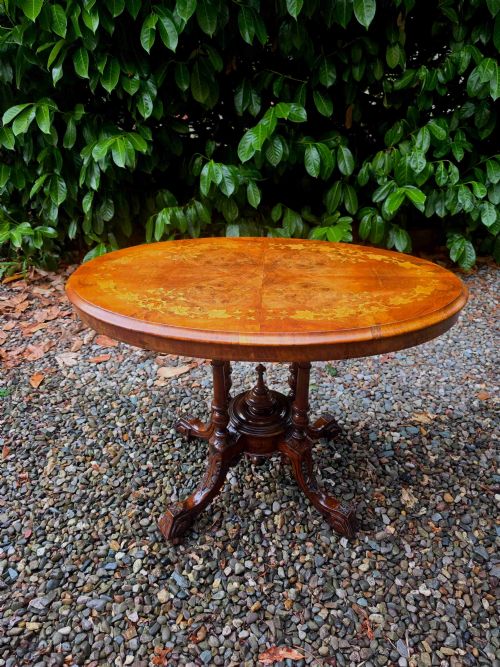
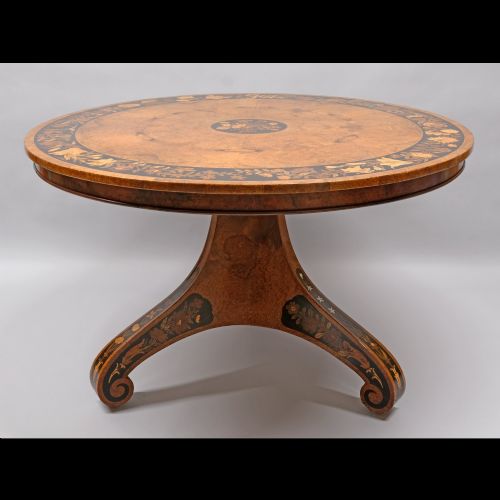
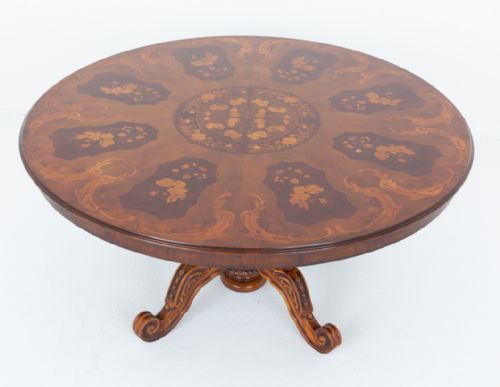
A floral inlay centre table is a freestanding piece designed to be viewed from all sides, commonly encountered here in Victorian and nineteenth-century iterations. These tables serve various domestic roles, appearing as occasional, writing, breakfast, or lamp tables depending on their proportions.
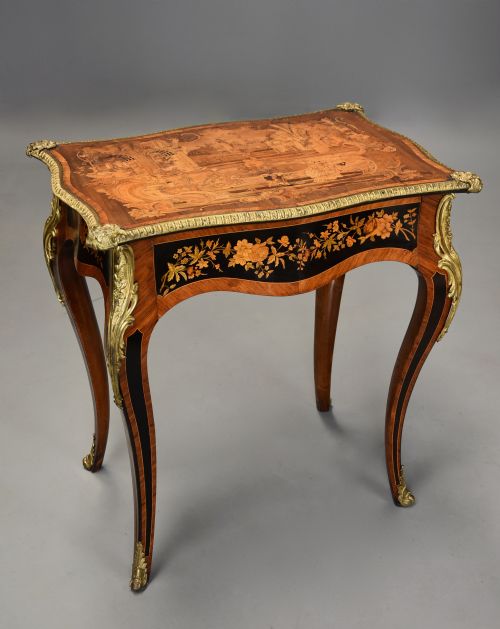
The core form draws heavily on French and Dutch revival styles, notably Louis XV and Louis XVI designs, alongside English Victorian interpretations. Makers utilised shapes ranging from circular and oval to octagonal and rectangular formats.
Origins span across English workshops and continental centres, featuring diverse woods and intricate surface decoration. Pieces range from modest nineteenth-century examples to exhibition-standard works associated with notable makers.
Materials and construction
The construction relies on robust foundational timbers such as walnut, burr walnut, rosewood, kingwood, and satinwood, providing stable carcasses for decorative surfaces. These are frequently mounted with cast or chased ormolu details to accentuate the structural lines.
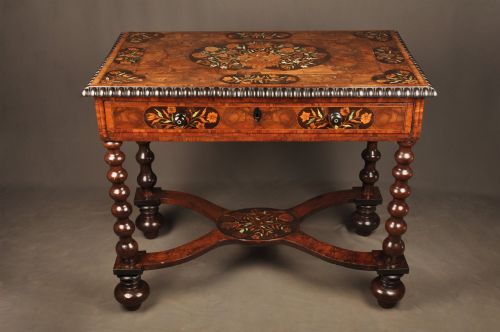
Surface decoration employs detailed marquetry and wood inlay, combining fruitwood, sycamore, and bone to render botanical motifs across the top. Specialised techniques such as Pietra Dura and ebonisation also appear among continental pieces.
The listings span the eighteenth, nineteenth, and early twentieth centuries, featuring woods such as walnut, rosewood, satinwood, and kingwood.
Assessing craftsmanship
Quality reveals itself in the precision of the botanical marquetry and the choice of ground timber, where burr veneers and dense rosewood indicate higher ambition. The crispness of ormolu mounts and the integration of secondary woods further distinguish finer workshops.
Structural integrity and the retention of original surface polishes separate standard production pieces from exhibition-grade examples. The complexity of the table base, whether pedestal or multi-legged, also reflects the maker's investment in design.
Edward Holmes Baldock·Jackson and Graham
The Floral Inlay Centre Table Glossary
- Marquetry inlay
- The practice of fitting decorative wood veneers into a prepared ground to create pictorial or botanical patterns. It differs from simple surface painting by using varied grain and natural timber colours.
- Ormolu
- Gilded bronze mounts applied to furniture edges, legs, and aprons for decorative effect. This technique was favoured in French revival pieces to highlight structural curves.
- Burr walnut
- Timber taken from the abnormal growth of a walnut tree, producing highly figured, swirling grain patterns. It was frequently used on nineteenth-century table tops.
- Bureau plat
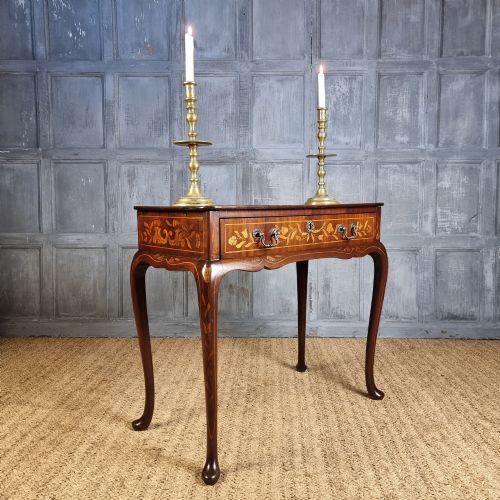
- A freestanding writing table fitted with drawers, often decorated with floral marquetry. It originated in France and sits away from walls.
- Pietra Dura
- An inlay technique using cut and fitted polished coloured stones to form floral designs. It appears on Florentine tables alongside traditional wood inlay.
Floral Inlay Centre Table: Frequently Asked Questions
Where should a floral inlay centre table go?
These pieces are designed to stand free in the middle of a room rather than pushed against a wall, allowing the detailed top to be seen from all angles.
They function well in entrance halls, large living spaces, or libraries where a central display surface is required.
How do I care for the inlaid surface?
Keep the wood away from direct sunlight and steady heat sources to prevent the delicate veneers and natural glues from drying out.
Apply a traditional beeswax polish sparingly and buff with a soft cloth to maintain the finish without building up residue.
Can I use it as a writing desk?
Certain forms within these listings are specifically designated as writing tables or bureau plats, equipped with appropriate working heights and drawers.
Standard occasional or breakfast versions have flat tops suitable for writing, though lack dedicated stationery storage underneath.
How do I distinguish French styles from English ones?
French revival pieces often incorporate prominent ormolu mounts, serpentine legs, and lighter fruitwood marquetry reflecting Louis XV or XVI tastes.
English examples frequently lean towards darker walnut or rosewood timbers with robust proportions and disciplined floral arrangements.