


Floral Inlay Accent Tables
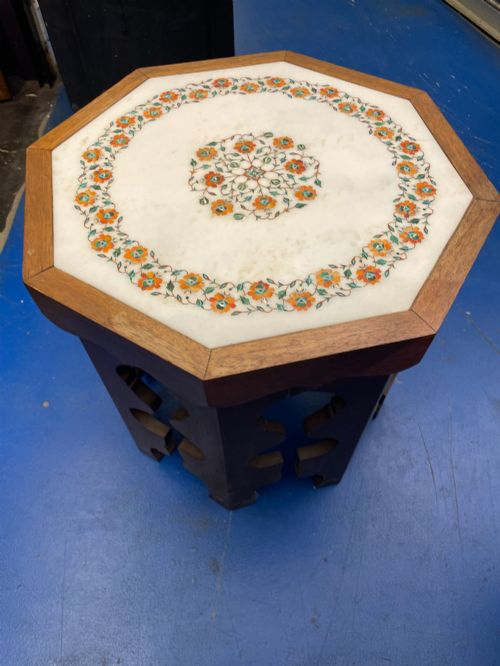
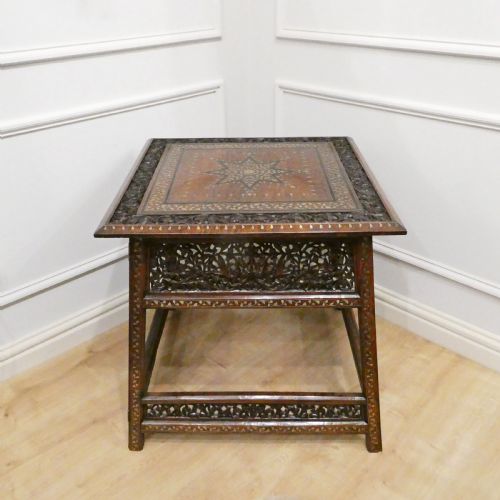
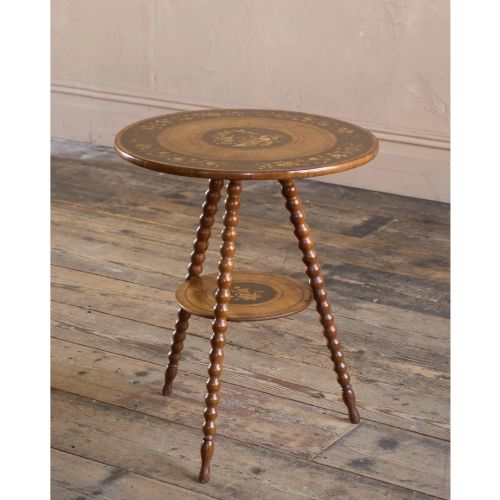
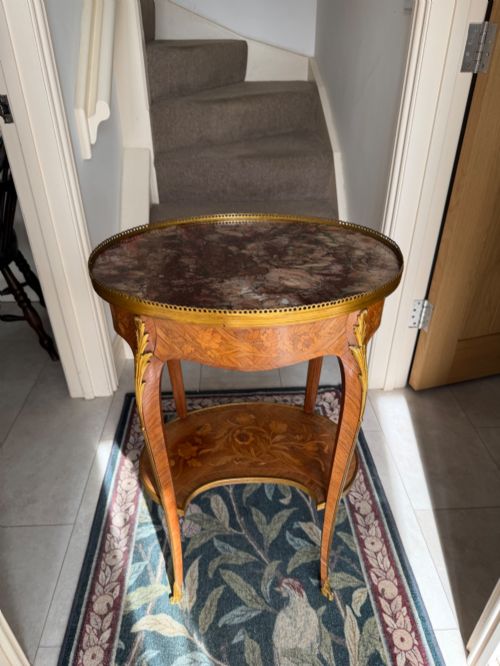
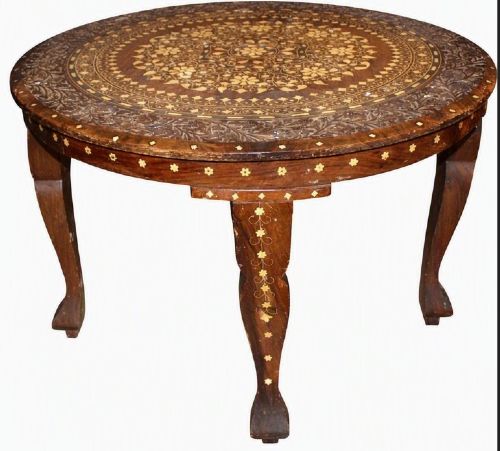
These floral inlay accent tables bring warmth and pattern into a room through intricate timber and bone work.
Floral Inlay Accent Tables
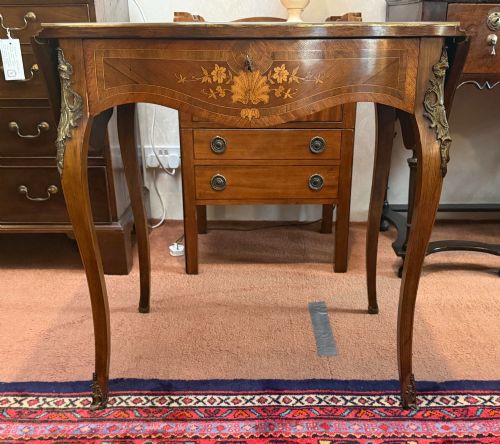
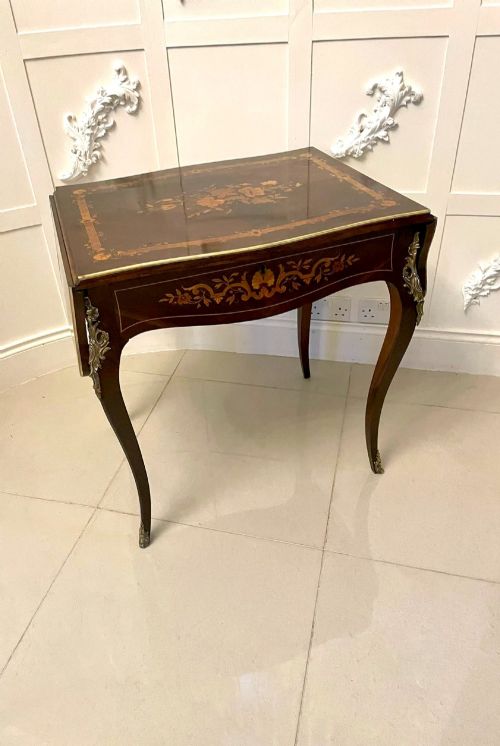
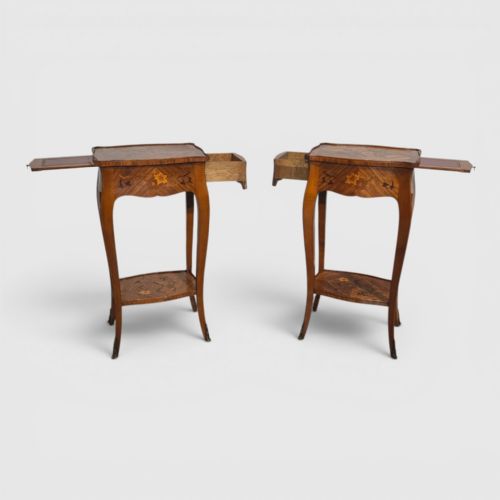
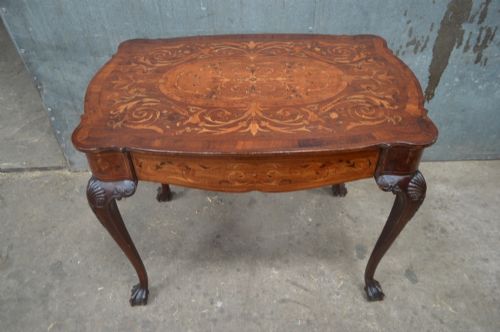
Floral inlay accent tables encompass a range of smaller occasional forms, including side tables, lamp tables, centre tables, and nests of tables. When searching for floral inlay accent tables, buyers frequently encounter Victorian, Edwardian, and nineteenth-century French examples shaped by revival styles such as Louis XV and Napoleon III.
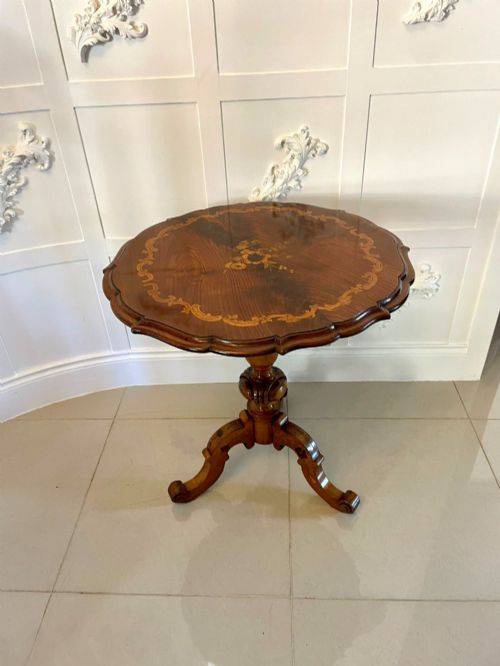
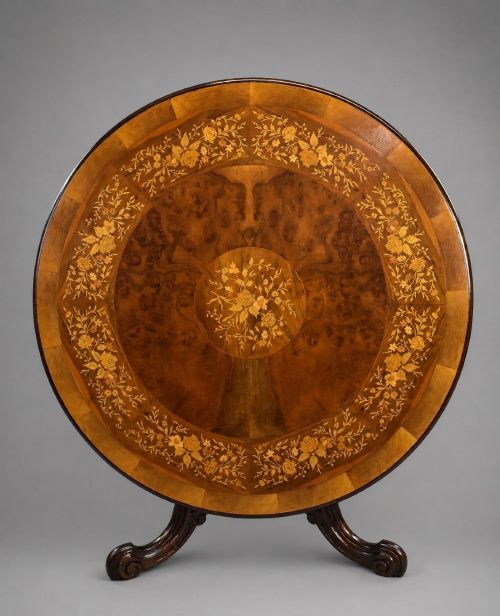
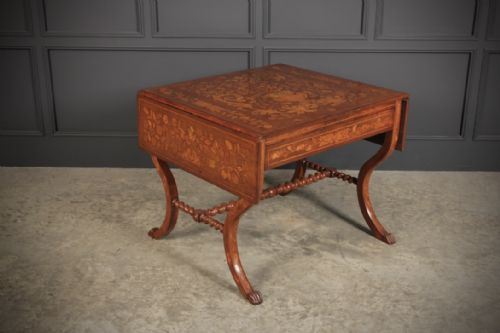
The selection on this page spans walnut, rosewood, mahogany, and kingwood surfaces embellished with detailed marquetry, bone, and brass motifs. Makers construct these pieces in varied formats, from oval Sutherland tables and circular gueridons to tiered etageres and pedestal plant stands.
Materials and Construction
Cabinetmakers build these tables using structural timbers like walnut, mahogany, and rosewood, often applying burr walnut or kingwood veneers to create richly figured tabletops. Artisans then inset contrasting woods, bone, or brass into the prepared ground to form floral marquetry patterns.
Specialised techniques such as ebonising and painting supplement the timber work on select pieces, whilst brass or ormolu mounts provide structural edging and decorative accents. Joinery methods reflect the period of manufacture, ranging from traditional cabinet framing to turned bobbin legs and tripod bases.
Tables double as travelling companions when fitted with flip-top mechanisms or removable trays designed for afternoon service.
Markers of Quality
Quality reveals itself in the precision of the marquetry cutting and the choice of contrasting veneers, where crisp floral outlines demonstrate skilled handcraft. The selection of primary and secondary timbers, from burr walnut to solid mahogany, dictates the structural integrity and visual depth of the top.
Refinement in secondary details, such as cast ormolu mounts, hand-carved tripod bases, or stamped maker attribution, separates standard production furniture from superior workshop output. The harmony between the inlaid design and the proportions of the underlying table form defines the higher tiers of the range.
Liberty & Co·Edwards & Roberts
The Floral Inlay Accent Tables Glossary
- Marquetry
- Decorative veneer work arranged in pictorial or floral patterns across a surface. Artisans cut thin sections of contrasting wood or bone to fit precisely within a prepared channel.
- Ormolu
- Gilded bronze used for decorative mounts and edgings on furniture. This technique gained prominence in French nineteenth-century cabinetmaking.
- Etagere
- A set of open shelves for displaying small objects. These pieces often feature inlaid tops and slender supports.
- Poudreuse
- A small dressing table fitted with a mirror and compartments. Eighteenth and nineteenth-century examples frequently incorporate delicate floral marquetry.
- Gueridon
- A small circular table supported by a central pillar or multiple legs. The form often showcases elaborate parquetry or floral inlay.
Floral Inlay Accent Tables: Frequently Asked Questions
What periods do these tables date from?
The pieces span the eighteenth, nineteenth, and early twentieth centuries, with a strong representation of Victorian and Edwardian examples. French styles from the Napoleon III and Louis XV revival periods also appear frequently.
Craftsmen across these eras utilised distinct timbers and marquetry techniques, allowing collectors to trace stylistic shifts through the floral motifs and underlying furniture forms.
Where should I place an occasional table?
These compact tables suit living rooms, hallways, and bedrooms as lamp stands, side pieces, or display surfaces. Their varied shapes, including oval, square, and kidney formats, help them fit beside seating or into corners.
Because surfaces feature delicate timber inlay and polish, placing them away from direct sunlight preserves the natural colours of the wood and bone.
How do I distinguish French and English pieces?
French tables of this era often lean towards Kingwood and rosewood veneers with elaborate ormolu mounts and Louis XV revival curves. English examples frequently employ walnut or mahogany with structured marquetry panels and simpler turned legs.
Maker stamps and regional construction methods further clarify the origin of individual pieces.
What materials make up the floral designs?
Artisans cut floral motifs from varied contrasting woods, fruitwoods, satinwood, and occasionally bone or brass. These materials are set flush into a darker ground timber such as walnut or rosewood.
The natural grain and colour variations of the veneers create shading within the petals and leaves without relying on paint.