





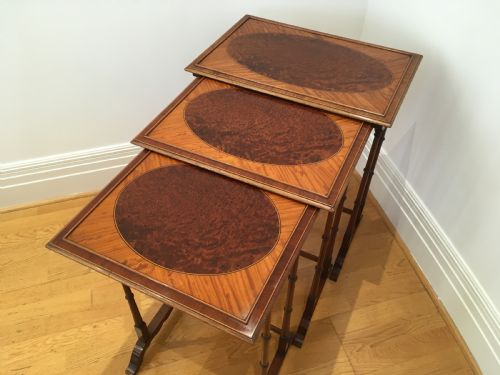

Marquetry Nested Side Tables
Marquetry nested side tables bring together ingenious space-saving design and intricate decorative woodlays to serve a room with quiet elegance.
Marquetry Nested Side Tables
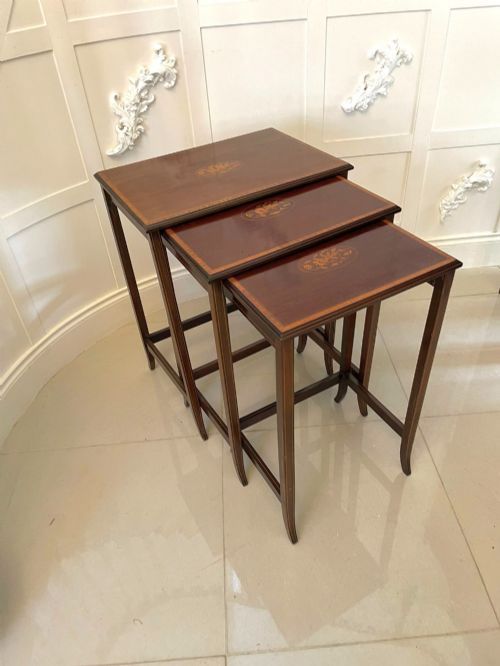
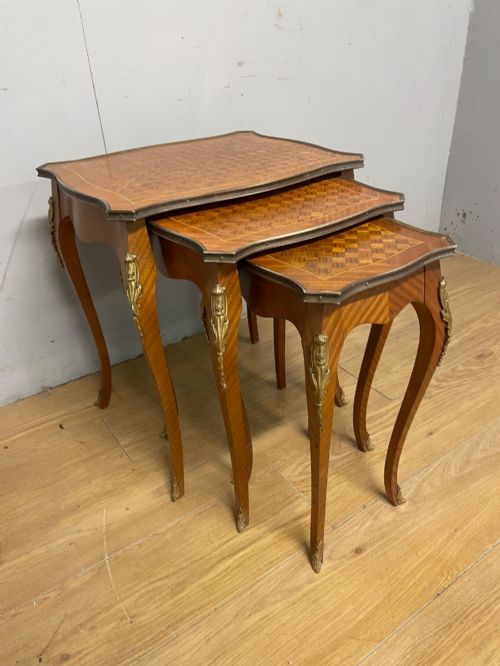
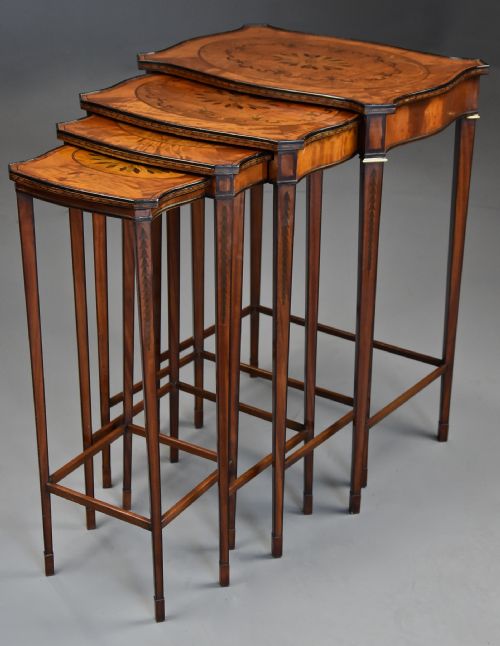
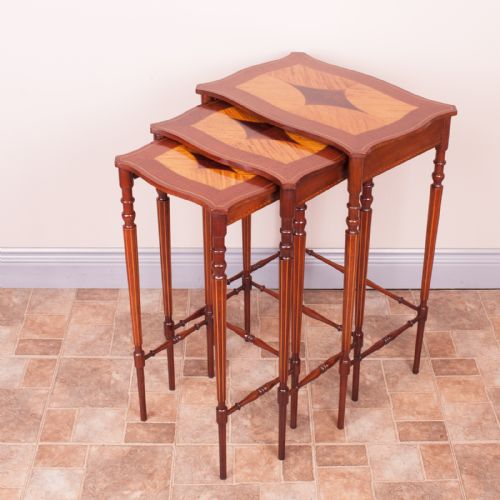
The selection ranges from classic rectangular quartetto sets of four to serpentine forms, kidney shapes, and organic Art Nouveau interpretations. Makers varied the table counts between three and four per set, each proportioned to fit precisely within the footprint of the largest surface.
How they were made
Cabinetmakers constructed these tables using a solid wood framework or fine wood veneer over a stable core, applying contrasting timbers to achieve elaborate marquetry and parquetry inlay. Artisans cut delicate floral and geometric motifs from various dyed and natural woods, fitting them meticulously into the surface veneer.
Makers shaped the supports using techniques suited to the period, from slender turned legs on Victorian sets to fluid, carved contours on Art Nouveau pieces. Finishing involved polishing the timber to protect the delicate wood inlay while enhancing the natural grain patterns of rosewood, amboyna, and mahogany.
Several sets include a hidden fourth table that slips out like a secret drawer.
What varies in quality
Quality rests principally on the ambition of the design and the precision of the timber selection, distinguishing standard utility furniture from finer artistic output. Sets featuring named makers or complex specimen woodlays demonstrate superior craftsmanship in both structural joinery and surface detail.
The refinement of the marquetry inlay itself dictates the tier of the piece, with simple stringing sitting below intricate floral arrangements and multi-timber parquetry. Proportional harmony when the tables are nested together also marks out the more accomplished workshop production.
Émile Gallé
The Marquetry Nested Side Tables Glossary
- Marquetry
- Decorative veneer work where small pieces of various woods are assembled into pictorial or geometric patterns. This technique creates the ornamental surfaces seen across the tops of these tables.
- Quartetto
- A matched set of four smaller tables designed to nest together. The term originates from the grouping of four individual surfaces.
- Parquetry
- A geometric mosaic of wood pieces used for surface decoration. It differs from marquetry through its strict reliance on repeating angular shapes rather than floral or figurative designs.
- Satinwood
- A lustrous, yellowish timber native to India and Sri Lanka often utilised for contrasting stringing and decorative panels. It provides a bright focal point against darker woods like mahogany and rosewood.
- Stringing
- Thin lines of contrasting timber inlaid into the surface of furniture to create geometric borders. This linear detail defines the edges of table tops and legs.
Marquetry Nested Side Tables: Frequently Asked Questions
What is a quartetto nest?
A quartetto nest is a set of four graduating tables designed to slide neatly beneath one another to save floor space.
Cabinetmakers traditionally produced these four-piece sets during the Victorian and Edwardian eras for flexible use in drawing rooms and parlours.
How were nested tables used historically?
Owners deployed the individual surfaces around a room as needed for afternoon tea, reading materials, or writing correspondence.
When not in use, the smaller tables stacked away under the main surface to maintain an uncluttered floor plan.
How do I date a set?
Stylistic clues such as serpentine edges, kidney-shaped tops, and Art Nouveau curves help distinguish early twentieth-century examples from late Victorian pieces.
Timber choice also aids dating, as satinwood accents and specific rosewood varieties point clearly towards Edwardian and late nineteenth-century workshop preferences.
Are all nested tables inlaid?
Many examples feature elaborate marquetry, parquetry, or simple stringing, but plain timber versions also exist within the period.
Inlay work ranges from delicate floral motifs to bold geometric patterns across the primary surface veneers.