




Floral Gold Locket
A floral gold locket is a hinged sentimental keepsake bearing botanical engravings or gemstone blooms, offering portable devotion from past centuries.
Floral Gold Locket
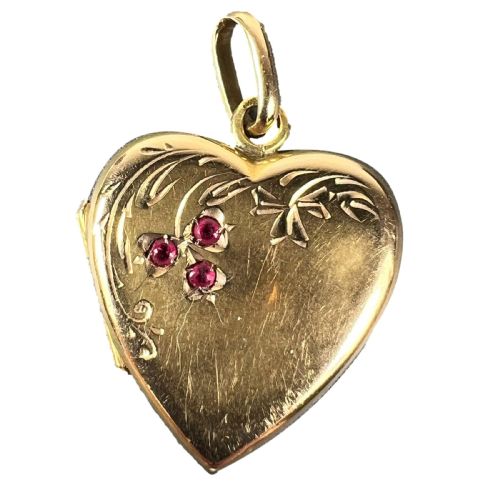
A floral gold locket brings together precious metal and botanical ornamentation, taking forms such as round pendants, puffy hearts, shields, and oval photo cases. The examples seen here predominantly span the Victorian and Edwardian eras, alongside Georgian and early twentieth-century French pieces.
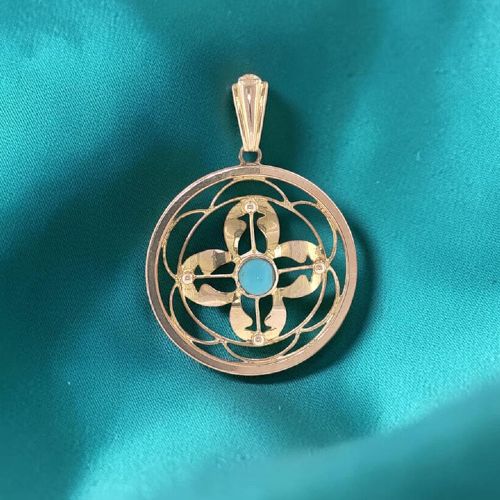
The decorative schemes rely heavily on natural motifs, featuring engraved roses, forget-me-nots, leaf wreaths, flower baskets, and swallow birds. Gemstones such as rubies, turquoise, seed pearls, and emeralds frequently accent the gold surfaces, marking these items as tokens of remembrance or affection.
Buyers seeking a floral gold locket will encounter both solid gold constructions and gold back and front variants. These pieces function simultaneously as wearable jewellery and as miniature frames for personal portraits or locks of hair.
Materials and construction
Metals range from nine-carat and fifteen-carat gold up to eighteen-carat yellow gold, supplemented by gold back and front techniques where a thin precious sheet covers a base metal core. Gemstones including turquoise, rubies, diamonds, opals, and seed pearls are flush-set, bezel-set, or pinned directly into the metal.
Surface decoration relies on hand engraving, engine turning, and piercing to render floral wreaths, swallows, and basket motifs. Hinged compartments and glass-covered interior frames are integrated into the internal structure to hold photographs securely.
Swallows and flower baskets frequently join the floral wreaths, reminding us that Victorian birds had very specific botanical hobbies.
Factors of quality
Quality rests upon the crispness of the hand engraving and the depth of the botanical relief work. Pieces with sharp, well-defined floral wreaths and detailed bird or basket motifs demonstrate superior hand skills compared to softer, worn stampings.
The integrity of the hinge and snap closure dictates everyday utility, ensuring the locket stays shut securely when worn. Material purity and the selection of accent gemstones, such as matched turquoise or natural seed pearls, elevate the standing of an individual piece.
The Floral Gold Locket Glossary
- Gold Back and Front
- A method of construction where the exterior surfaces are made of solid gold fused to a supportive base metal interior. This technique provided the appearance and wear resistance of solid gold at a lighter weight and lower cost.
- Engine Turned
- A decorative mechanical process of engraving precise geometric patterns into metal using a specialised lathe. This creates repetitive background textures that contrast with hand-engraved floral subjects.
- Pietra Dura
- An artistic technique using inlaid cut and fitted highly polished coloured stones to create pictorial images. In jewellery, this typically depicts floral or mosaic scenes set directly into the gold body.
- Seed Pearl
- Very small natural or saltwater pearls, often half-drilled and glued or pegged onto gold pins. They are commonly arranged to form the petals of forget-me-nots or floral clusters on nineteenth-century pieces.
Floral Gold Locket: Frequently Asked Questions
Can I put photos inside my locket?
Most floral gold lockets contain interior frames and glass panels designed specifically to hold miniature photographs or paper tokens. The hinged compartments open to allow safe placement of these personal mementos.
Older pieces may require careful trimming of photographs to fit the specific oval, round, or heart-shaped apertures. Care should be taken with original glass covers and interior rims during this process.
How do I date a gold locket?
Dating relies upon stylistic markers such as the puffy heart shape of the French Belle Epoque or the engraved wreath motifs typical of the Victorian period. Hallmarks, where present, provide specific assay office marks and date letters.
Comparing the closure style, engraving depth, and accompanying gemstone settings against known periods helps narrow down the decade of manufacture. Pieces from the nineteenth century often exhibit distinct hand-chased botanical details absent in later items.
What is gold back and front?
Gold back and front refers to a nineteenth-century manufacturing method where the front and back plates of the locket are made of solid gold, while the interior framing and middle rim utilise a base metal for structural strength. This kept the weight manageable for daily wear.
This technique does not indicate a fake piece, but rather a standard Victorian practice designed to make gold jewellery more accessible. The visible exterior surfaces remain genuine gold.
How should I care for an antique locket?
Antique lockets require gentle handling, particularly around delicate glass interiors, seed pearls, and historic hinges. Cleaning should be limited to a soft, dry cloth to avoid damaging delicate engravings or displacing glued gemstones.
Keeping the locket away from moisture and harsh chemical cleaners protects the gold surfaces and internal paper linings. Professional inspection of the hinge and clasp periodically ensures the piece remains secure during wear.