


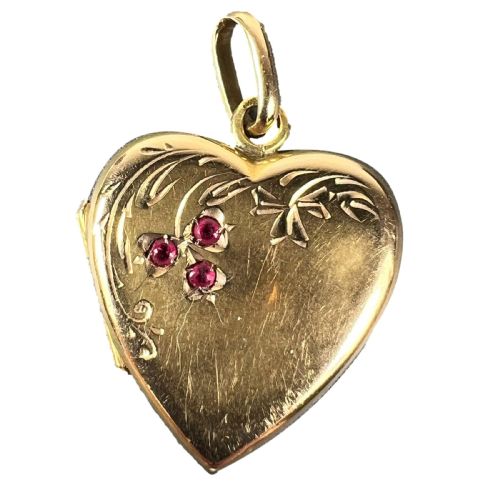


18k Gold Locket
An 18k gold locket holds personal keepsakes or portraits close, offering a tangible connection to past eras through high-carat precious metal.
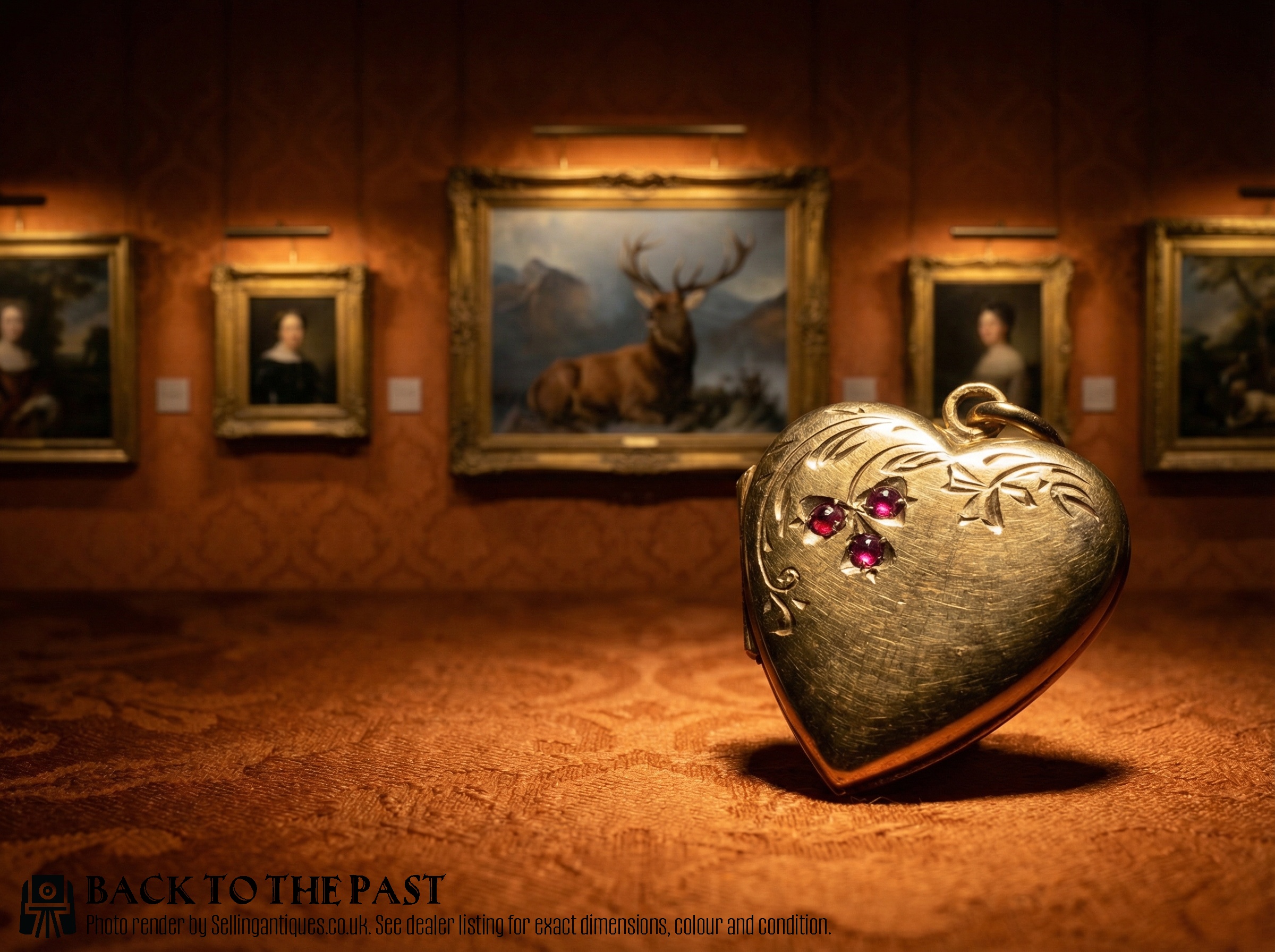
18k Gold Locket
The objects take many forms, including puffy hearts, geometric deco shapes, shield medals, and vinaigrettes. Victorian and Edwardian iterations frequently incorporate sentimental motifs like pansies, roses, and forget-me-nots in enamel or pearl. You are also likely to find Georgian mourning pieces and Belle Epoque designs set with sapphires, rubies, and rose-cut diamonds.
Origins vary from British naval officer miniature portraits on agate to French plique-a-jour enamel medals and rose gold momento pieces. These items served as personal tokens, remembrance pieces, or fashionable pendants worn on chains. The range encompasses both functional photograph holders and intricate mourning compartments designed for daily wear or safekeeping.
Materials and construction
The construction of these pieces centres on high-carat 18ct and 18k yellow or rose gold, providing a rich, warm hue and a substantial weight. Goldsmiths utilised traditional techniques such as hand engraving, repousse work, and delicate bezel settings to secure gemstones. Enamel work, including blue enamel and plique-a-jour, adds vivid colour and intricate patterning to the metallic surfaces.
Gemstones like sapphires, rubies, rose-cut diamonds, pearls, and garnets frequently accent the gold work, alongside hardstones like agate and onyx. Interior compartments often contain glass panels or woven hair work framed securely within the hinged cases. Artisans shaped these metals into complex dimensional forms like puffy hearts, floral wreaths, and shield medallions.
Listings show 18k gold locket examples spanning the 18th century, Georgian, Victorian, Edwardian, and mid-century periods, utilising materials like enamel, sapphire, and ruby.
Assessing quality and craftsmanship
Quality in an 18k gold locket is visible in the crispness of the hand engraving and the structural integrity of the hinge and clasp. Superior pieces exhibit fine, detailed chased work on motifs like flowers, leaves, and ribbons rather than flat or cast shortcuts. The integration of stones, whether diamonds, rubies, or pearls, relies on precise setting work that sits flush and secure within the gold frame.
The refinement of internal components, such as well-fitted glass bezels and intact hair compartments, distinguishes masterwork items from standard production. Enamel preservation also dictates standing, with undamaged vitreous surfaces retaining their lustre across centuries. Maker attribution or documented provenance further elevates the stature of specific historical pieces.
Jacob Amyand
The 18k Gold Locket Glossary
- Vinaigrette
- A small hinged box or pendant containing a perforated grill, originally used to hold a sponge soaked in aromatic vinegar. These date often to the Georgian and William IV periods.
- Plique-a-jour
- An enamelling technique where the enamel is applied without a backing, creating a translucent, stained-glass effect that allows light to pass through.
- Rose-cut diamond
- An antique diamond cut featuring a flat base and a domed crown faceted with triangular shapes, common in Georgian and Victorian jewellery.
- Mourning locket
- A piece created to commemorate a deceased person, frequently containing braided human hair, miniature portraits, or dark enamel work.
- Belle Epoque
- A period of refined, elegant design spanning the late 19th century and the first decade of the 20th, known for light garland motifs and diamond work.
18k Gold Locket: Frequently Asked Questions
What fits inside an antique locket?
Historical lockets typically contain small photographic prints, painted portrait miniatures on ivory or agate, or woven locks of human hair. Many feature internal glass frames designed to protect these delicate keepsakes from moisture and wear.
Modern wearers often use these interior spaces to store tiny photographs, handwritten notes, or pressed botanical elements. The depth and shape of the compartment dictate whether flat paper or dimensional mementoes fit best.
How do I date an 18k gold locket?
Dating relies on stylistic clues, such as the curved floral motifs of the Belle Epoque or the geometric lines of Art Deco pieces. Maker marks, hallmarks, and the specific construction of hinges and glass bezels also offer chronological indicators.
Historical context helps narrow the period, particularly when dealing with mourning jewellery trends or specific gemstone cuts like rose-cut diamonds. Comparing the piece to dated examples in archives provides further clarity.
Are these lockets suitable for daily wear?
High-carat 18k gold is relatively soft compared to lower gold alloys, meaning it can show wear over long periods of frequent use. Antique hinges and clasps require gentle handling to maintain their alignment and security.
Many collectors choose to wear their pieces on sturdy chains, reserving them for special occasions to preserve fragile enamel or antique glass. Regular checks by a jeweller ensure the clasp and bail remain secure.
What is the difference between a pendant and a locket?
A pendant is any decorative ornament suspended from a necklace, while a locket specifically includes a hinged compartment designed to open and reveal an interior space. All lockets function as pendants, but not all pendants contain opening mechanisms.
Historical examples often blur the line by serving as both decorative medals on the exterior and functional photo holders on the inside. The presence of a thumbnail catch or a hidden release mechanism defines the locket form.