




Engraved Heart Locket
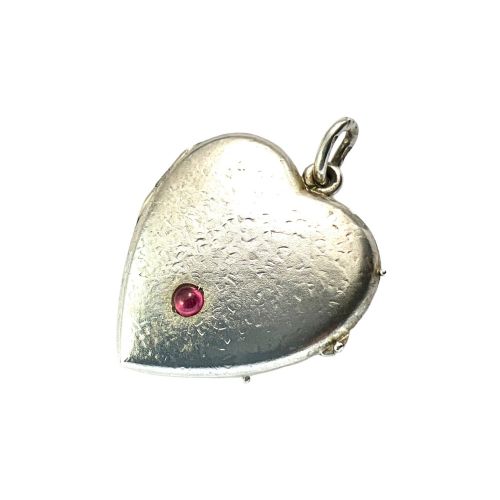
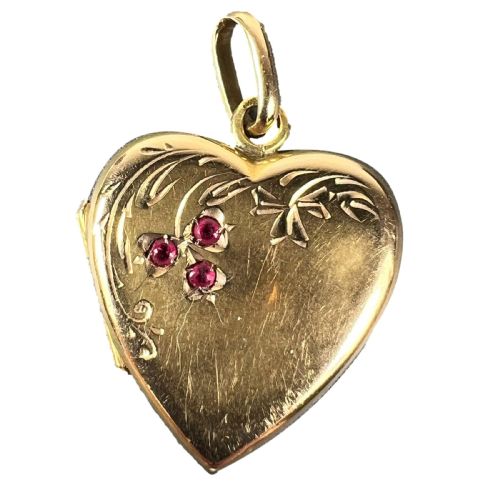
An engraved heart locket holds a photograph or token close, and these pieces span the Victorian, Edwardian, and mid-century decades.
Engraved Heart Locket
When you search for an engraved heart locket, you encounter pieces designed to hold photographs, hair, or small mementoes near the wearer. The selection on this page centres primarily on pendant and charm formats, alongside a memorial ring.
The periods represented stretch from the Victorian and Edwardian eras through the 1930s, 1940s, 1950s, and 1960s. You will find variants styled in the Victorian Revival and Belle Epoque traditions, alongside pieces made during the original reigns.
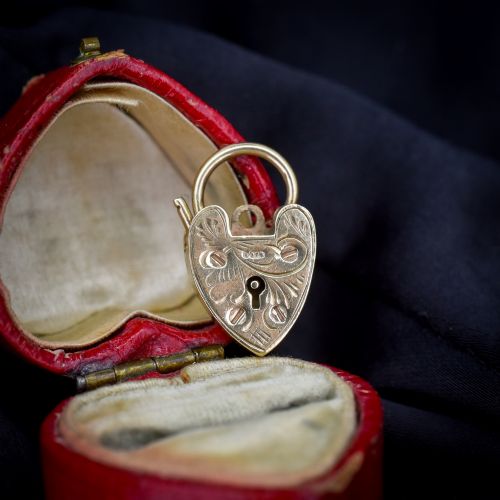
Forms range from simple flat cases to ornate puffy hearts, padlocks, and floral motifs. Some pieces open as double photograph lockets, whilst others function as charms or pendants.
How they were made
Metals span standard yellow and rose gold in 9ct, 15ct, and 18ct, alongside gold back and front construction and sterling silver. Gold back and front pieces utilise thin gold sheets applied to a base metal core for structural strength.
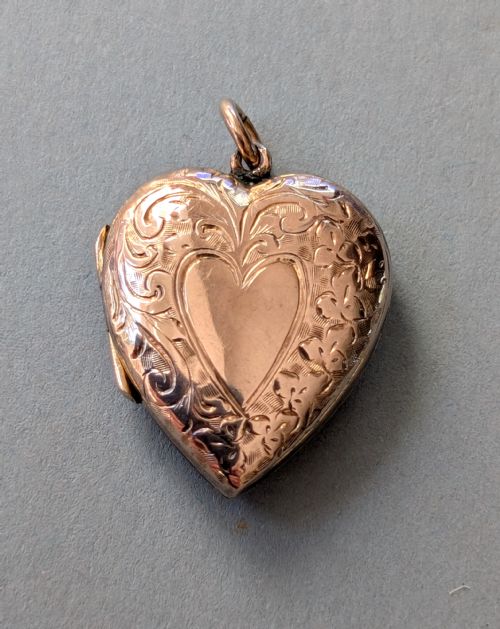
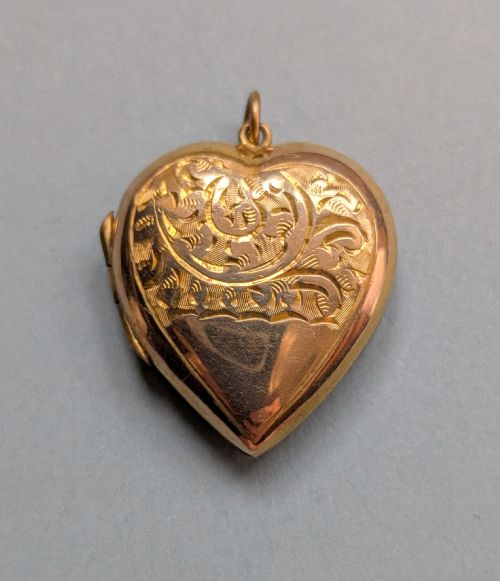
Surface decoration relies heavily on hand engraving, featuring birds, butterflies, and floral patterns. Gemstones such as rubies, sapphires, turquoise, diamonds, and garnets are flush-set or mounted to accent the metalwork.
One Edwardian ring preserves a small section of human hair beneath its crystal face, keeping a Victorian tradition alive on the finger.
What varies in quality
The calibre of the hand engraving sets individual pieces apart, distinguishing deep, crisp incisions from worn or shallow surface marks. Heavier gold gauges and solid high-carat gold construction elevate a piece above thinner gold back and front alternatives.
The integrity of the hinge, snap closure, and internal bezels dictates how securely a locket functions in daily wear. Precision in the stone settings, particularly with pavé diamonds or calibrated rubies, marks the distinction between standard production and finer jeweller work.
The Engraved Heart Locket Glossary
- Gold Back and Front
- A construction method where thin sheets of gold are fused to a base metal interior. This technique provided the appearance and wear surface of solid gold while reducing weight and cost.
- Puffy Heart
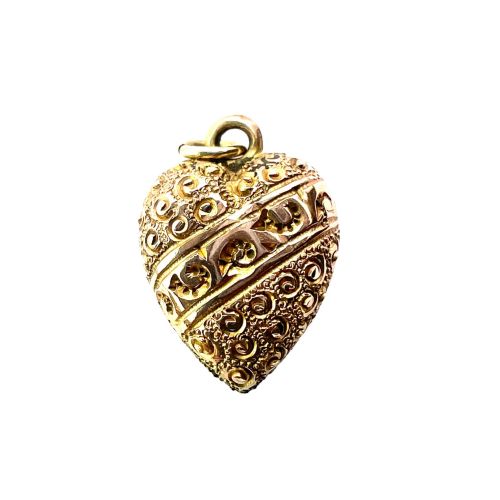
- A hollow pendant formed from two domed metal halves joined together. This shape gives the piece a three-dimensional, inflated appearance.
- Padlock Pendant
- A locket or charm shaped like a functional padlock, often featuring decorative engraving on the front plate. They gained popularity during the Victorian and Edwardian periods.
- Memorial Ring
- A ring incorporating hairwork, photographs, or closed compartments to remember a person. The evidence includes an Edwardian example set with gold and hair.
- Belle Epoque
- A period of design spanning the late nineteenth and early twentieth centuries, characterised by light, garland-style motifs. Pieces from this era often employ high-carat gold and fine gemstone settings.
Engraved Heart Locket: Frequently Asked Questions
How do I open an old locket?
Most lockets use a snap closure or a small side hinge that releases with gentle pressure from a fingernail. Avoid using metal tools to pry them open, as this can damage the gold rim.
Check for a tiny thumbnail notch along the edge where the two halves meet. If the hinge feels stiff, a professional jeweler can lubricate or adjust it safely.
Can I put a photo inside?
Yes, many of these pieces were specifically designed to hold miniature photographs or locks of hair. Double photograph lockets include internal metal frames or glass covers to secure the pictures.
Trim your photograph slightly smaller than the internal bezel measurement. You can hold it in place using the original metal retaining ring if present.
What does gold back and front mean?
Gold back and front indicates that the exterior plates are made of solid gold while the internal chassis uses a base metal. This method was common in the nineteenth and early twentieth centuries.
It allowed makers to produce sturdy, substantial lockets at a more accessible price point. The visible outer surfaces remain genuine gold.
How do I date a Victorian piece?
Dating relies on stylistic clues, hallmarks, and construction techniques typical of the nineteenth century. Hand-engraved floral motifs and heavier gold gauges are characteristic of the period.
Compare the findings, hinges, and engraving styles to known examples from the era. Hallmarks, where present, provide the most precise indication of the assay office and year.