


Floral Glazed Stoneware
Floral glazed stoneware brings robust ceramic vessels finished with rich botanical glazes and incised floral motifs into contemporary rooms.
Floral Glazed Stoneware
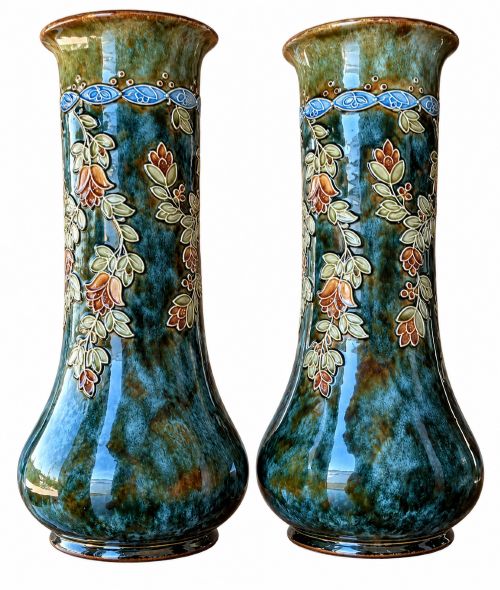
Floral glazed stoneware encompasses durable ceramic vessels finished with botanical patterns, spanning from Victorian productions to earlier Song and Yuan dynasty celadon dishes. Buyers examining this selection encounter robust vases, jardinieres, and jugs primarily shaped during the late nineteenth and early twentieth centuries.
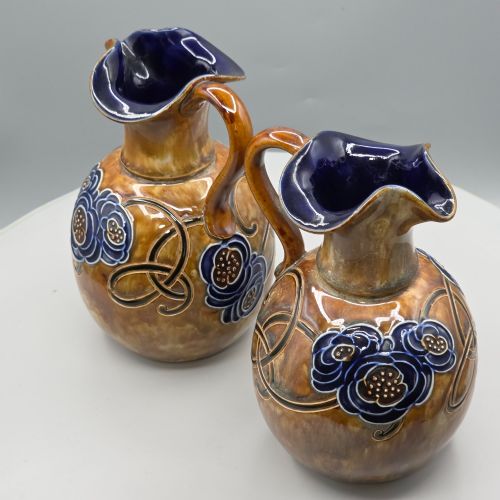
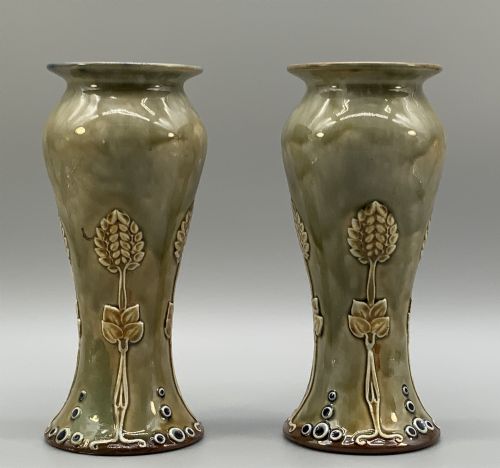
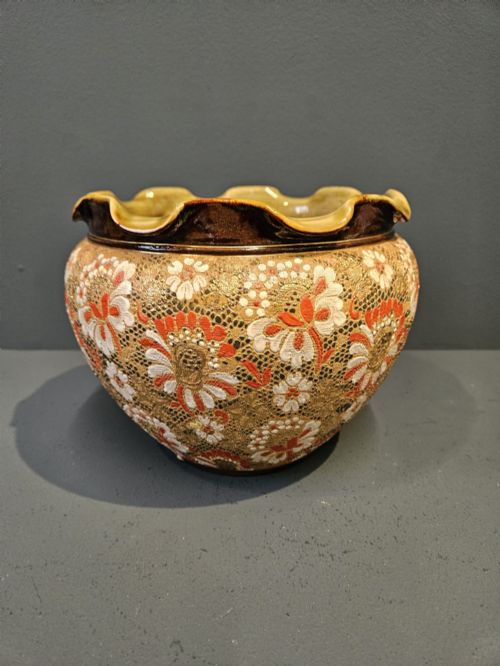
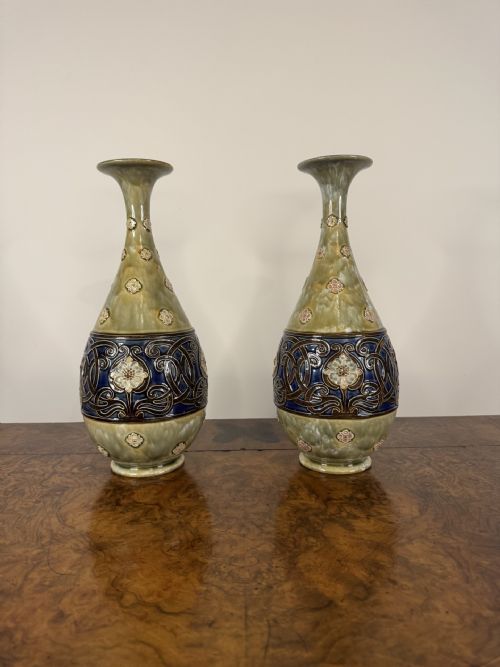
The English examples on this page heavily feature the work of Doulton Lambeth, displaying characteristic Art Nouveau and Arts and Crafts styling. Alongside these, occasional early Asian pieces demonstrate moulded floral scrolls beneath celadon glazes.
Vessels range from intimate cabinet vases to large floor-standing jardinieres, providing substantial forms that integrate easily into diverse interior schemes.
Production materials and techniques
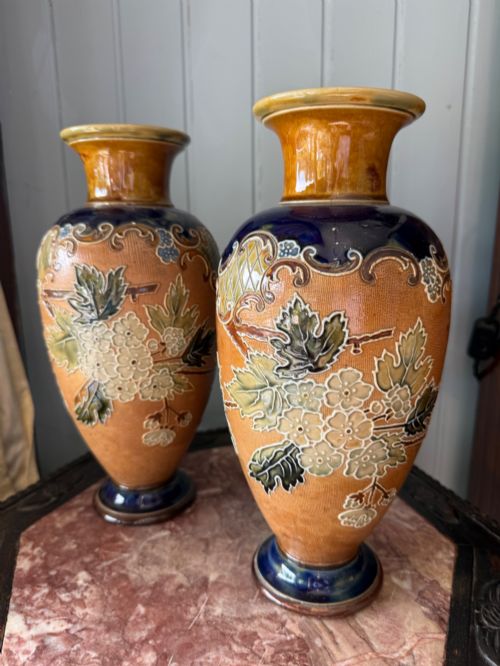
Makers utilised dense stoneware bodies capable of holding liquid without porosity, fired at high temperatures to ensure structural resilience. Glazes were applied by hand, often combining deep cobalt blues, greens, and ochres with enamel highlights and occasional gold leaf details.
Surface decoration frequently involved incised or moulded botanical motifs, reflecting Aesthetic movement and Arts and Crafts design principles. Techniques such as Slater's patent introduced textured lace patterns beneath the glaze, creating tactile contrast against smooth floral panels.
Some Victorian jugs carry official US patent numbers stamped into the stoneware base alongside the decorator's initials.
Assessing quality in stoneware
Quality rests heavily on the crispness of the incised floral decoration and the control demonstrated in the glaze application. Pieces designed and executed by named artists show superior handling of line and colour balance compared to standard factory output.
The weight, symmetry of the thrown body, and complexity of the botanical ornamentation separate ordinary production pieces from exceptional exhibition examples.
Royal Doulton·Doulton Lambeth·Mettlach Pottery·John Ridgway·Denby Ware
The Floral Glazed Stoneware Glossary
- Stoneware
- A type of pottery fired at a high temperature until vitrified and non-porous. It provides a heavy, durable body suitable for rich coloured glazes.
- Jardiniere
- A large ornamental pot or stand designed to hold growing plants or flowers. These vessels often sit on heavy pedestals or floor surfaces.
- Celadon
- A pale green glaze originating in East Asia, typically associated with Longquan wares. The glaze mimics the appearance of jade.
- Baluster
- A vase shape characterised by a rounded body that tapers toward the neck and stands on a widened base. This form supports elaborate botanical decoration.
- Enamel
- Opaque glass-like material fused to the ceramic surface during secondary firings. It provides bright colour accents over standard glazes.
Floral Glazed Stoneware: Frequently Asked Questions
What is floral glazed stoneware?
Floral glazed stoneware comprises durable ceramic pieces decorated with plant and flower motifs beneath coloured glazes. The selection ranges from Victorian English studio pottery to ancient Asian celadon dishes.
These items were produced primarily as decorative vessels, including vases, jardinieres, and table wares designed to display botanical themes.
How do I care for stoneware?
Stoneware requires minimal maintenance due to its dense, non-porous ceramic body. Dusting with a soft cloth keeps the glaze clean and preserves any enamel or gold leaf details.
Avoid exposing antique pieces to sudden temperature shifts or abrasive cleaning agents to protect the historic surface finishes.
How are different periods identified?
Periods are identified through a combination of manufacturing marks, stylistic traits, and material composition. Victorian and Edwardian English pieces often display factory stamps and artist monograms.
Earlier Asian examples rely on glaze characteristics, body weight, and moulding techniques typical of Song and Yuan dynasty production methods.
Where were these pieces made?
The pieces originate from various European and Asian workshops, with a strong representation from English potteries based in Lambeth. German factories also contributed significant decorative vessels during the nineteenth century.
Far Eastern pieces stem from historical kiln centres known for celadon production and carved floral scrollwork.