


Floral Glass Light Shade
When you search for a floral glass light shade, you find pieces that bring colour and historic illumination into a room.
Floral Glass Light Shade
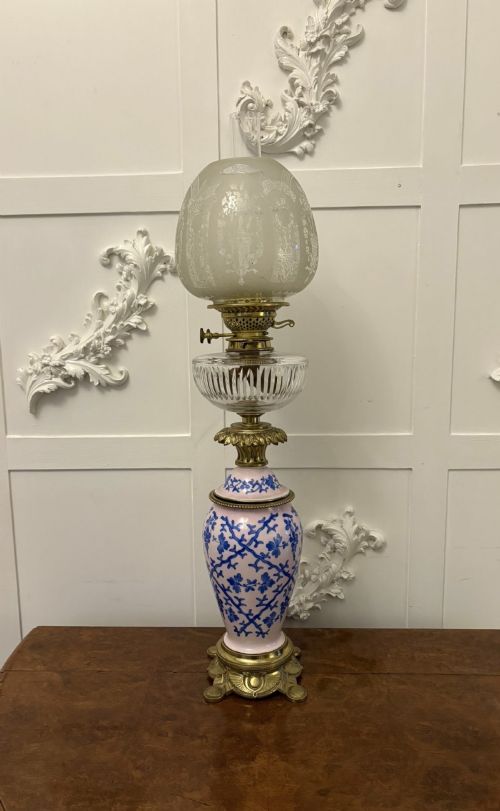
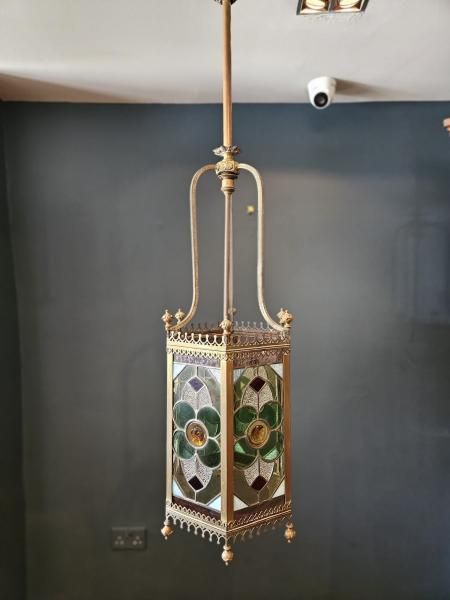
A floral glass light shade serves as a decorative diffuser for interior illumination, appearing primarily across Victorian, Edwardian, and Art Deco periods. These items emerge in forms such as oil lamps, pendant lights, chandeliers, and specific lamp shades.
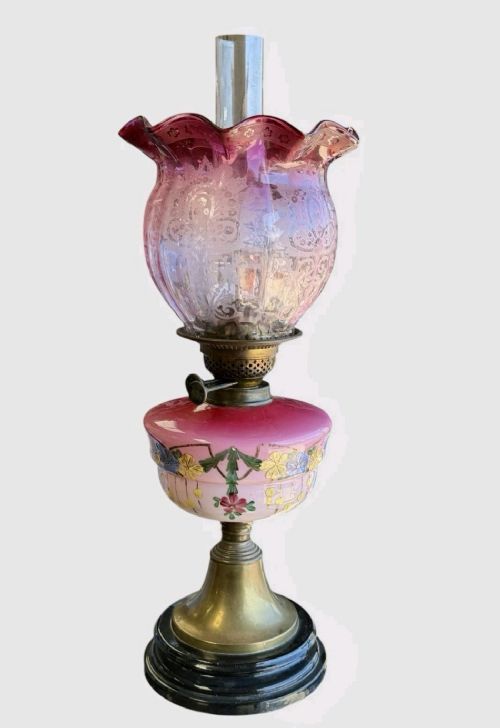
The selection on this page centres on glass components paired with brass, ceramic, and wrought iron frameworks. Pieces range from nineteenth century oil lamp fonts to early twentieth century ceiling fixtures and table lamps.
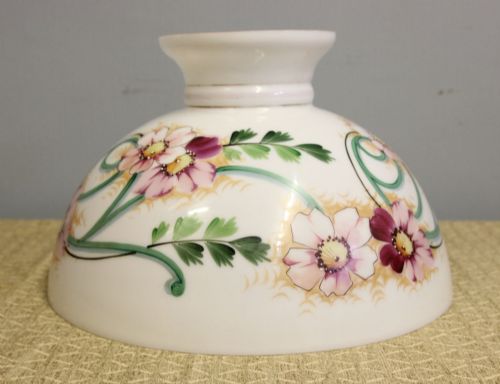
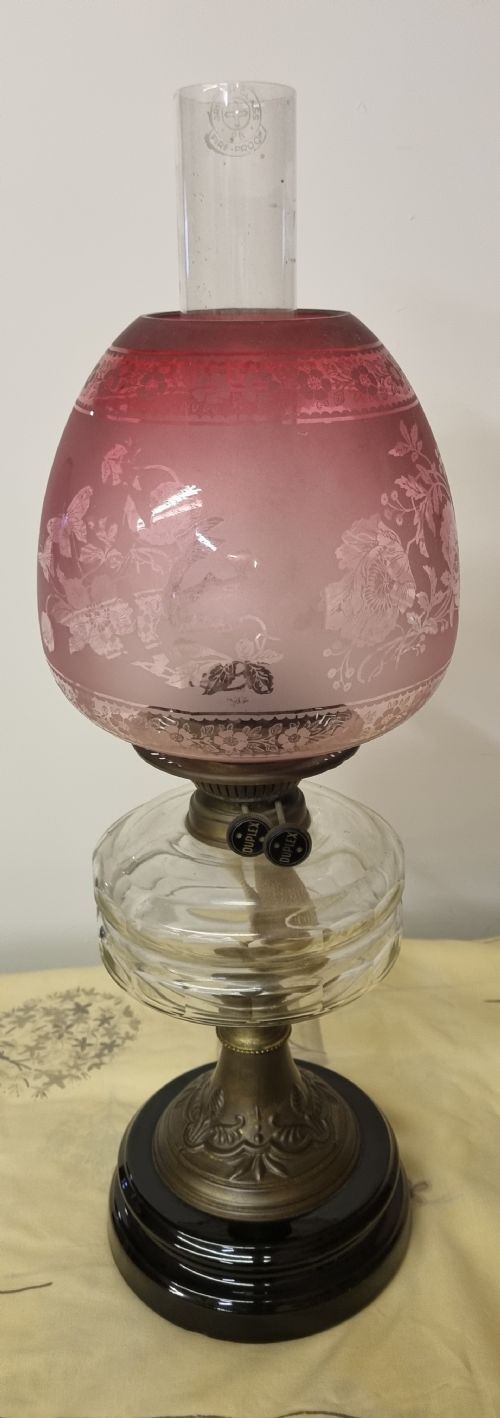
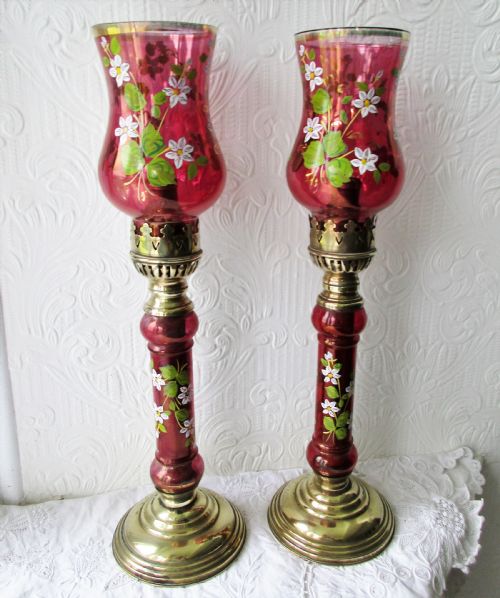
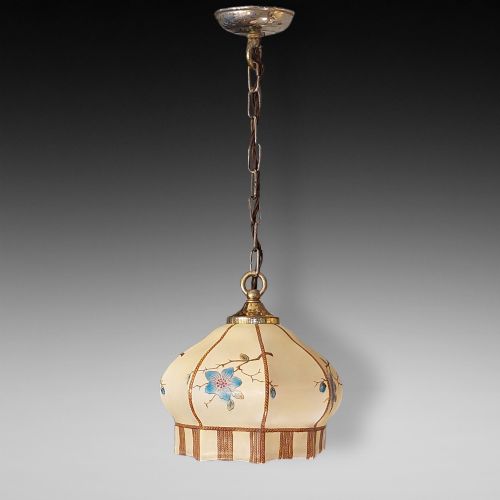
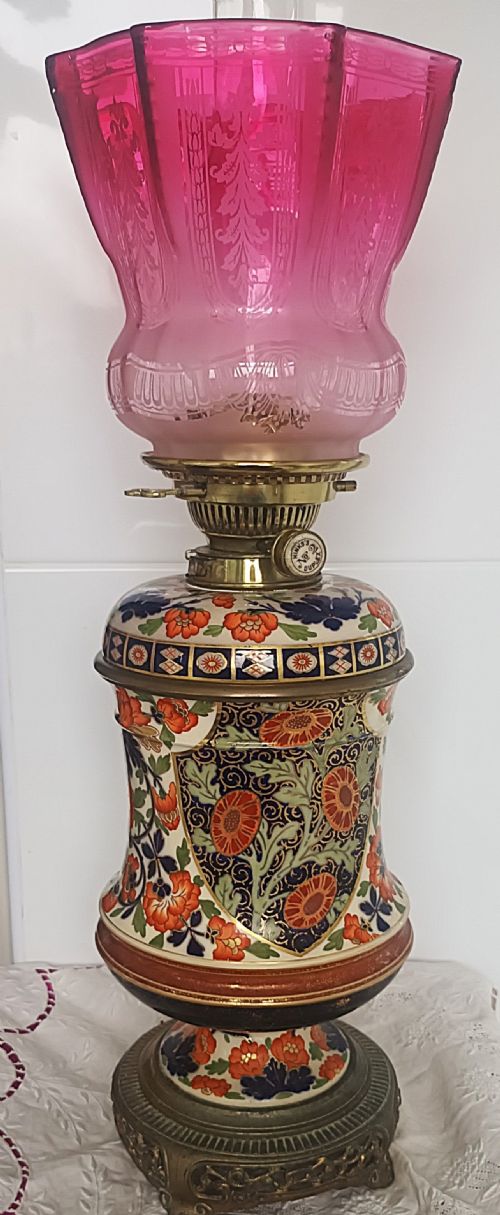
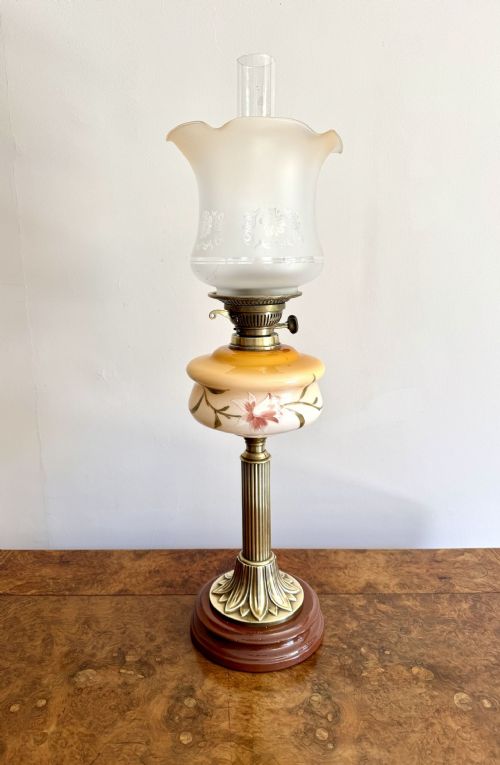
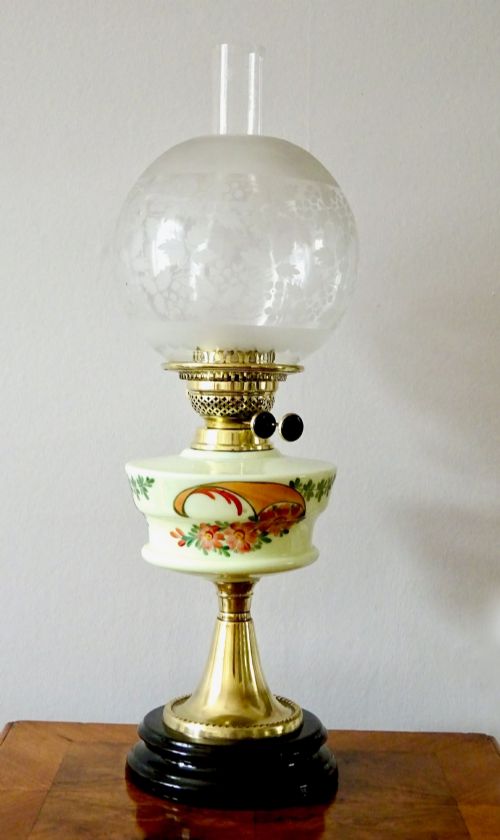
Victorian examples frequently display cranberry or green glass shaped into floral profiles, whilst later items from the nineteen-twenties and nineteen-thirties incorporate frosted and painted glass shades. Buyers encounter both complete lamps and individual replacement shades.
Quality factors in glass and metal
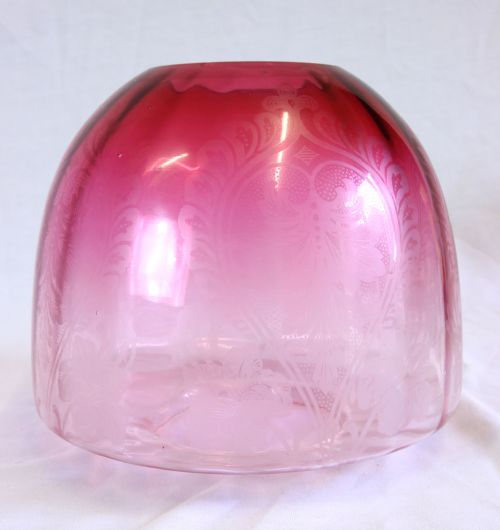
Quality rests in the depth of colour within the glass, the crispness of moulded or etched floral details, and the precision of hand-painted decoration. Cranberry and ruby glass variations demonstrate differing richness in hue.
The integration between the glass shade and its brass or metal mount dictates the structural integrity of the piece. Finer examples show careful attention to finishing, whether in the gilding of chandelier bowls or the modelling of porcelain lamp bases.
Several chandeliers incorporate cherub arms to hold the light.
Taylor Tunnicliff·Sitzendorf·Baccarat·Daum
The Floral Glass Light Shade Glossary
- Cranberry glass
- A type of transparent red glass coloured with gold chloride during production. It is frequently seen in Victorian oil lamp shades.
- Opaline
- A semi-opaque glass with a delicate pastel appearance, popular in nineteenth and early twentieth century lighting. It diffuses light with a soft glow.
- Plafonnier
- A ceiling light fixture where the glass shade sits flush or close to the ceiling mount. These often feature painted glass designs.
Floral Glass Light Shade: Frequently Asked Questions
How do I identify a Victorian floral glass light shade?
Victorian examples typically rely on rich cranberry, green, or opaline glass often featuring hand-painted floral motifs or frilled edges. They frequently formed part of nineteenth century oil lamps.
Examine the weight and thickness of the glass, as older pieces often display slight irregularities from traditional mouth-blowing techniques rather than modern machine moulding.
Can I use these shades with modern electric fittings?
Many of these pieces were originally designed for oil, paraffin, or candle use before later conversion or adaptation. Glass shades can often be fitted to modern electrical fixtures with appropriate hardware.
Consult a qualified electrician to ensure any historic frame or gallery safely accommodates contemporary wiring and bulb temperatures without damaging the glass.
What is the difference between an oil lamp shade and a plafonnier?
An oil lamp shade is generally an open-ended globe or frilled chimney designed to sit atop a specific lamp burner and font assembly. They direct light upwards or outwards from a central flame.
A plafonnier is a ceiling-mounted bowl light that hangs close to the surface, typically illuminating an entire room from above rather than resting on a table base.
How should I clean antique painted glass shades?
Painted and frosted glass requires gentle maintenance to preserve hand-painted floral details and delicate surface finishes. Avoid harsh chemical cleaners or abrasive scrubbing.
Use lukewarm water with a mild soap and a soft cloth, drying the glass immediately to prevent water spots on metal mounts or painted areas.