
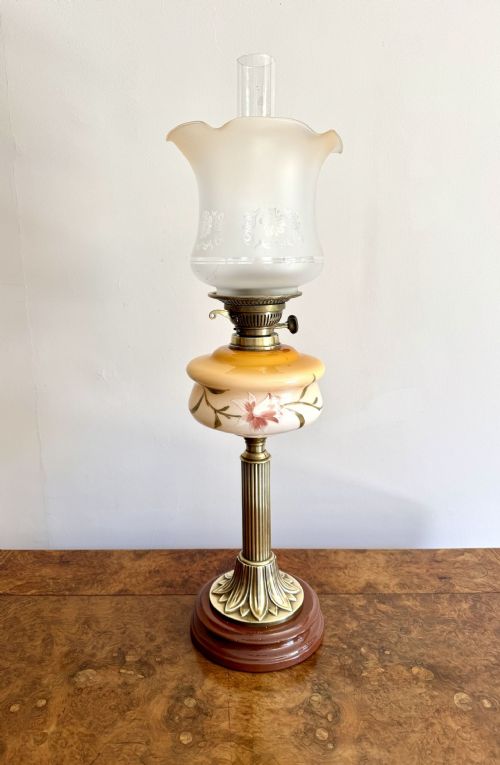
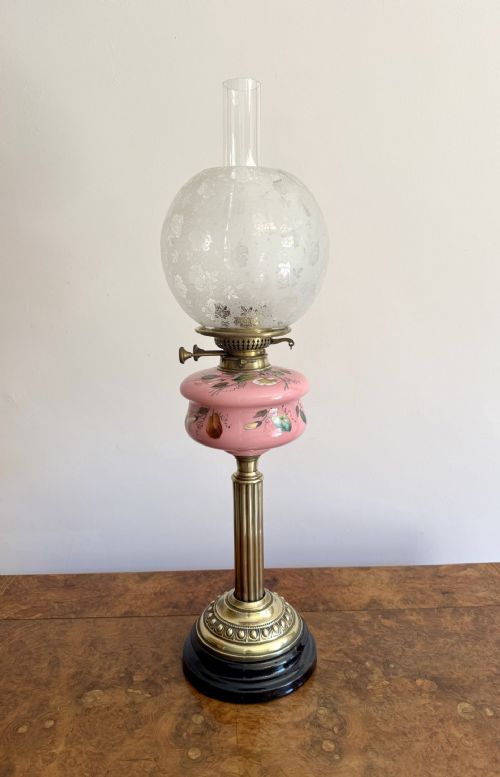
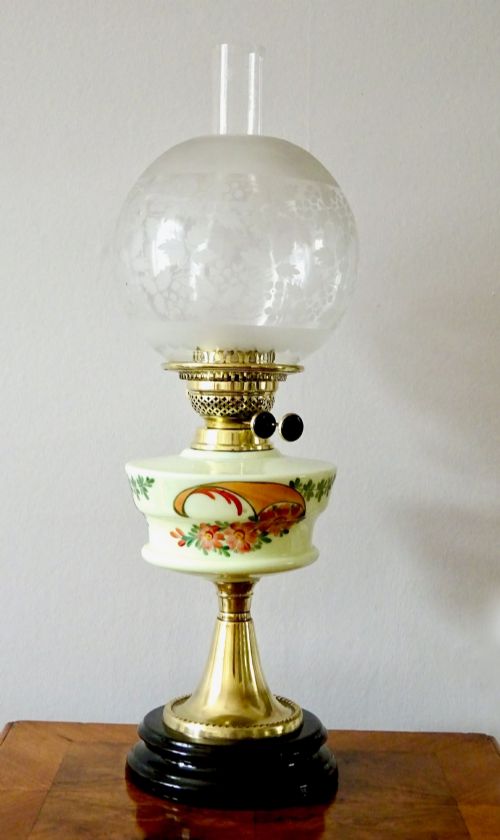


Edwardian Painted Glass Shade
These edwardian painted glass shade examples bring warmth and colour to any room, offering classic period charm and soft illumination.
Edwardian Painted Glass Shade
An edwardian painted glass shade forms the decorative centrepiece of period lighting, filtering the glow from oil lamps and ceiling suspensions. Most examples on this page date from the late nineteenth century through to the early decades of the twentieth century, including Victorian and Edwardian periods.
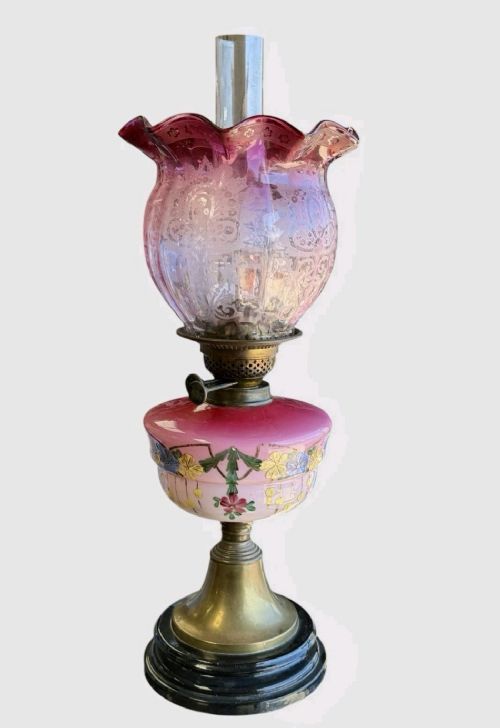
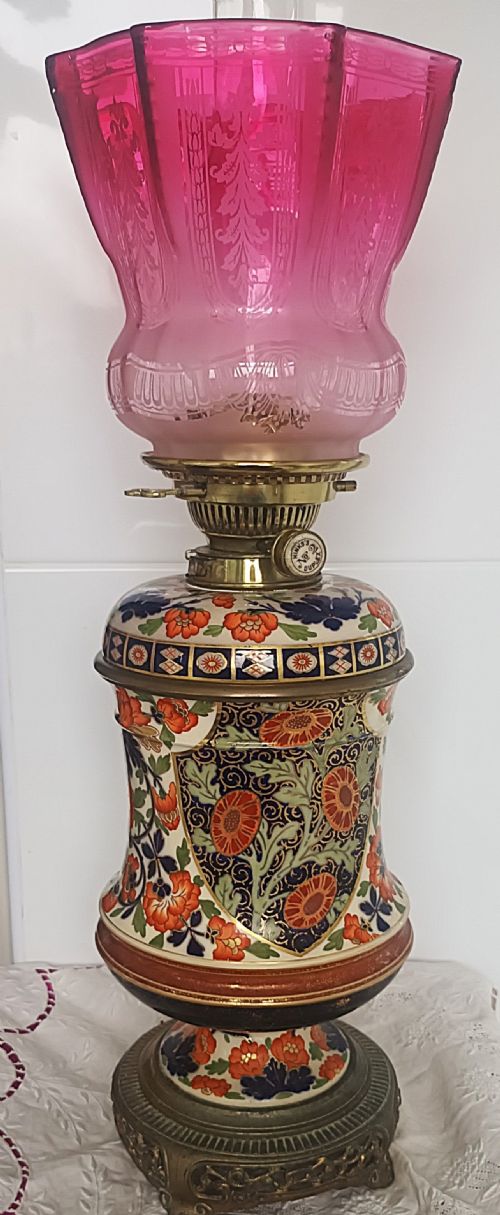
The forms range from hanging oil lamp shades and table lamp components to ceiling lighting fixtures and plafonnier light shades. Materials span milk glass, opaline glass, cranberry glass, and hand-painted glass, often paired with brass or ceramic bases.
Materials and construction
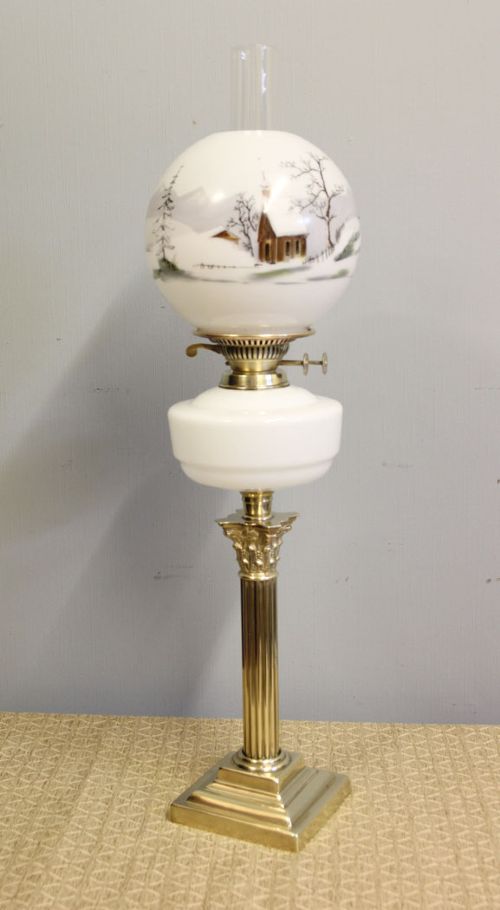
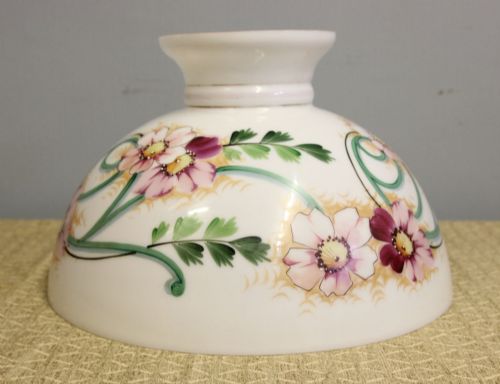
Makers utilised high-quality glass production methods, incorporating techniques like enamelling and hand-painting directly onto milk, opaline, or cranberry glass surfaces. These decorations often feature winter scenes or floral motifs applied before a final firing to set the pigment.
Metal mounts in brass frequently secure the glass elements, providing structural support for oil lamps and ceiling suspension fittings. Ceramic components also appear among the supporting structures, combining durability with decorative utility.
Judging quality and character
Quality rests in the precision and delicacy of the hand-painted details upon the glass surface, distinguishing simple utilitarian items from finer decorative works. Crisp brushwork and well-preserved enamel colours indicate superior craftsmanship.
The integrity of the glass itself, alongside the weight and finish of the brass or ceramic mountings, determines the overall standard of the piece. Matching components and harmonious proportions between shade and base elevate the piece further.
The Edwardian Painted Glass Shade Glossary
- Opaline glass
- A semi-opaque glass with a delicate milky appearance, often used for Edwardian lamp shades to diffuse light softly. It provides an ideal canvas for hand-painted decoration.
- Cranberry glass
- A rich red glass created by adding gold chloride to the molten mixture during production. This striking material is frequently seen in Victorian and Edwardian lighting.
- Plafonnier
- A bowl-shaped ceiling light shade suspended close to the ceiling, usually directing illumination downwards. These fixtures often feature painted glass and brass suspension hardware.
- Enamel
- A decorative fused glass coating applied to the surface of the shade to add durable colour and intricate pattern. It stands up well to the heat generated by period lighting.
Edwardian Painted Glass Shade: Frequently Asked Questions
Are these shades compatible with modern light fittings?
Many of these shades can be adapted for modern electrical ceiling suspensions or lamps, provided the fitter size matches the shade aperture. Consulting a professional electrician ensures the installation meets current safety standards.
Take precise measurements of the shade's fitter rim before purchasing any conversion hardware. Preserving the original brass or ceramic components maintains the historic integrity of the piece.
What periods do these shades come from?
The pieces span from the late nineteenth century through the Victorian and Edwardian eras up to the nineteen-twenties. Common manufacturing dates cluster around nineteen hundred and nineteen ten.
Stylistic influences include Neoclassical designs and French Chateau aesthetics alongside traditional British domestic lighting forms. Each period brings distinct decorative motifs and glass coloration techniques.
How do I identify cranberry glass?
Cranberry glass displays a characteristic translucent pink to deep red hue achieved through gold-based colouring agents. When held to the light, the colour remains rich and even throughout the material.
Victorian and Edwardian examples often combine this striking glass with hand-painted floral details or brass oil lamp fonts. The depth of colour serves as a key indicator of authenticity.