

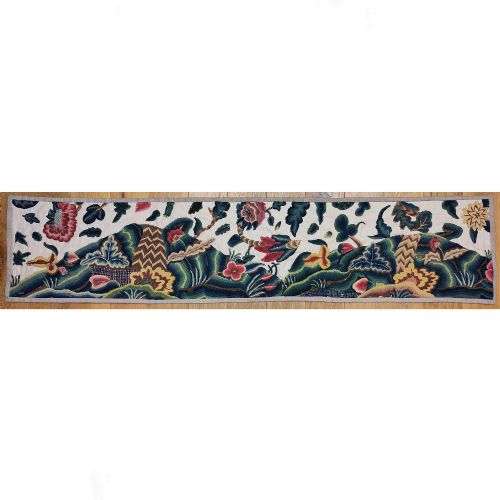
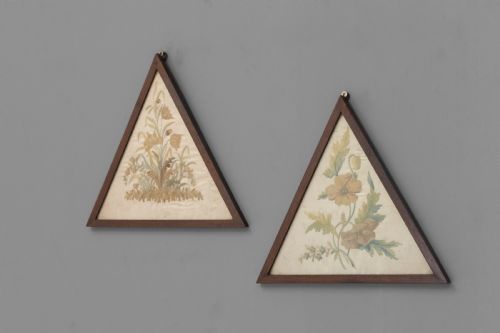

Floral Embroidery Panel
A floral embroidery panel brings centuries of hand-stitched botanical art into a room, offering rich texture and historic colour through framed pictures, wall hangings and screens.
Floral Embroidery Panel
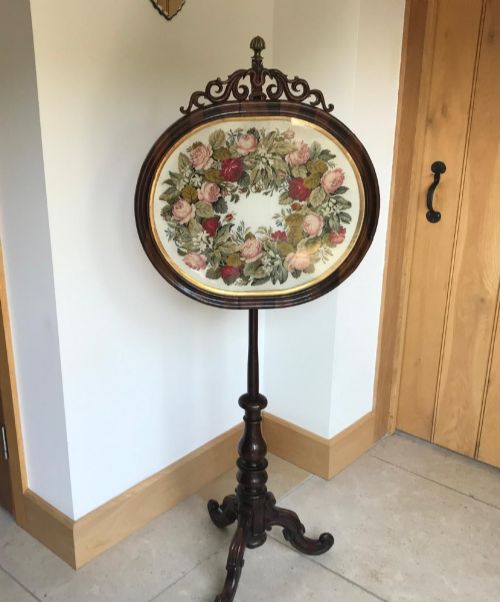
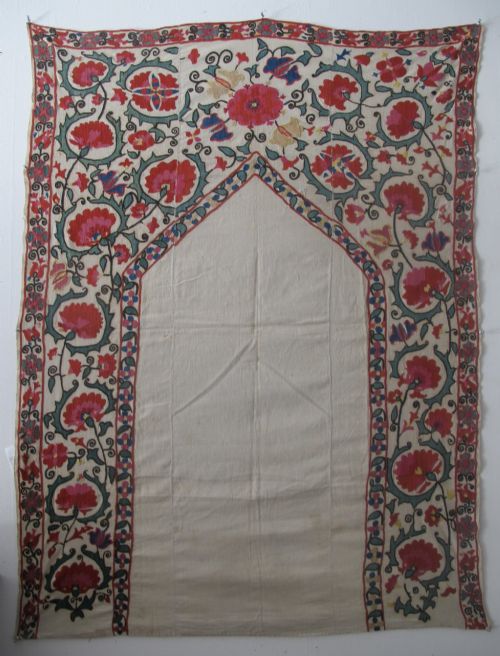
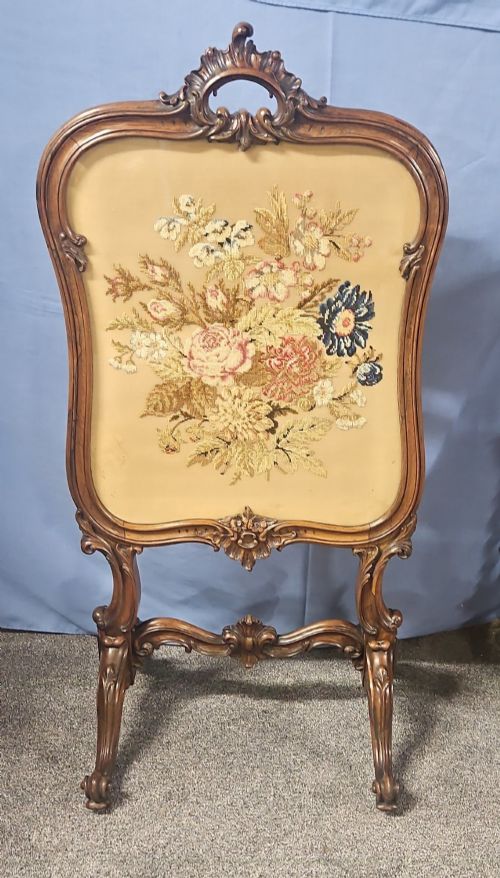
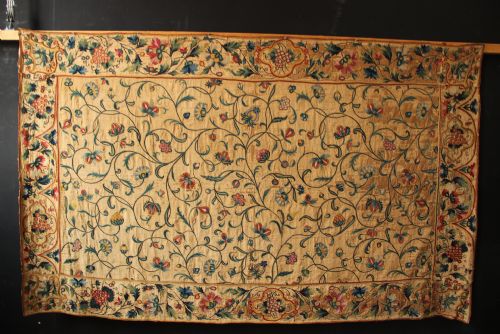
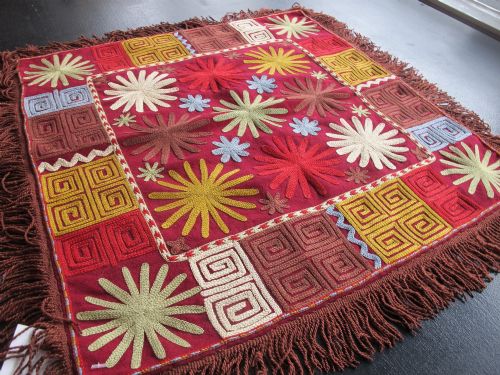
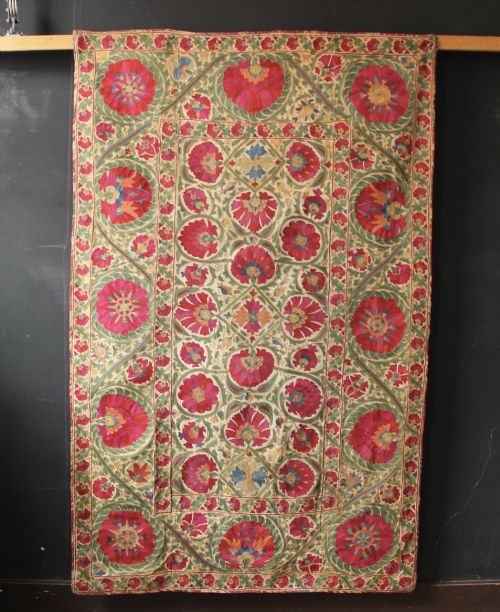
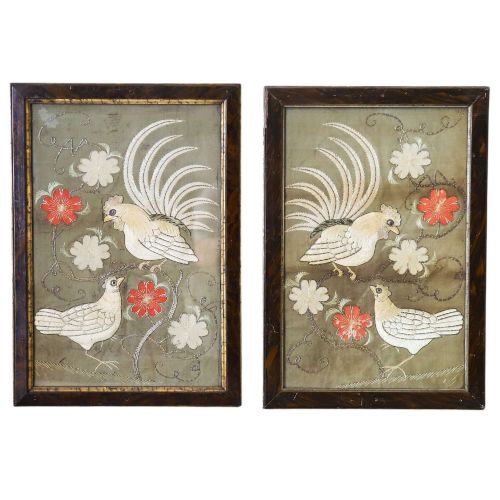
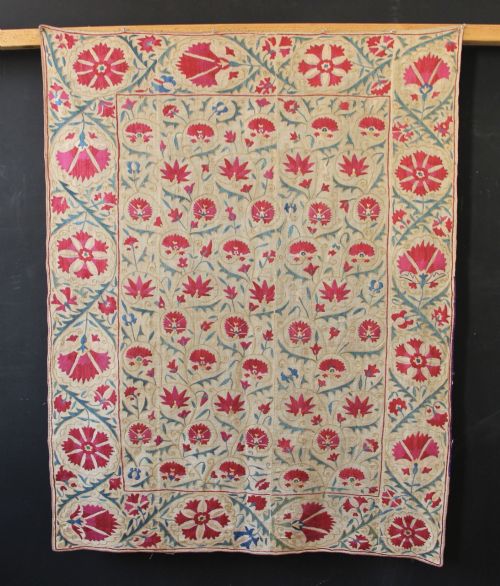
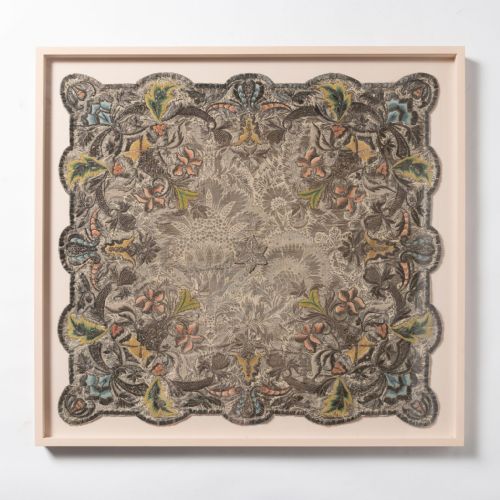
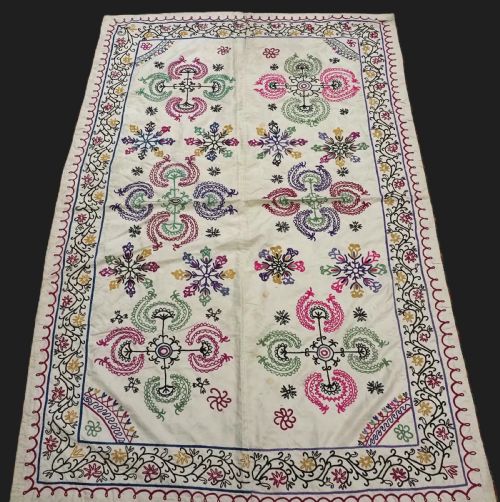
A floral embroidery panel encompasses diverse textile traditions ranging from English crewelwork and Georgian samplers to Central Asian Suzanis and Ottoman fragments. These pieces appear as framed pictures, wall art, fire screens and mounted textile panels created across the nineteenth and eighteenth centuries.
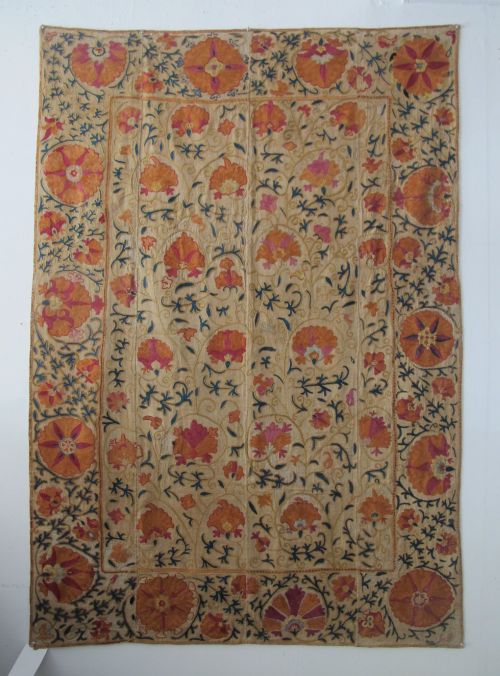
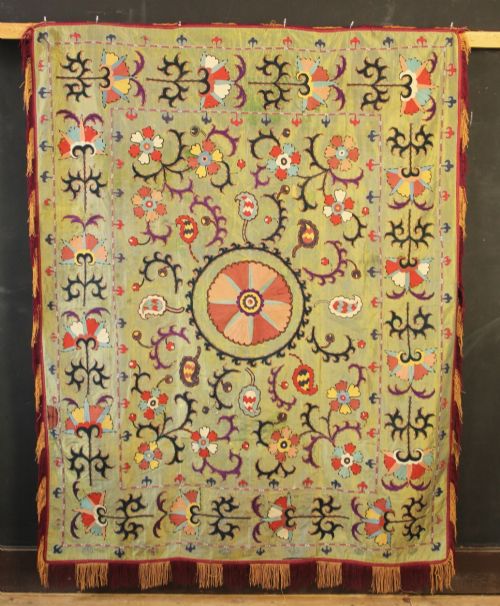
Buyers frequently encounter Central Asian embroideries executed in silk on cotton or linen grounds alongside domestic European needlework pictures. The selections span vernacular folk art and refined court pieces, each designed for vertical display on interior walls.
How they were made
Needlework artisans utilised natural fibres including silk, wool, cotton and linen, stitching polychrome threads onto woven or felted ground cloths. Many examples employ surface embroidery stitches, while others incorporate applique work and couching techniques.
Structural framing often integrates wood, brass and glass to protect fragile textiles, whilst larger wall hangings rely on the inherent strength of heavy linen or cotton foundations to support dense needlework.
Listings feature textiles from the seventeenth century through to the 1930s, encompassing English, Central Asian, Chinese and Ottoman origins.
What varies in quality
The distinction between standard examples and superior pieces rests upon the precision of the needlework and the complexity of the botanical composition. Dense, finely worked silk threads on balanced grounds demonstrate greater technical proficiency than sparse or hasty stitching.
Preservation of original colour and structural integrity significantly elevates an example. Pieces retaining vibrant natural dyes and stable ground fabrics without excessive restoration hold greater visual harmony.
The Floral Embroidery Panel Glossary
- Suzani
- An embroidered tribal hanging originating from Central Asia, traditionally worked in silk on a cotton or linen foundation with large floral motifs.
- Crewelwork
- A type of embroidery utilising wool yarn on a heavy linen or cotton twill fabric, frequently seen in historic English interior decoration.
- Sampler
- A piece of needlework produced to demonstrate a maker's proficiency in various stitches, alphabets and floral motifs.
- Applique
- A technique where pieces of fabric are applied to a larger ground cloth to build up pattern and texture, common in Persian Rasht embroideries.
- Pole screen
- A freestanding wooden furniture piece featuring an adjustable vertical panel designed to shield a person's face from the radiant heat of an open fire.
Floral Embroidery Panel: Frequently Asked Questions
How do I hang a textile panel safely?
Heavy panels benefit from professional mounting behind glass to protect fragile silk and wool fibres from dust and atmospheric moisture. Lighter pieces require specialist archival framing methods that prevent direct contact between the textile and the glass.
Position wall hangings away from direct sunlight to prevent natural dyes from fading over time. Ensure weight is distributed evenly across the frame rather than suspended from a single central point.
What is the difference between a Suzani and English crewelwork?
Suzanis originate from Central Asia and typically feature large-scale circular floral medallions worked in vibrant silk thread on cotton or linen grounds. They were traditionally created as dowry textiles.
English crewelwork relies on wool yarn stitched onto heavy linen twill, featuring scrolling floral vines and motifs rooted in seventeenth and eighteenth-century domestic decorative arts.
How are different periods identified?
Dating relies upon examining the materials, ground cloths, dye colours and stitch structures characteristic of specific eras. Eighteenth-century needlework often displays distinct canvas work or fine silk petit point techniques.
Nineteenth-century examples frequently incorporate machine-woven cottons or distinct synthetic undertones in later Victorian pieces, while Central Asian fragments reveal regional dye palettes tied to specific decades.
Were these panels always framed?
Many textile panels served alternative domestic purposes before entering the art market. Central Asian Suzanis functioned as wall hangings, bed covers or ceremonial hangings within nomadic and urban households.
English needlework pictures and samplers were frequently framed closer to their creation date to adorn parlour walls, while others were incorporated directly into wooden fire screens and furniture.