

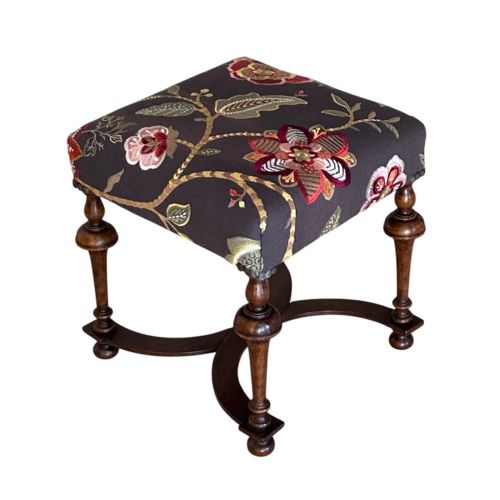
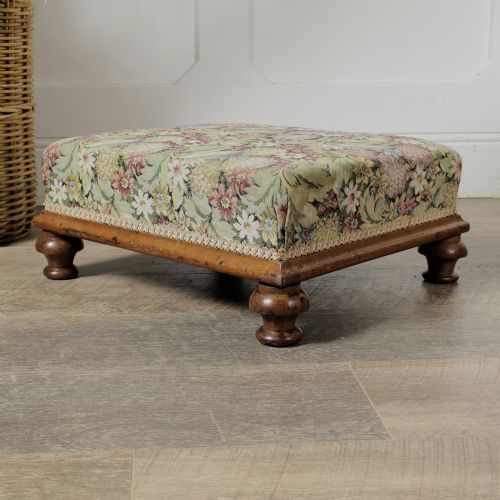
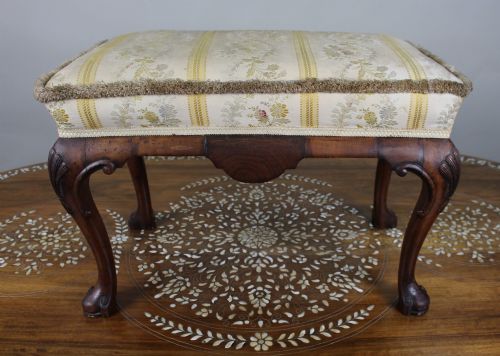
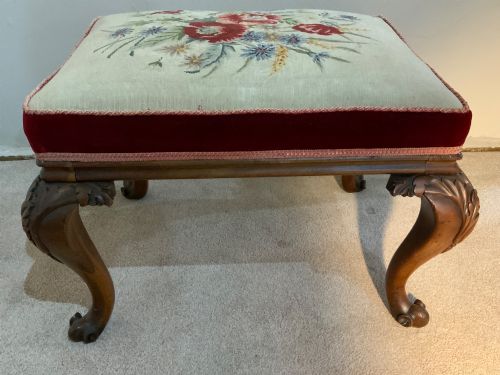


Floral Embroidered Footstool
A floral embroidered footstool brings traditional textile work and solid timber frames into a room, offering both decorative charm and a practical low seat.

Floral Embroidered Footstool
A floral embroidered footstool combines a timber frame with a textile top worked in floral motifs. Buyers searching for a floral embroidered footstool encounter various forms, from small mahogany embroidery foot stools to long dressing stools.
The pieces span several periods, including Georgian examples, Victorian items, and pieces from the early twentieth century. Frames take the form of footstools, ottomans, and dressing table stools with distinct regional and stylistic influences.
Revival styles appear frequently alongside pieces from the nineteenth century. Makers adopted Queen Anne style, Louis XV revival, and Swedish Empire designs, mounting needlepoint and tapestry tops on walnut, mahogany, oak, and birch frames.
How they were made
Frames are built from hardwoods such as mahogany, walnut, oak, and birch, often shaped with carved details. Joinery secures the wooden structures before upholstery is applied to the upper section.
Textile elements incorporate wool worked in needlepoint, tapestry, and embroidery techniques. Fabric and velvet also appear on seats, sometimes accompanied by brass details on the frame or feet.
Floral Embroidered Footstool Retail Price Guide 2026
Typical asking prices for floral embroidered footstool among the pieces listed under this phrase on Sellingantiques today, from the lower quarter to the upper quarter. They describe what is for sale here now, not the wider market.
What varies in quality
The distinction between standard and superior pieces lies in the crispness of the timber carving and the complexity of the needlework. Finely worked wool embroidery on a sturdy walnut or mahogany frame demonstrates greater craftsmanship than simpler upholstered versions.
Proportion and stylistic adherence also set examples apart. Pieces that faithfully execute Queen Anne or Louis XV revival forms display more refined lines and harmonious integration between the wooden base and the textile top.
The Floral Embroidered Footstool Glossary
- Needlepoint
- A type of embroidery stitched on a stiff open-weave canvas. It forms the patterned surface seen on many antique stool tops.
- Upholstery
- The materials, including padding, fabric, and webbing, that make up the soft covering of a seat. Traditional pieces use horsehair or similar stuffing beneath the outer textile.
- Revival
- A design style that imitates or resurrects the aesthetics of an earlier historical period. Queen Anne and Louis XV revival pieces adapt eighteenth-century motifs for later interiors.
- Ottoman
- A low, upholstered seat without arms or a back. These pieces often serve as footrests or alternative seating.
Floral Embroidered Footstool: Frequently Asked Questions
How do I date an antique footstool?
Dating relies on examining the timber species, joinery methods, and stylistic cues present in the frame. Secondary woods and tool marks often reveal the manufacturing era.
Upholstery techniques can also help, though many pieces have been re-covered over time to preserve the textile top.
Were these stools used just for feet?
While many served as footrests before armchairs, larger versions functioned as dressing table stools or low seats in sitting rooms. Their portable size made them easy to move around the house.
Some longer variants were designed to accommodate multiple feet or to double as short benches.
How should I clean needlepoint upholstery?
Needlepoint requires gentle care to protect the wool threads from fraying or fading. Vacuuming through a mesh screen on a low setting removes surface dust.
Professional textile cleaning is recommended for deeper stains to avoid damaging the underlying structure.
What is the difference between mahogany and walnut frames?
Walnut was favoured in earlier periods for its rich grain and suitability for carving intricate details. Mahogany gained popularity later for its reddish-brown tone and durability.
Both timbers provide strong structural support for upholstered seats.