



Floral Earthenware Water Jug
These floral earthenware water jugs bring bright painted decoration and generous volume to the table or washstand, and a buyer wants one for their robust domestic charm.
Floral Earthenware Water Jug
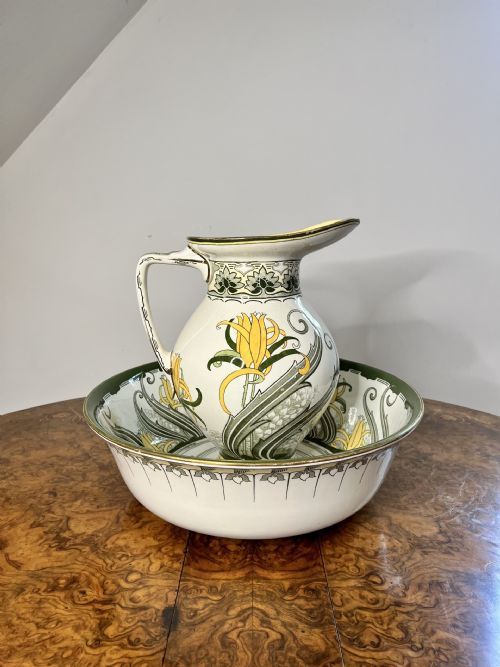
A floral earthenware water jug serves as a practical vessel for water or flowers, coming in forms ranging from standalone pouring pitchers to large pieces belonging to complete wash sets. When searching for a floral earthenware water jug, a buyer typically encounters pieces spanning the Georgian, Victorian, and Edwardian eras, alongside occasional twentieth-century examples.
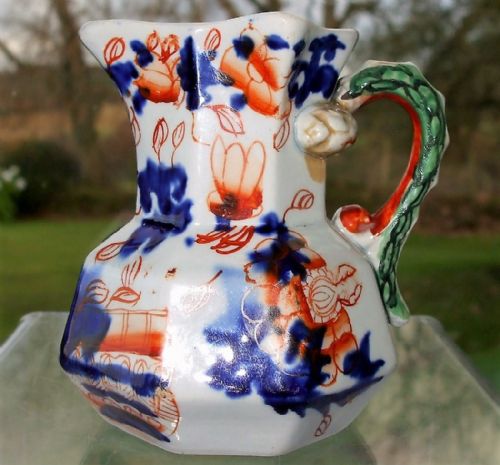
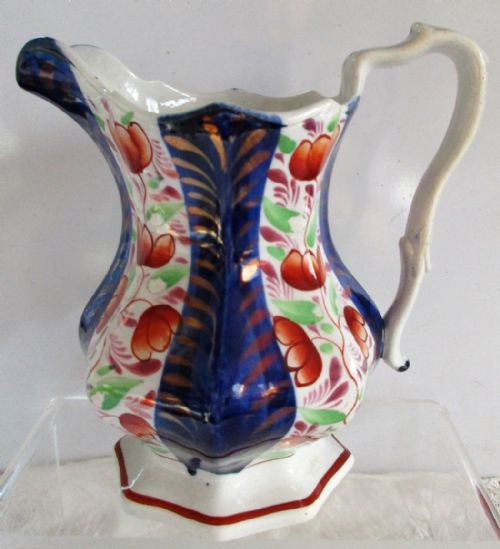
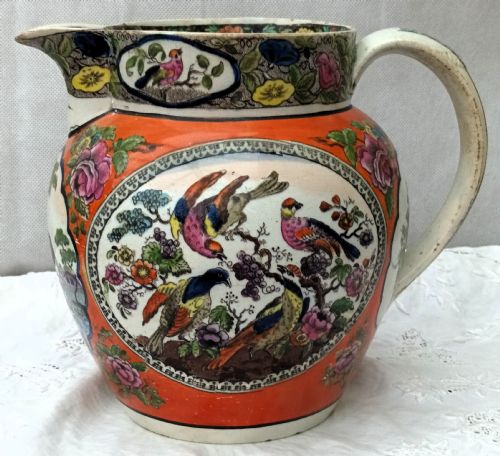
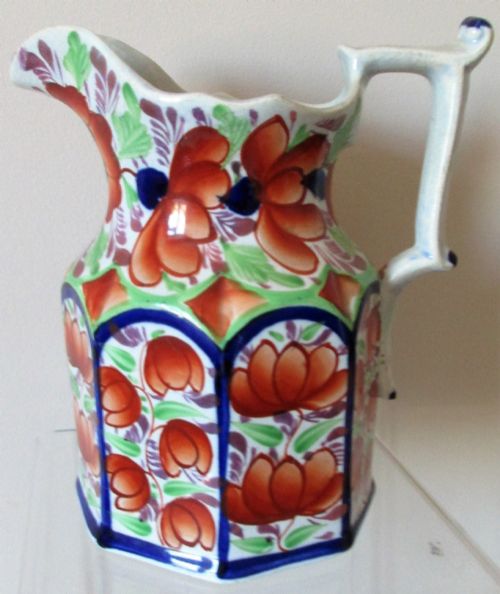
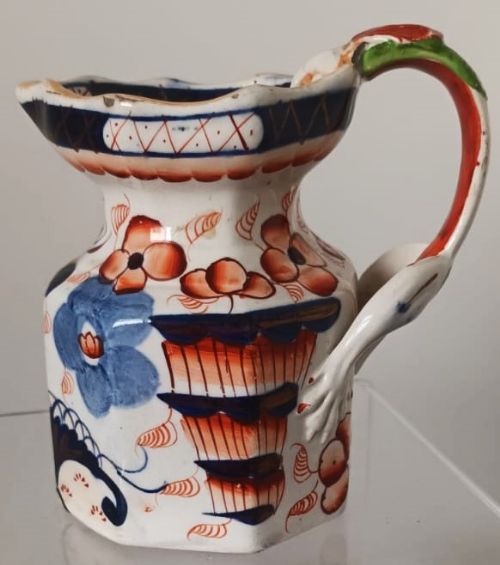
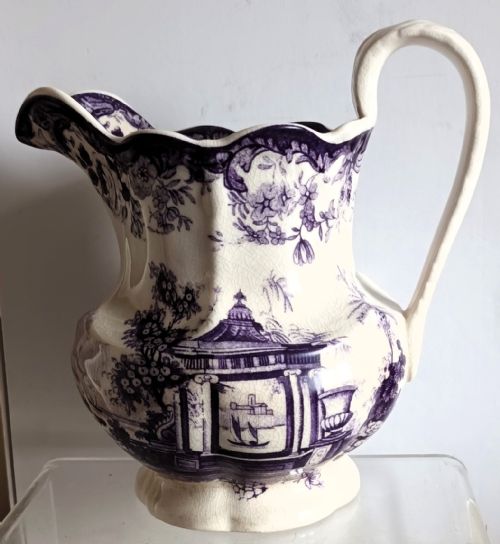
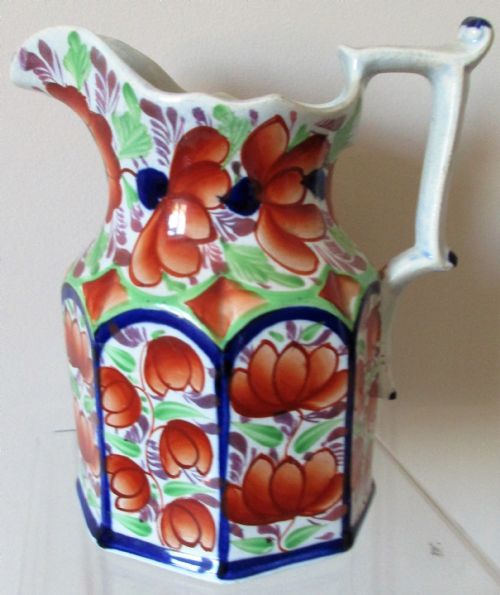
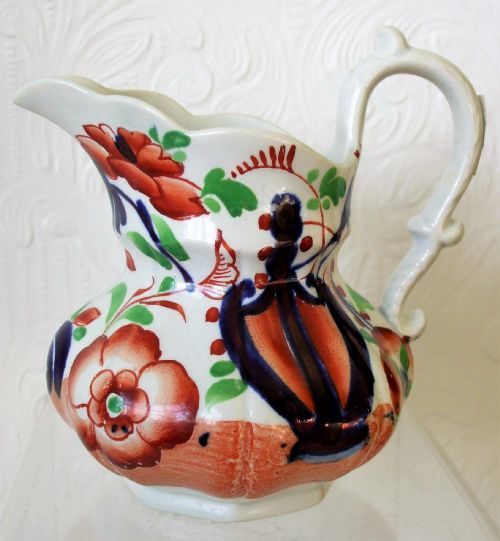
The material record shows heavy use of pearlware and standard earthenware, finished with enamel glazes, lustreware, or blue and white transfer printing. Makers and patterns vary from Gaudy Welsh designs named Conwy, Gwent, Pagoda, Harlech, and Bethesda to transfer patterns and substantial Staffordshire jugs.
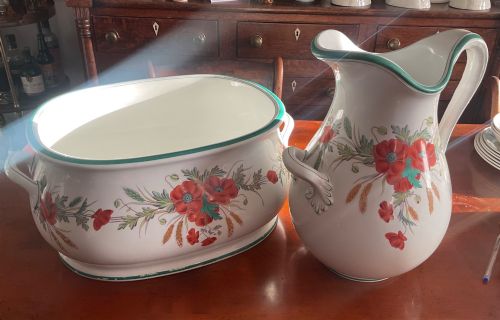
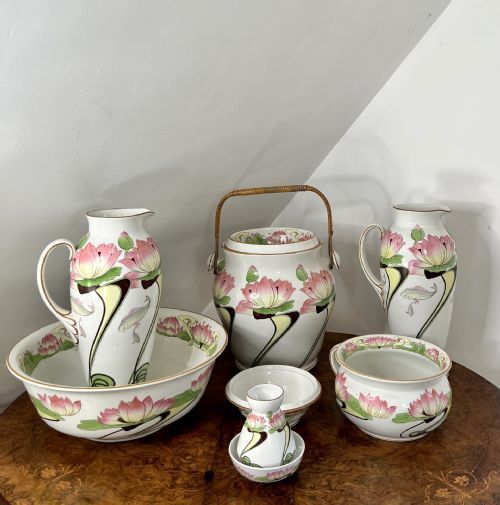
Forms include standard jugs and pitchers, pouch jugs, and large one-gallon vessels, often accompanied by matching basins in full wash sets. These items bridge utilitarian kitchenware and decorative pottery, combining bold floral motifs with heavy ceramic bodies designed for daily use.
How they were made
Potters shaped these vessels from earthenware or pearlware bodies, utilising traditional throwing and moulding techniques to form the heavy walls required for holding liquids. Once shaped, the pieces received hand-painted enamels, transfer printed scenes, or lustre highlights before a protective coat of glaze was applied.
Kiln firing fixed the ceramic body and fused the surface decoration, producing the durable finishes seen on Georgian transfer jugs and Victorian Gaudy Welsh patterns. Footbaths, large water jugs, and wash sets required substantial clay bodies to support their considerable scale during these high-temperature firings.
Floral Earthenware Water Jug Retail Price Guide 2026
Typical asking prices for floral earthenware water jug among the pieces listed under this phrase on Sellingantiques today, from the lower quarter to the upper quarter. They describe what is for sale here now, not the wider market.
Listings feature earthenware and pearlware jugs spanning the Georgian, Victorian, Edwardian, and later periods, utilising transfer print and enamel glaze techniques.
What varies in quality
Quality rests in the crispness of the transfer print or the hand-painted brushwork, distinguishing standard utility wares from finer cabinet pieces. The complexity of the pattern, such as multi-coloured Gaudy Welsh motifs or detailed floral arrangements, dictates the level of artisan skill involved in production.
The weight, proportion, and structural integrity of the ceramic body also separate everyday kitchen vessels from substantial exhibition pieces or large wash set components. Preservation of the enamel glaze and lustre details over decades of domestic use determines the overall desirability of an individual jug.
Minton·Doulon Burslem·Charlotte Rhead
The Floral Earthenware Water Jug Glossary
- Earthenware
- Porous pottery fired at lower temperatures, requiring a glazed surface to hold liquids safely. It forms the primary body for most domestic jugs and wash sets.
- Pearlware
- A refined earthenware developed in the eighteenth century featuring a subtle bluish tint in the glaze to mimic Chinese porcelain. It provides a smooth white ground for transfer printing.
- Lustreware
- Pottery decorated with a metallic film that creates an iridescent sheen upon firing. This technique adds reflective copper or gold highlights to floral patterns.
- Gaudy Welsh
- A distinctive style of brightly coloured pottery featuring cobalt blue, iron red, pink lustre, and green enamel. It gained popularity in the nineteenth century for domestic tea and tableware.
- Transfer printing
- A method of applying detailed designs to ceramics by engraving a copper plate and pressing the image onto paper tissue before transferring it to the biscuit pot. This allowed complex patterns to be produced consistently.
Floral Earthenware Water Jug: Frequently Asked Questions
What were floral earthenware water jugs used for?
These large vessels served practical household roles, carrying water for washing at the basin or serving liquid at the table.
Many survived as part of matching wash sets or large one-gallon storage pitchers used before modern indoor plumbing.
How do I date a floral earthenware water jug?
Dating relies on identifying ceramic bodies like pearlware, specific glaze types, and registered pattern names from the Georgian and Victorian periods.
Stylistic shifts from hand-painted Gaudy Welsh motifs to Edwardian bathroom sets and later twentieth-century pieces also help establish age.
Can I use these antique jugs for daily tasks?
Most buyers choose to display these pieces as decorative items or use them exclusively for holding dried and fresh flowers.
Due to age, historical glaze composition, and potential hairline fractures, modern daily culinary use is generally discouraged.
How do I care for a ceramic water jug?
Keep the piece out of direct sunlight and avoid harsh chemical cleaners that might degrade hand-painted enamels or lustre highlights.
Dust gently with a soft cloth and refrain from submerging older earthenware in water for extended periods.