





Floral Cloisonne Enamel Pot
These floral cloisonne enamel pot examples bring intricate metalwork and vibrant colour into a room.
Floral Cloisonne Enamel Pot
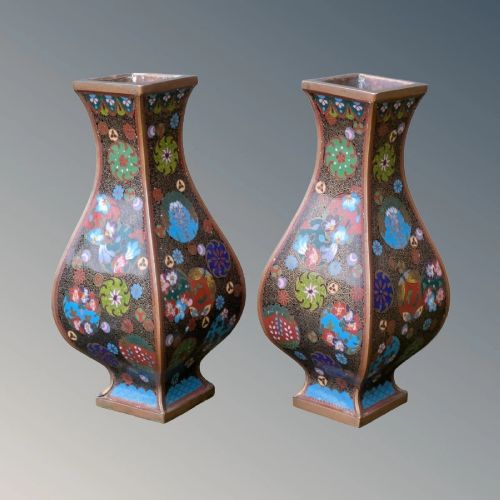
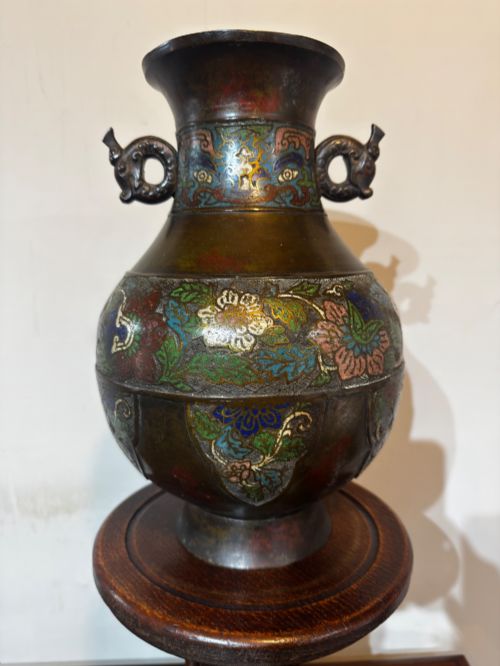
A floral cloisonne enamel pot combines fine metal wirework with coloured vitreous enamel pastes to create lasting botanical patterns across jars, vases, and vessels. Buyers seeking these items will encounter ginger jars, lidded gourd pots, and jardiniere forms originating from Chinese and Japanese workshops.
The objects span multiple periods, ranging from late Edo and Meiji Japanese pieces to Qing dynasty Chinese examples. Forms include decorative jars, sake kettles, and bonsai planters, each displaying characteristic floral motifs within wired compartments.
How they were made
Craftsmen soldered flat metal wires onto copper, brass, or bronze bodies to form the outline of the floral design. These thin metal walls create the individual cells that hold the coloured enamel pastes before firing.
After the enamel powders melted and fused to the metal base during firing, artisans ground and polished the surface until the wire rims and glass pastes lay flush. Additional gilding or metal finishing often completed the vessel body.
Floral Cloisonne Enamel Pot Retail Price Guide 2026
Typical asking prices for floral cloisonne enamel pot among the pieces listed under this phrase on Sellingantiques today, from the lower quarter to the upper quarter. They describe what is for sale here now, not the wider market.
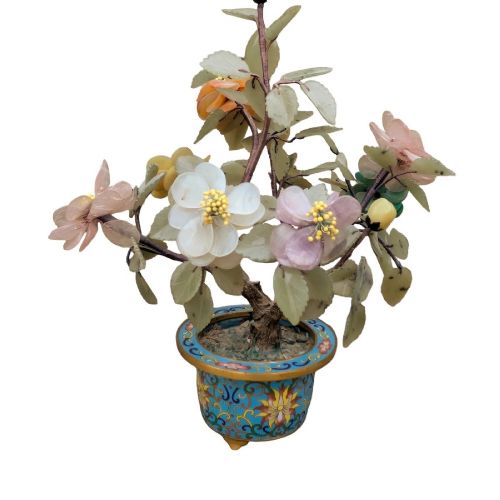
Several pots double as miniature landscapes, featuring carved hardstone blossoms permanent enough to outlive any gardener.
What varies in quality
The refinement of the wirework dictates much of the visual success, with finer and more regular lines separating masterworks from simpler production. Sloppy soldering or uneven enamel thickness alters the crispness of the botanical patterns.
The choice of foundation metal and the polish of the finished surface distinguish better examples. Heavier bronze or copper bodies with smooth, well-finished enamel surfaces hold greater visual depth than rougher pieces.
The Floral Cloisonne Enamel Pot Glossary
- Cloisonne enamel
- A decorative metalwork technique where thin wires are soldered to a metal body to form cells, which are then filled with enamel paste and fired. This method creates distinct coloured compartments that map out the floral design.
- Jardiniere
- A large decorative pot or planter designed to hold growing plants or floral arrangements. These vessels often sit on stands and feature elaborate enamel work across their exterior.
- Ginger jar
- A ceramic or metal lidded vessel originally used for storing spices, later adopted for decorative display. The rounded body provides a wide surface area for detailed floral motifs.
- Meiji period
- An era of Japanese history lasting from 1868 to 1912 noted for high technical achievement in decorative metalwork and enamel. Pieces from this time often exhibit exceptional control over fine wire placement.
Floral Cloisonne Enamel Pot: Frequently Asked Questions
How are cloisonne pots cleaned safely?
Dust these metal and enamel vessels gently with a soft, dry cloth to prevent scratching the polished surface. Avoid liquid cleaners or chemical polishes, as moisture can seep into hairline cracks and affect the underlying metal.
Keep the pieces out of direct sunlight to protect the enamel colours from fading over long periods. Careful handling ensures the delicate wire outlines remain intact.
What materials make up these pots?
The primary structure relies on metals such as copper, brass, bronze, or sometimes heavier alloys shaped into jars and vases. Finely drawn metal wires create the surface cells that contain the coloured vitreous enamel paste.
Some compositions incorporate hardstone, jade, or quartz elements, particularly in bonsai tree arrangements. These mixed media pieces combine stonework with traditional metal enamelling.
Where were these pots made?
The pieces originate primarily from traditional workshops in China and Japan across the nineteenth and twentieth centuries. Chinese Qing dynasty pieces and Japanese Meiji period examples represent the main regional traditions found here.
Each region developed distinct palettes and wirework styles, allowing collectors to identify the source through specific decorative characteristics. The cultural techniques evolved alongside local metalworking practices.
How can I date a pot?
Dating relies on stylistic clues, metal types, and manufacturing characteristics associated with specific historical periods like the Qing dynasty or Meiji era. Subtle differences in the colour palette and wire thickness often point towards a particular decade or century.
Documentation or historical context provided by the maker can further narrow down the production timeframe. Comparing the form to known dated examples helps confirm the age.