

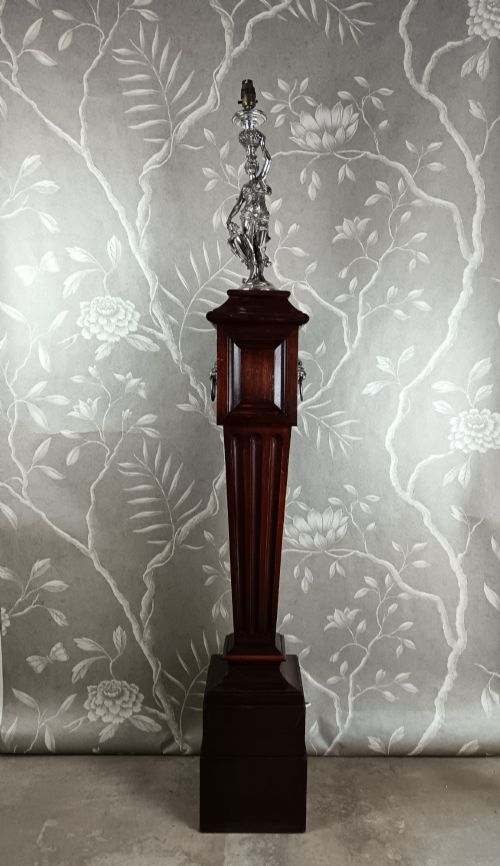


Floor Torchere Stand
A floor torchere stand elevates light or sculpture, bringing height and presence to a room.
Floor Torchere Stand
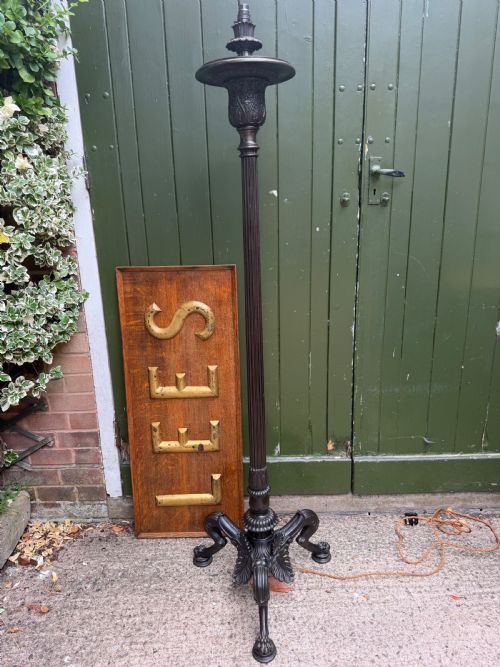
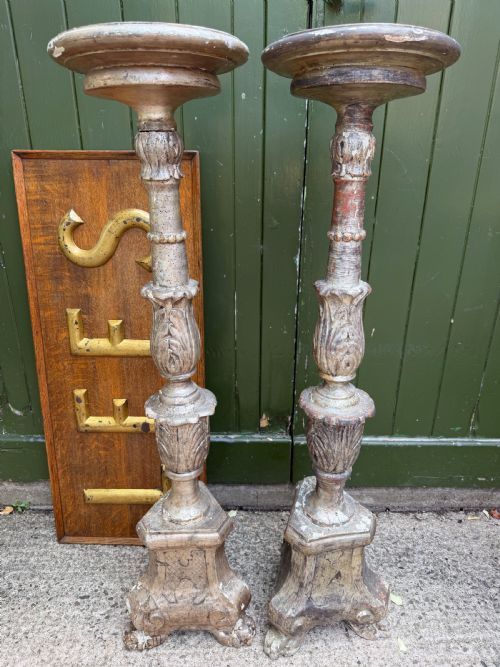
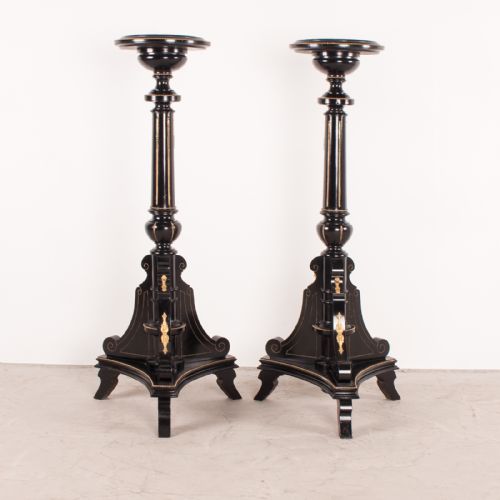
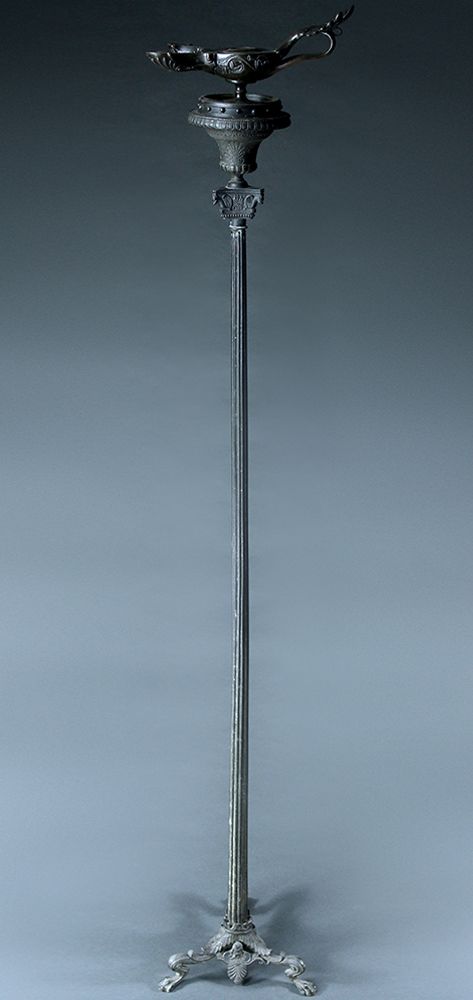
A floor torchere stand functions as an elevated holder for candles, lamps, or decorative figures, lifting light sources and display pieces high above the ground. When you search for a floor torchere stand, you encounter tall structural supports originating from periods ranging from the eighteenth century through the art deco era. These pieces appear in forms such as standard lamps, pillar pedestals, and figural candle holders.
The selection on this page leans heavily toward nineteenth-century works, alongside eighteenth-century Italian designs and twentieth-century interpretations. You find Venetian figural standards, carved wooden columns, and cast-iron standards configured for gas or electricity. Each variant serves to occupy vertical space while holding illumination or ornamental objects.
Materials and construction
Carved wood forms the backbone of these tall supports, frequently enhanced with gesso, gold leaf, silvering, or polychrome paint to enrich the surface. Artisans shaped pinewood, oak, and mahogany into fluted columns, figural statues, and intricate pedestals.
Metal components introduce structural rigidity and distinct visual weight, utilising cast iron, bronze, brass, and silver-plated elements. Many examples combine carved timber with metallic fittings, or apply surface finishes like bronze patination and giltwood to achieve ornamental depth.
Several stands double as polite attendants, holding trays or lights while frozen in painted wooden posture.
Assessing quality and craftsmanship
Surface execution distinguishes finer pieces, particularly in the application of original gilt polychrome, gold leaf, or aged paint layers. The harmony between the structural support and its decorative elements dictates the visual impact of the piece.
Humphrey Hopper·WMF·Coutan
The Floor Torchere Stand Glossary
- Torchere
- A tall ornamental stand originally designed to carry a candle or torch. These pieces now frequently accommodate electric lamps or figural sculptures.
- Gesso
- A plaster-like mixture applied to wood surfaces as a base for painting or gilding. It allows craftsmen to carve intricate relief details before applying gold leaf.
- Standard lamp
- A floor-standing upright pole or column fitted to hold a light source. The term often interchanges with floor lamp in antique listings.
- Polychrome
- Decorated in multiple colours. This finish appears frequently on carved wooden figures and Venetian stands.
- Blackamoor
- A historical decorative art term denoting European representations of figures from North or Sub-Saharan Africa, often depicted wearing turbans and holding trays or lights.
Floor Torchere Stand: Frequently Asked Questions
What is a floor torchere stand used for?
These tall stands support lighting, candles, or decorative figures to illuminate dark corners or accent vertical space in a room.
Historically, they elevated wax candles or oil lamps, while later iterations accommodate electric bulbs or serve purely as pedestals for art objects.
How do I identify the period of a torchere?
Dating relies on stylistic cues such as neoclassical proportions, art deco geometric lines, or Victorian ornamentation. Material composition and construction techniques also point toward specific manufacturing eras.
Examination of the surface preparation, such as gesso layers or bronze casting quality, helps confirm the age of the piece.
Are these stands wired for modern electricity?
Many antique examples undergo conversion to electricity for practical use as standard lamps or uplighters. Some retain their original candle prickets or gas-light fittings.
Buyers should inspect the internal wiring of electrified pieces to ensure compatibility with modern safety standards.
Where should I place a torchere in a room?
Their vertical height makes them effective in empty corners, flanking large pieces of furniture, or framing doorways. They draw the eye upward and add architectural interest to flat walls.
Positioning depends on the stability of the base and the reach of the power cord if the piece is wired for light.