



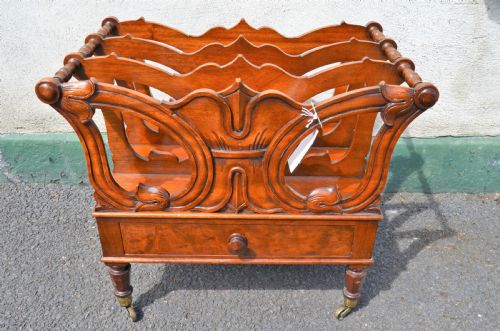


Floor Magazine Holder
These floor magazine holder pieces span utilitarian oak racks to ornate brass revolving stands, offering a practical way to keep periodicals neat in a sitting room.

Floor Magazine Holder
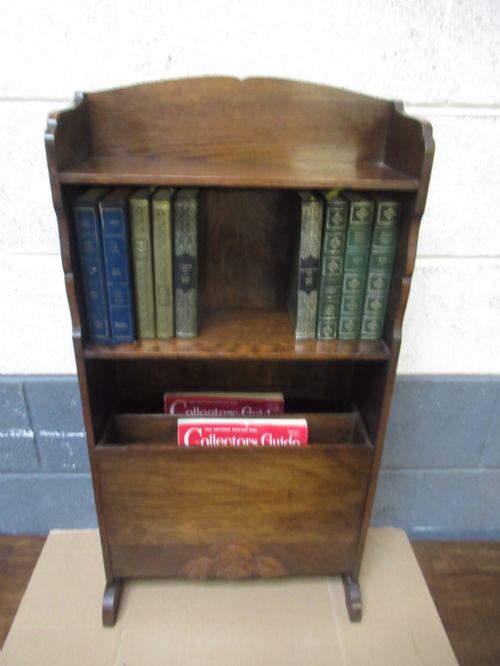
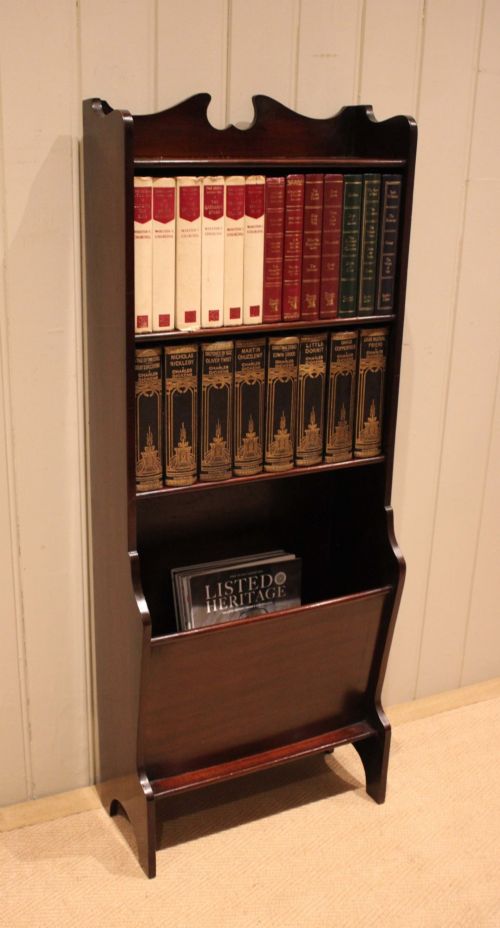
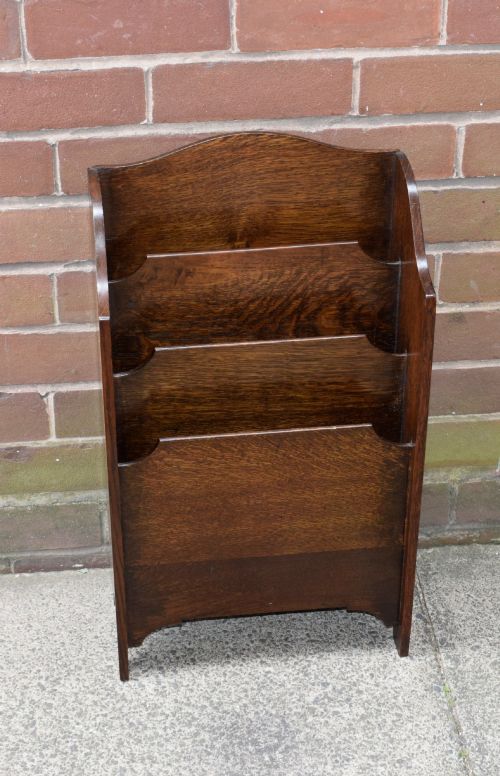
A floor magazine holder groups together useful nineteenth and early twentieth century items designed to store periodicals, books, and folios in domestic spaces. These pieces encompass traditional canterburys, standing book troughs, and revolving metal stands rather than simple modern wire racks.
The varieties you meet most often on this page include mahogany and oak canterburys alongside brass revolving stands from the Victorian and Edwardian eras. Simpler rustic pieces utilising bamboo, rattan, and painted wood also appear regularly amongst the formal timber designs.
How they were made
Makers constructed these stands using solid timbers such as mahogany, oak, and Cuban mahogany, often joining them with traditional cabinetmaking techniques suited to daily weight and movement. Turned wooden spindles and carved details frequently divide the compartments.
Metalwork played a structural and decorative role, seen in heavy brass stands, revolving mechanisms, and cast metal mounts. Bamboo and rattan construction relied on careful bending and binding to form lightweight yet stable frames.
Floor Magazine Holder Retail Price Guide 2026
Typical asking prices for floor magazine holder among the pieces listed under this phrase on Sellingantiques today, from the lower quarter to the upper quarter. They describe what is for sale here now, not the wider market.
A bear might guard your sheet music in a Black Forest carving.
What varies in quality
Quality rests upon the choice of timber and the solidity of the construction, distinguishing finely figured Cuban mahogany or carved Black Forest work from plain utility pieces. Superior examples exhibit crisp joinery and robust rotating mechanisms that turn smoothly without wobbling.
The refinement of the decorative details, from turned wooden columns to polished brass fittings, separates standard domestic furniture from finer items produced for the principal rooms of a period house.
The Floor Magazine Holder Glossary
- Canterbury
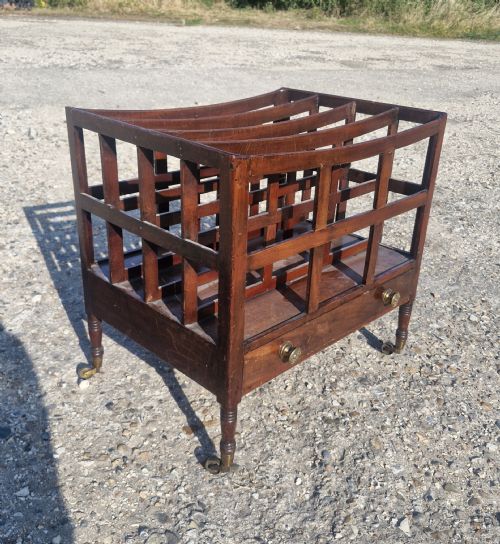
- A low, freestanding stand with multiple partitions used originally for sheet music and later for newspapers and periodicals. They often feature carrying handles and small castor wheels.
- Folio Stand
- An adjustable or folding rack designed to hold large books, prints, or portfolios of paper flat. Late Georgian and Victorian examples usually sit on sturdy trestle feet.
- Book Trough
- A small open trough for holding books or magazines within easy reach of a chair or desk. Edwardian versions frequently incorporated painted finishes or revival styling.
- Revolving Stand
- A multi-sided rack mounted on a central pivot that allows the user to spin the compartments for easy selection. These were typically constructed from brass and mahogany or oak.
- Black Forest
- A term for carved wooden items produced in the Central European region, characterised by realistic animal and foliage motifs. Pieces of this style often served as music or portfolio stands.
Floor Magazine Holder: Frequently Asked Questions
What is a canterbury?
A canterbury is a compartmentalised stand traditionally used to hold music sheets, newspapers, and magazines close to a seating area. They usually feature open vertical divisions and may include low legs or castors.
First appearing in the eighteenth century, these pieces remained popular through the Victorian and Edwardian periods as domestic storage needs evolved.
How do I date an oak magazine rack?
Dating relies on observing the timber choice, construction methods, and stylistic cues present in the piece. Edwardian and 1920s examples often display simpler Arts and Crafts influences or straightforward industrial framing.
Examining the fixings, drawer linings if present, and overall wear helps distinguish nineteenth-century work from later Georgian Revival reproductions.
Where should I place a revolving stand?
Revolving stands work best beside an armchair, desk, or sofa where their rotating action provides easy access from multiple angles. Their brass and timber construction suits traditional studies and living rooms.
Because they turn freely, they require a small amount of clearance around them to allow the compartments to spin without striking surrounding furniture.
Are bamboo holders sturdy?
Bamboo and rattan holders offer a lighter alternative to solid timber while retaining sufficient strength for daily storage of magazines and newspapers. They gained particular popularity during the late Victorian craze for exotic natural materials.
Careful inspection of the bound joints ensures the frame remains stable and capable of supporting regular handling in a domestic setting.