


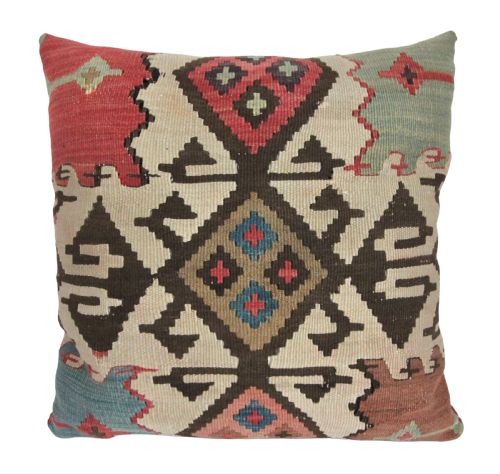
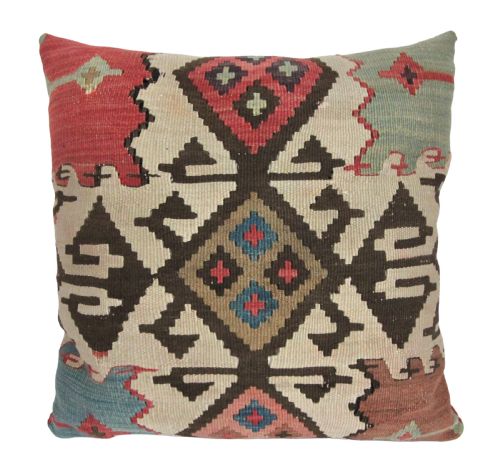


Flatweave Rug Cushion
A flatweave rug cushion brings tactile nomadic history into a room through repurposed tribal textiles.
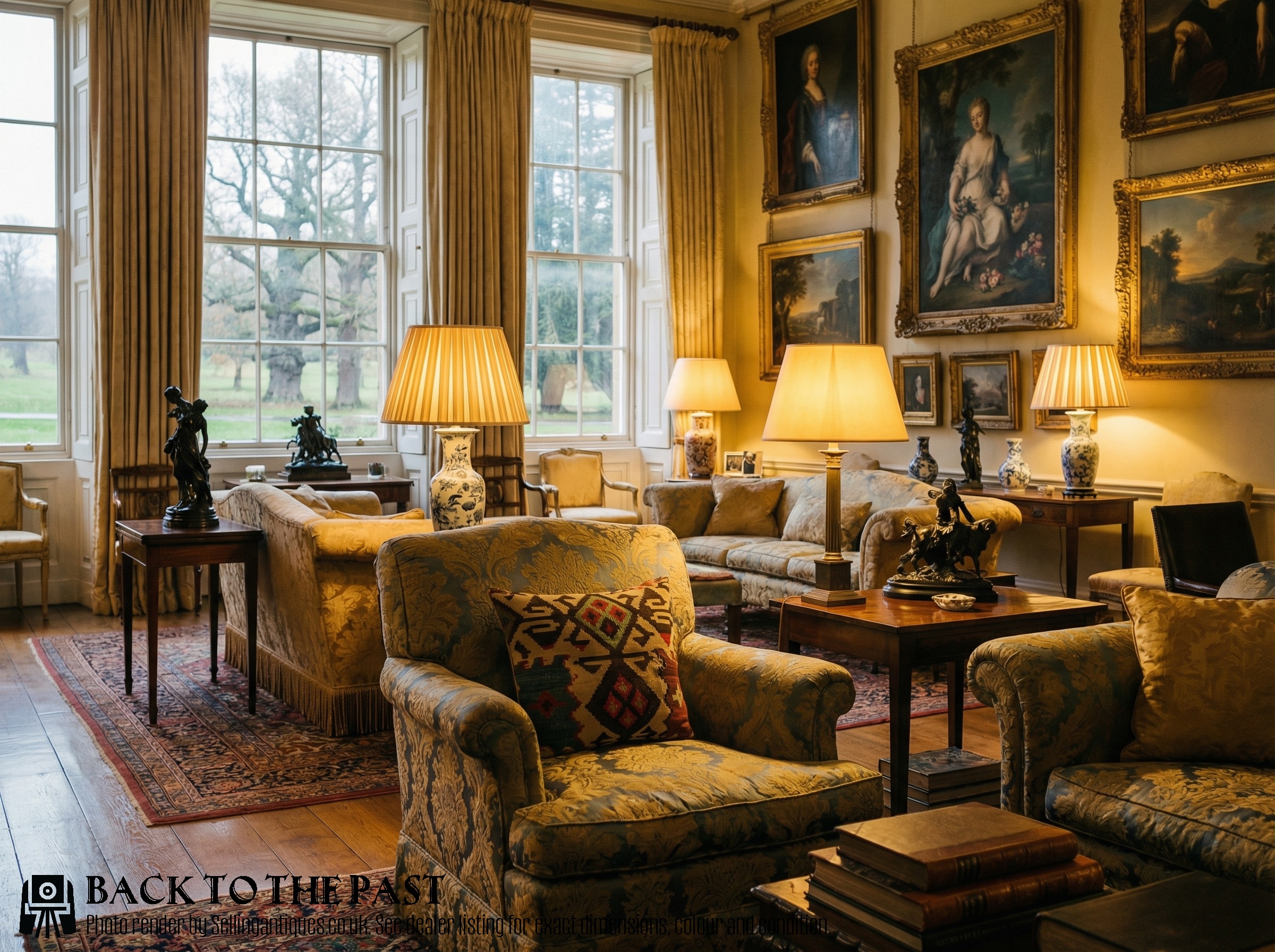
Flatweave Rug Cushion
A flatweave rug cushion adapts antique nomadic textiles, including saddle bags, storage sacks, and kilims, into soft furnishings. These pieces originate from Persian, Anatolian, and Central Asian tribal groups.
The most common examples on this page are fashioned from repurposed village and tribal bag faces, such as Shahsavan soumaks, Luri tachehs, and Yomut torbas. They retain their original front panels while being constructed for domestic seating.
Dating primarily from the mid-nineteenth century to the early twentieth century, these textiles reflect the traditional weaving practices of nomadic weavers across varied regions.
Materials and construction methods
Makers utilised hand-spun wool and goat hair, combining durable foundational warps with tightly packed wefts to create resilient flatweaves. Natural dyes derived from local plants and minerals provided rich colour palettes that deepen with age.
Weaving techniques vary from straightforward slit-tapestry kilim construction to intricate soumak wrapping, which creates raised geometric patterns on the surface. Many surviving examples incorporate original plain-weave wool backs and traditional tassel details.
Listings feature flatweave rug cushions originating from the mid-nineteenth century through to the early twentieth century, utilising wool, cotton, and natural dyes.
Determinants of quality
Quality rests upon the fineness of the weave, the complexity of the tribal iconography, and the integrity of the natural dyes. Superior pieces display precise geometric or pictorial motifs, such as stylized birds and dragons, executed with tight knotting or wrapping.
Condition and originality dictate the standing of a cushion, with preference given to examples retaining their authentic structure, balanced proportions, and undisturbed pileless surfaces rather than heavily restored textiles.
The Flatweave Rug Cushion Glossary
- Flatweave
- A textile produced without a pile by interlocking warp and weft threads together. This creates a smooth, tapestry-like surface suitable for daily utility.
- Soumak
- A brocade-like weaving technique where supplementary weft threads are wrapped around the warp threads. This method adds structural weight and distinctive surface texture.
- Tacheh
- A traditional tribal storage bag or wheat sack woven by nomadic groups in western Persia. These grain containers are frequently repurposed into decorative cushions.
- Torba
- A wide tribal storage bag traditionally used inside a tent for bedding or household goods. They often feature banded geometric designs in wool.
Flatweave Rug Cushion: Frequently Asked Questions
What are flatweave rug cushions made from?
These cushions are constructed from antique nomadic textiles created using hand-spun wool and occasionally goat hair. The weavers relied entirely on natural dyes sourced from local flora and minerals.
Many examples repurpose historic bag faces and storage sacks into durable covers. They preserve authentic tribal craftsmanship within a modern domestic context.
How do I care for an antique rug cushion?
Gentle maintenance preserves the integrity of the wool and natural dyes over time. Regular light vacuuming without a beater bar removes surface dust safely.
Professional specialist cleaning is recommended for heavier soils. Avoid placing antique textiles in direct, prolonged sunlight to prevent colour fading.
Where do these tribal cushions originate?
The textiles originate from nomadic and semi-nomadic groups across Persia, Anatolia, and Central Asia. Specific tribal attributions include Shahsavan, Bakhtiari, Yomut, and Afshar weavers.
Each region developed distinct weaving structures, geometric layouts, and natural dye palettes. These regional traits help identify the origin of the base textile.
Are these cushions made from authentic antique rugs?
The cushions on this page are formed from genuine nineteenth and early twentieth-century tribal textiles. Old storage bags, saddle bags, and kilim fragments provide the patterned front faces.
These functional household items were originally woven for daily nomadic life. Repurposing them gives surviving historic fragments a practical role in contemporary interiors.